A comedy starring Keanu Reeves is a good reason to go to the cinema. I also offer you others

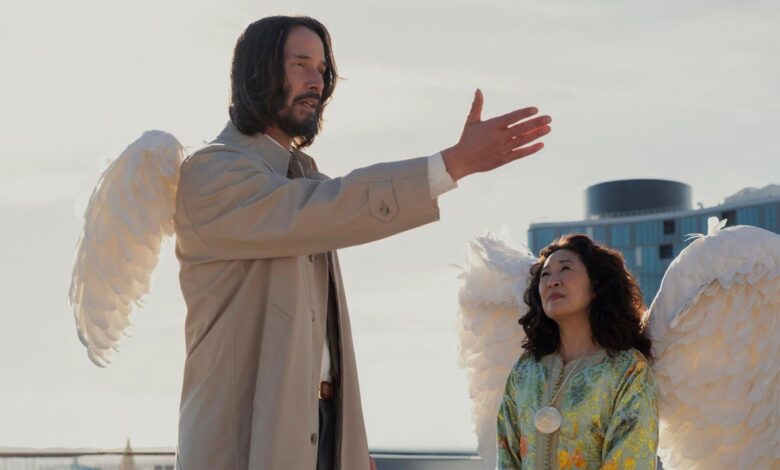
Angels have always fascinated, and the cinema has not kept away from them. The new comedy “God, what luck!” / “Good Fortune” (now on the big screens), where Keanu Reeves plays an angel ambitious to save a lost soul, brings back this fascination in the present. He interweaves it with commentary on emigrants, social disparity, gentrification and the housing crisis. Normally, angels do not appear when we are good.
In fact, what unites these films with angels is the idea that life on earth is worth living, hard as it is. That its weight has a purpose. This is what the main character in “My God, what luck!”, played by the film's director and screenwriter, Aziz Ansari, learns.
Arj, the Indian expatriate who wants to make a documentary film in Los Angeles, but barely gets by as a deliveryman and sleeps in his car at night, has no prospects even when the angel shows him the future.
And in the future it seems that he will have a job for nothing. Why would you want to live like this? Even when the angel makes him switch places with the rich businessman (Seth Rogan), to see that it's not easy either, Arj doesn't want to return to his old life.
It is necessary for the angel, forced to take menial jobs (because his boss punished him), to realize how important human solidarity is for Arj to want to return to what he had.
Of course, the topic is not new
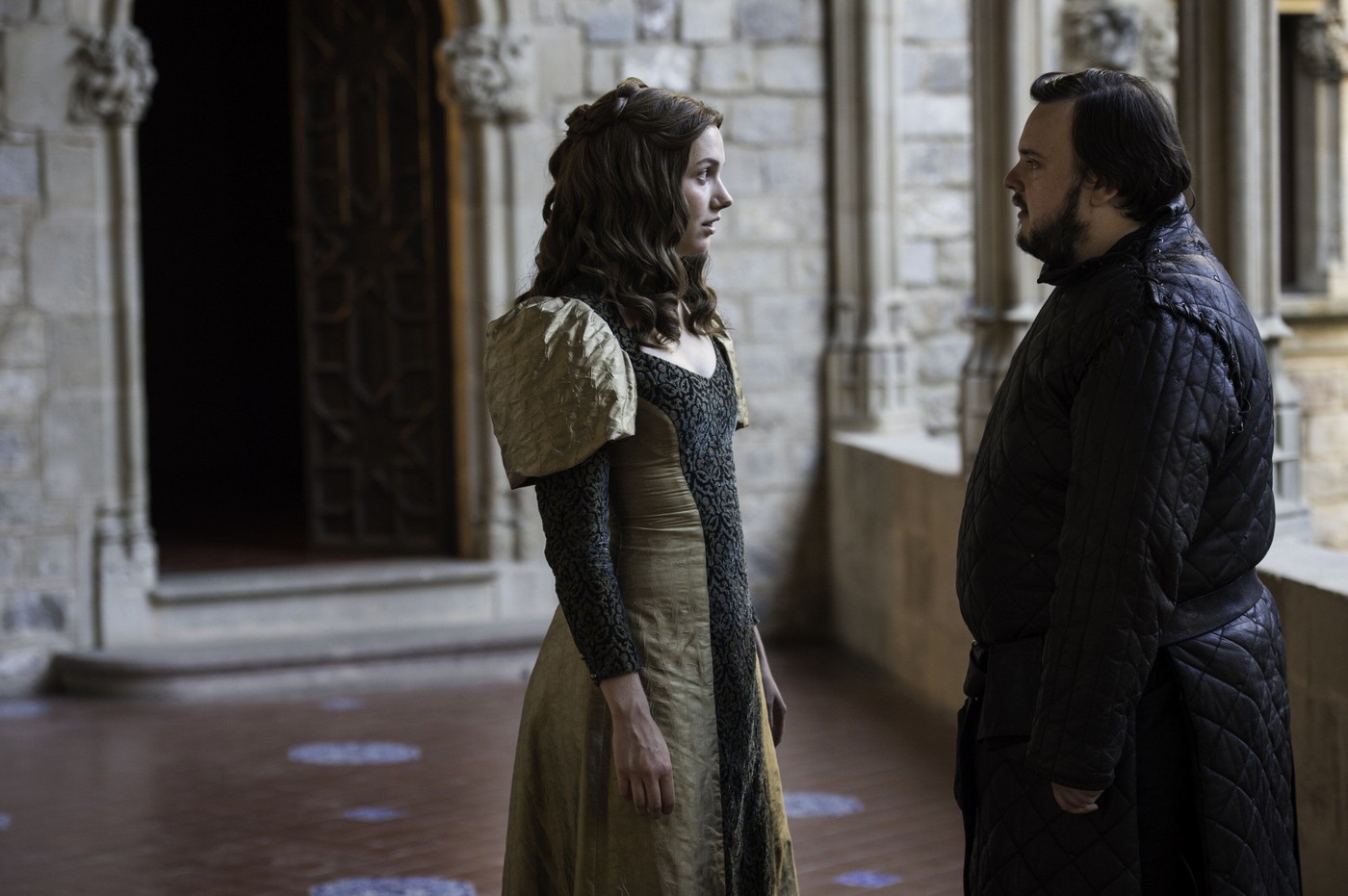
In the 1946 film It's a Wonderful Life, Frank Capra delivered to Americans one of the most beautiful and sad stories (with angels or not) ever told.
A man who wants to take his own life on Christmas because he is almost broke and can no longer support his family, is saved by the intervention of the guardian angel, who throws himself in front of him in the water, forcing him to save him, and then shows him how the life of the community would have been if he had not been born.
… writes the angel Clarence in the dedication to “The Adventures of Tom Sawyer”, the book he leaves behind after he earns his wings and returns to Heaven.
The parallel reality in which George Bailey (James Stewart) wanders in his hometown, where no one knows him (because he was not born) has the merit of showing him how much our own lives influence the lives of others. If he had not saved his brother from drowning in 1919, he would not have become a hero in the Shamd war.
On the other hand, however, George only gets a new perspective on his life in the cage, not another life. He had always wanted to leave the city and see the world, free as a bird in the sky, but life made him stay and take over the family business, marry and have many children. None of these achievements were something he had wanted, so it is understandable that the suicide attempt was prepared by many accumulated frustrations.
The perspective he receives with the help of the angel only helps him to adjust to the already existing life, to see the good things in it, especially since the company is saved from bankruptcy by the contribution of fellow citizens.
Not to change his life and become what he always wanted.
Difficulties challenge us to grow
If Capra's film lifted the hearts of Americans immediately after the war, Ansari's film, which is avowedly inspired by it and was shot in 2024, before Donald Trump was re-elected president, is seen today through different lenses. Before offering a solution (or, please, consolation), he shows that there is a problem. One so serious that it makes us invoke divine intervention.
But again, the message is the same: we come with something to learn and we can't learn from something easy. All difficulties tell us something, challenge us to grow, help us choose.
Angels humanized…also by us
Almost all films with angels (when they do not have a religious subject, such as, for example, “The Temptation of Saint Anthony”, by Georges Méliès, from 1898, the first film with an angel) have the pleasure of humanizing the angels, making them discover the joy of being in the body. Here, too, it is still a purely earthly perspective.
One of the most illustrious examples is “Der Himmel über Berlin” (by Wim Wenders, 1987), whose English title, “Wings of Desire”, translates even better the situation of the angel (Bruno Gantz) who falls in love with a trapeze artist (Solveig Dommartin) and becomes a man for her.
“How nice to blacken your fingers from the newspaper (…), to be able to doubt instead of knowing for sure”, discusses the hero, Damiel, with his colleague Cassiel (Otto Sander), two angels in long coats, who haunt a city to which the traveling circus gives an even more desolate air – and not exactly timeless, since the Berlin Wall jumps into the eye so often.
And the presence of the angel incarnate, played by the beloved American actor Peter Falk (formerly Columbo), who had given up immortality to become an American actor (!), only makes his plea for the beauty of life on earth sound even more convincing. Proof that Damiel is following him.
Wenders' film had an American remake in 1998, “City of Angels”, directed by Brad Silberling, which changed the happy ending to something much more tragic. The melancholic angel played by Nicolas Cage became a man out of love for the doctor played by Meg Ryan, but she died shortly after they found each other.
In “My God, What Luck!”, the angel Gabriel (not the same as Archangel Gabriel) is a minor angel. When he finds himself forced to work on the land, Gabriel also takes up smoking, reveals his muscles, discovers dance and food. That is, they discover that life on earth is not boring at all and that the idea of community makes personal hardships easier to bear.
Ansari's film does not fall into the comic genre, but it leaves you with a good mood which, again, is just coming to terms with what you have.
Why would this be important?
Maybe to make us understand that the divine plan exists even in a modest life, that there is no need to beat ourselves up if we don't all become Hollywood stars or moguls or world champions of whatever.
That, in whatever direction we take, we are on the right track and that wherever we are is good.
It's funny that Keanu Reeves is the angel. Ansari confesses that she thought of him because he seems from another planet. At the same time, Reeves is the opposite of what we think of as a star: a modest and civilized man, and the Internet is full of images of him offering his seat to ladies on the subway and stories of his donations and gifts.
There is no actor with a more beautiful image in the collective mind. As if in the divine plan of Keanu Reeves the star position is only the means through which he reaches the people with the message. The more famous, the greater the power of penetration.
And what an evolution from the mouthy angel of “It's a Wonderful Life” to the otherworldly angel of Keanu Reeves, passing through the gentle angel of Bruno Ganz or the poetic angel of Nicolas Cage. In fact, angels not having a body, they take the form that each age gives them.
Not as far away as we might think
Celebrated on October 2 in the Roman Catholic religion, and on November 8 among the Orthodox and Greek Catholics (along with Archangels Michael and Gabriel), angels are perceived as messengers of God, who are not allowed to intervene in human destiny except in exceptional cases.
They usually intervene only when the person asks them to. And they are not as far away as we might think. We can perceive them in prayer, in meditation, but also in exceptional situations.
Most people perceive the presence of the guardian angel when they enter the final. And my mother dreamed of it, three months before she died. It was as if he was not sleeping when a man appeared in the room. He asked him who he was and how he got in. He didn't answer. I'm sure she knew who he was, but if she told me he was her guardian angel, she should have told me she was dying.
Because the angel appears to tell you to prepare, they say.
An American doctor named John Lerma, who specialized in palliative medicine, did not believe in the existence of angels until he began to document the many cases of patients who, on the verge of death, said that they had begun to be visited by angels. The first time the angels stood at the threshold and waited to be invited. Then they came alone, more and more often.
John Lerma published in 2007 a book with testimonies of his patients, “Into the Light: Real Life Stories about Angelic Visits, Visions of the Afterlife, and Other Pre-Death Experiences”. All the stories have a common denominator: the conviction that those on the verge of death (even atheists) gained that death is not the end and that God exists.
The most beautiful of these stories (with which the book opens) is that of Matthew, a 9-year-old boy with terminal cancer, who had become the soul of the home because of his serenity and optimism. He said that his illness, which he had called Regina, would help his mother and sister regain their faith. And that he will also help other people, through Dr. Lerma (when he didn't know he was going to write a book.).
Matthew was talking about swimming in dreams with dolphins and penguins, but also with Raphy and Gabby (who the doctor assumed were the archangels Raphael and Gabriel.). Each person has, Matthew said, an assigned angel, but they multiply if you get seriously ill. 30-40 angels can also come into your salon, however many, just to make it easier for you to leave your family and go with them.
A few years later, another boy in the finals told the doctor how he met a boy named Matthew in his dream. From other dying patients, Dr. Lerma learned that some angels can be three meters tall.
Although unacceptable to common sense, such stories give us confidence that in moments of limitation we are not entirely alone. Sometimes they communicate with our own histories.
Bliss
Two weeks before my mother's death, when she was already between the worlds (she had started to reach out her hands to places in the room where no one was), I returned once from the city (a friend was sending me from Bucharest the only antibiotic for the Clostridium my mother took from the County Hospital in Sibiu), when I found her in a state for which bliss is the most appropriate word.
I had never seen her so happy. It was as if he had come back from the most beautiful place there is. Her face was glowing but, unable to speak due to a stroke, she couldn't tell me what she saw. Only the eyes tried to describe what he felt.
Taking care of my mother during the pandemic emergency, when even the family doctor did not come, I found that angels exist. I was so tired when I passed out in bed at night, like in “Terminator”, that at one point I started saying before I fell asleep: “Give me strength!”
I didn't know who I was praying to, and it didn't matter, because every time I said it (sometimes I forgot about the tiredness), I woke up fresh in the morning and started all over again.
A few months after my mother left, a cat appeared in the yard that I adopted. A year later he caught his leg in a wire mesh and developed a blood clot. According to medicine, he had very little chance of survival.
I went every day to the clinic where she was hospitalized and it broke my heart to see her paralyzed, and in the evening I fell asleep praying to all the saints (starting with Francis of Assisi and to all those close to me who had died to save Maimutica. It was like a mantra that helped me fall asleep crying: “Please, help Maimutica! Help Maimutica! Help Maimutica!”
On the third day, still repeating these words, I heard a voice in my head: “The cat will be fine.” I wasn't crazy, it just wasn't my voice. He sounded detached, somehow professional, objective, neutral and, above all, he didn't call her by name.
I didn't stop to think, but I calmed down. From the next day I started telling Maimutichia: “The cat will be fine.” And I really believed.
And it was good. She came back from paralysis with a defect in her leg, but functional (what progress, the doctor originally wanted to euthanize her!), and I started telling everyone that my guardian angel had to answer me bored just to stop beating him on the head.
We don't have to do everything ourselves
Beyond the joke, there was the belief that asking for help was enough. We don't have to do everything ourselves.
Angel movies have the merit of reminding us of this. And they also have the merit of helping us to ground ourselves – that is, to stay in the body and enjoy every day, every taste, color, smell, etc.
Keanu Reeves' angel said that food is among his most beautiful discoveries on earth – replace it with what you like the most!