This is how Russia wants to finish off Ukraine. Kyiv is preparing for the worst


The first thing I did when I started writing about Kiev's preparations for another winter of war was to make a list of the basic purchases I've made since spring 2022. Kiev may be much quieter than Kharkov, Sumy or Kherson, but it's still worth it be prepared for attacks.
A flashlight with a USB port and multiple modes, from blinding light to more subtle, is essential if you want to avoid breaking your neck while long winter nights in Kievwhen there is no street lighting. This is much more practical than lighting the way with a smartphone.
You will also need a headlamp, similar to those worn by miners. Mine also has a USB port, so you can charge it from a power bank or laptop. Most importantly, it leaves your hands free, which is especially important at night for mothers with children if they need to run to a shelter, parking lot or subway station to avoid gunfire.
Another necessary element is reflective tape with a layer of Velcro. It is best to attach several pieces to your bag and clothes. Drivers say it makes life much easier because they can spot pedestrians on the crosswalk from a distance.
Power banks are another essential piece of equipment. The more the better. Use them to charge phones, but also small lamps with USB ports that people place in their apartments to create a semblance of normal evening lighting.
Like many people, I believe that after long winter evenings spent in complete darkness – the light of a mobile phone screen does not matter! — the eyes begin to hurt and melancholy appears. Before I found better solutions, I used Chinese Christmas tree lights and a few weak table lamps.
Additional equipment may be a portable, battery-powered radio. If your internet connection drops and you can't read messages on your phone or ask friends on Facebook, these relics really come in handy.
The article continues below the video
Survive attacks
I also make sure to have two or three heavy hooded tracksuits made in Ukraine. In such situations, it is extremely important to support domestic producers and I suggest choosing rather larger tracksuits, because it is good to have enough space to put on a sweater and pants underneath. At night, when there is no Russian shelling but the central heating remains turned off due to a missile attack, people often sleep at home dressed this way. However, when spending the night in a bomb shelter, usually in a subway station or parking lot, you will need a sleeping bag, mattress or fold-out bed.
But why not one tracksuit? When infrastructure is attacked, as a rule first there is a lack of waterso you can't wash things as often as you would like. There is no problem with purchasing bottled water in Kiev, but just in case, it is always worth having two large plastic buckets with lids, filled with water, at home. It's even better to get a 35-liter plastic tank if you have space in the bathroom.
When it comes to electricity, install it generator at the dacha can provide you with a bit of paradise, war permitting. Those who live in apartments are not so lucky, and firefighters strongly advise against installing generators on the balcony. In some high-rise complexes, building management has purchased a powerful generator to keep elevators running and lighting until curfews and blackouts are implemented.
As for the things I have in my stash but haven't had to use yet – superstition keeps me from writing “so far” – it's a black plastic suitcase with a portable gas stove and a gas cylinder. We have a gas stove at home and so far gas consumers in Kiev have not had any problems. However, cylinders are currently a lifesaver for residents of the capital who have electric ovens.
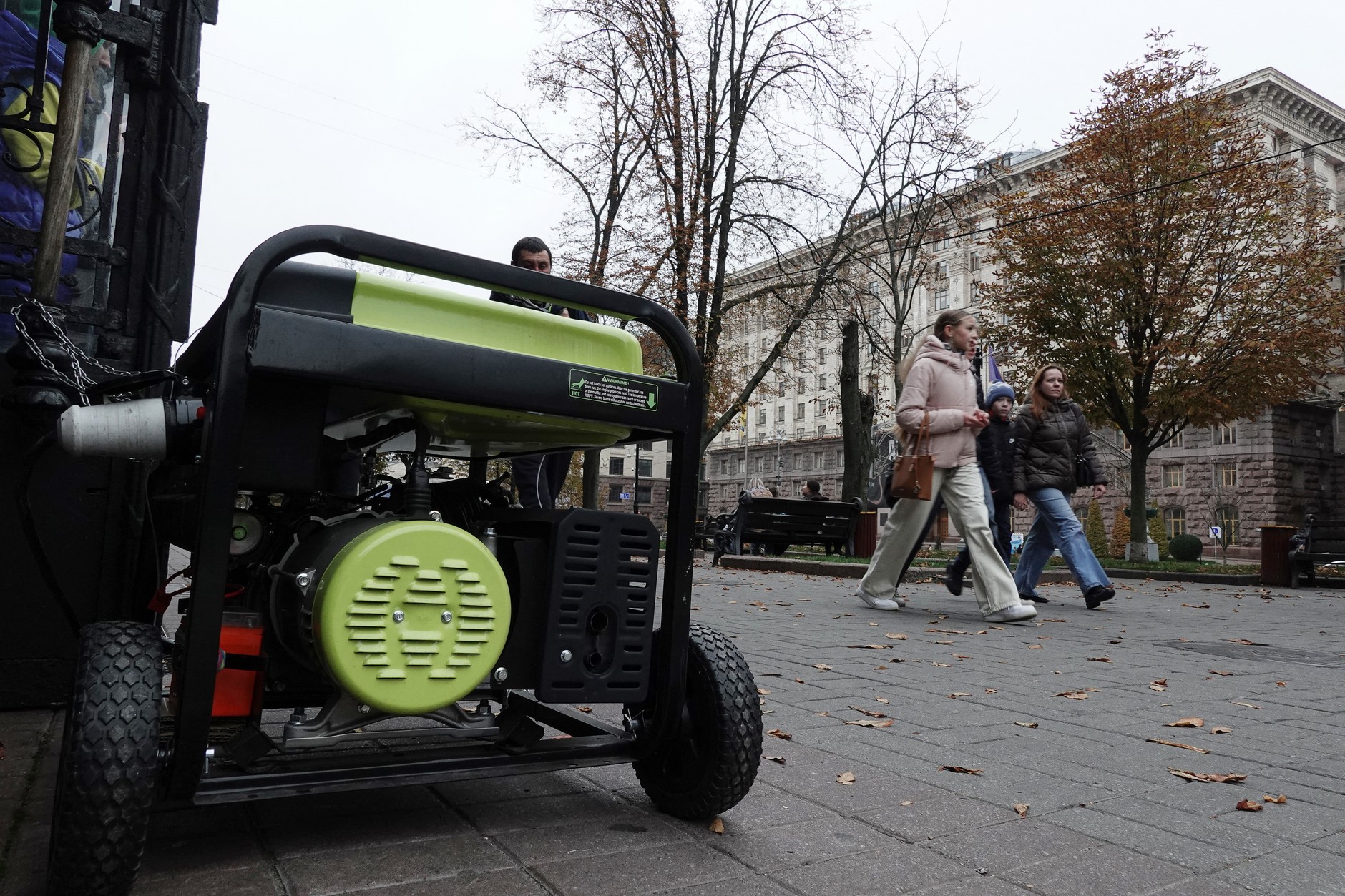
Generator on the street in Kiev, October 24, 2025.GENYA SAVILOV / AFP
Urban preparation
I also have two unopened bags of electric sheets and blankets. In 2022, I realized for the first time that my block of flats in one of the most bombed districts of the capital could easily be deprived of heating and I went shopping. However, I never imagined that I would lose electricity and heating at the same time. Now that we are approaching the fourth anniversary of the Russian invasion, we have a much better idea of what How to survive winter in the worst-case scenario.
Moving from private matters to more general ones, a few words about what the state is doing to protect people's lives and the country's economy as another winter approaches, which, thanks to Russia, will be as difficult for us as possible.
The Kyiv Digital application informs city residents about what is happening during airstrikes and provides detailed updates interactive map showing the location of approximately 400 phone charging points in various parts of the capital, as well as places where you can drink hot tea and warm up. Although the peak of winter is still far away, it is worth avoiding the cold and rain. There are at least three such points near my house.
The second map shows the city's pumps, which operate even in the event of a power outage because they have their own generators. The third map, which is constantly updated, shows air raid shelters.
Drones and missiles have been a constant presence in recent weeks and months. There is rarely a night without alarm sirens, which sound until the morning, when public transport starts running, shops open and children go to school.
This could be a prelude
The October 10 attack is already seen as one of the worst ever the country's energy sector. The Ukrainian Air Force said Russia fired 32 missiles and 465 drones overnight, making its intentions clear by destroying energy facilities as the cold weather arrived.
The entire left bank of the capital remained without electricity and water, and the metro network could only partially function in some sections. With no metro connections between the Right and Left Banks, buses, minibuses and taxis slowly crossed the bridges in traffic jams.
Ukrainian energy company DTEK clearly showed how serious the energy situation was, writing on its official Facebook page: “Russia attacked DTEK thermal power plants. The equipment is severely damaged. We are dealing with the consequences.”
Local media subsequently determined that the Kyiv thermal power plant, which produces both electricity and heat for central heating and hot water supply, was also attacked. The city has just turned on the heating in hospitals, schools and kindergartens. Engineers began repairs as soon as the attacks ended.
That afternoon, DTEK reported: “270,000 families in Kiev have electricity again after the shelling. The situation remains complex. We are working on it.” Some people expressed gratitude in the comments: “You are heroes! You are titans!” However, most were irritated and demanded to know how long the repairs would take, to which the company replied: “The damage is very serious and we are prioritizing deliveries to critical infrastructure facilities. Repair crews are working overtime.”
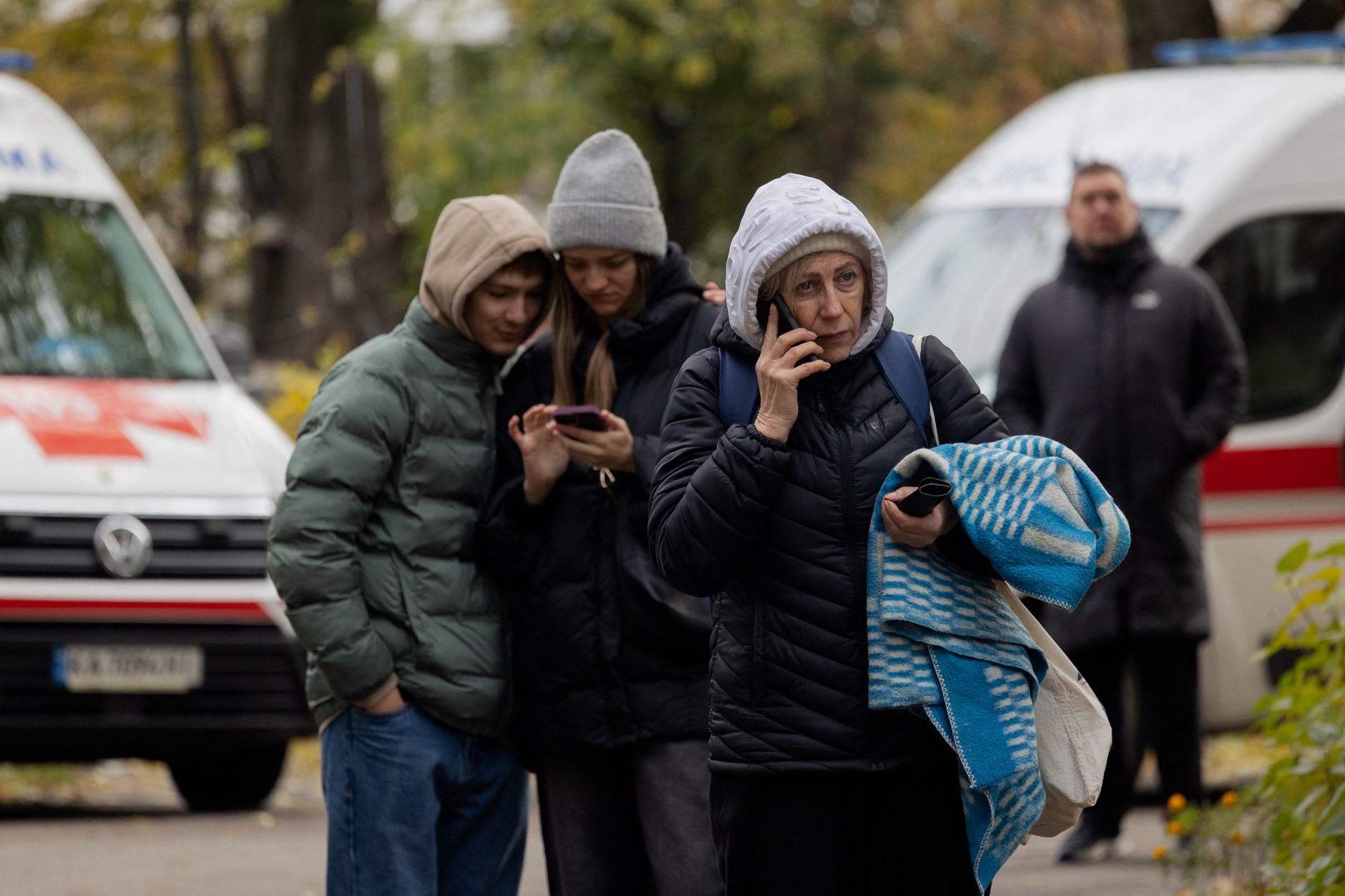
Residents after the Russian attack on Kyiv, October 26, 2025.Tetyana Dzhafarova / AFP
The fourth winter of the war
Could the consequences of the October 10 attack in Kiev have been avoided? How well have local authorities prepared for Russia's apparent attempts to deprive the capital's residents of heating and electricity as winter approaches?
Not good enough – says Oleksiy Kucherenko, a member of the Ukrainian Parliament and former Minister of Housing and Communal Services. The politician tells the Ukrainian website Telegraf that insufficiently protected transformers were damaged and blames the city authorities for it.
Although the attack on October 10 was undoubtedly huge, the air defense systems did everything in their power to defend the city, Kucherenko emphasizes, adding that the same cannot be said about protecting the transformers.
According to reports, on October 3 alone, Ukraine lost approximately 60 percent. its gas production capacity as a result of massive Russian air raids on the Kharkov and Poltava regions. If this information is confirmed, experts predict that Ukrainians will face a very difficult winter, although this is currently the norm. This is the fourth winter of this full-scale war, which was already called disastrous.