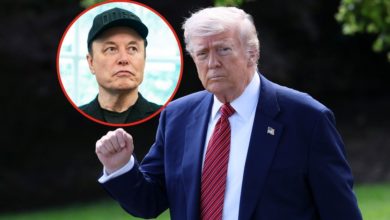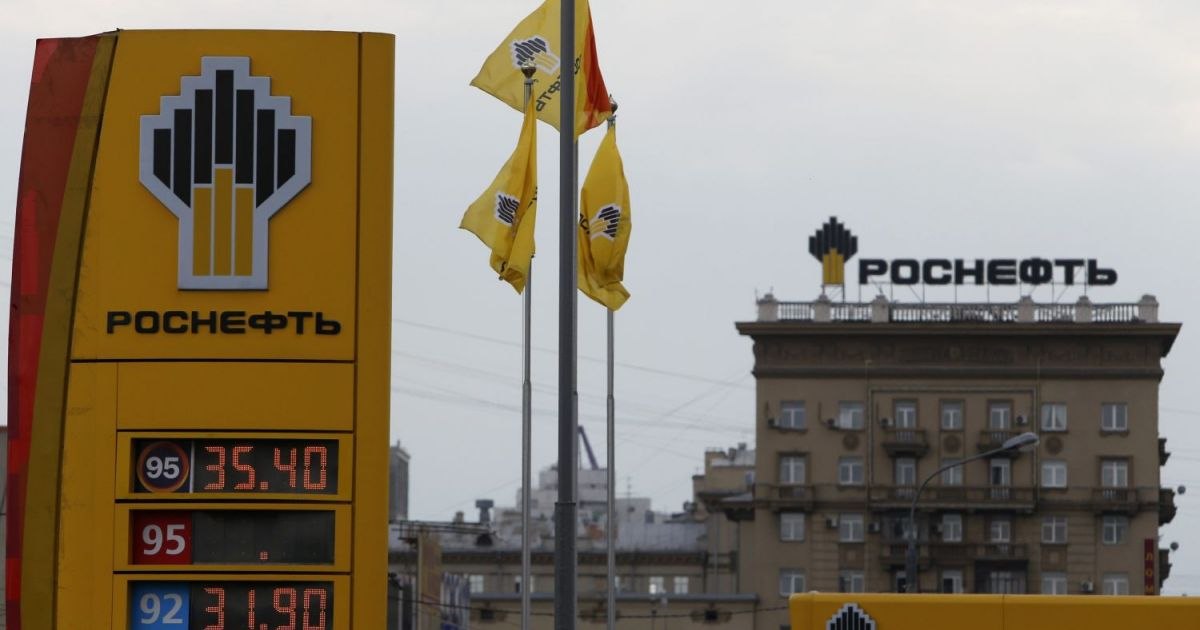
US President Donald Trump announced sanctions “extremely tough” against two of Russia's largest oil companies in an effort to pressure Moscow to end the war in Ukraine.
Trump imposes tough sanctions on Russian oil companies PHOTO: Archive
The sanctions, announced on Trump's Truth Social platform, target Rosneft and Lukoil — two major oil companies that, according to US Treasury Secretary Scott Bessent, finance “war machine” of the Kremlin.
“President Vladimir Putin's refusal to end this senseless war prompted this measure”Bessent stated in a statement.
The announcement comes a week after Britain imposed similar sanctions on Rosneft and Lukoil and a day after Trump said his planned meeting with Putin in Budapest would be postponed indefinitely.
“Every time I talk to Vladimir, we have good talks, but then they go nowhere. It just doesn't go anywhere”Trump said Wednesday after a meeting with NATO Secretary General Mark Rutte to discuss peace talks. “I felt it was the right time. I waited a long time”.
Companies targeted by sanctions
The sanctions, imposed by the US Treasury's Office of Foreign Assets Control (OFAC), effectively blacklist Russia's two largest oil producers.
Rosneft, a state-owned company run by Putin crony Igor Sechin, and Lukoil, a private firm, account for nearly half of Russia's total crude exports, according to Bloomberg estimates. Together, the two companies export 3.1 million barrels per day, the BBC reports.
Rosneft alone is responsible for nearly half of Russia's total oil production, which accounts for about 6 percent of global output, according to British government estimates.
“Rosneft is a vertically integrated energy company specializing in the exploration, extraction, production, refining, transportation and sale of oil, natural gas and petroleum products”stated OFAC. “Lukoil is engaged in the exploration, production, refining, marketing and distribution of oil and gas in Russia and internationally”.
Impact on the war in Ukraine
Ending the Russia-Ukraine war has become a focal point for Trump in recent months, but negotiations with Putin have proven difficult.
The US president has repeatedly supported proposals to freeze fighting on the current front lines, suggesting that the territories “they should stay as they are”. The Kremlin rejected the idea, with Dmitry Peskov saying that “the coherence of Russia's position does not change”referring to the desire for Ukrainian troops to leave the Donbas region.
Sanctions against such important pillars of the Russian economy could cause Moscow to revise its position, which is the US objective.
“The aim is twofold: to affect Russia's industrial capacity to wage war and to coerce it into accepting peace terms for fear of the growing impact of sanctions on the economy and society” explained Dr. Stuart Rollo, a researcher at the University of Sydney. “They will not affect the first dimension, but may influence the second if a fine diplomatic balance is struck between the consequences of continuing the war and the advantages of a peace agreement“.
Michael Raska, an assistant professor at Singapore's Nanyang Technological University, added that in the short term, sanctions “they probably won't change the military balance in Ukraine”but they will present Russia with difficult choices between maintaining socio-economic stability and financing a protracted war.
Global impact on oil prices as well
The sanctions will hit Russia's economy, given that oil and gas revenues make up about a quarter of the country's federal budget. The effects will also be felt globally, as Russia's main energy exports go to China, India and Turkey.
China purchased more than 100 million tons of Russian oil last year, accounting for nearly 20 percent of its total energy imports, and India's imports have risen to about $140 billion by 2022. Trump has said he is asking those countries to completely stop purchases of Russian oil, warning they could face secondary sanctions otherwise.
News of Trump's sanctions has already sent oil prices higher globally, with Brent jumping 5 percent, compared with 1.6 percent after similar sanctions imposed by Britain.
“In the medium to long term, I do not expect them to affect global prices, unless the secondary sanctions on transport and finance related to these companies are strictly enforced”said Dr. Rollo.