

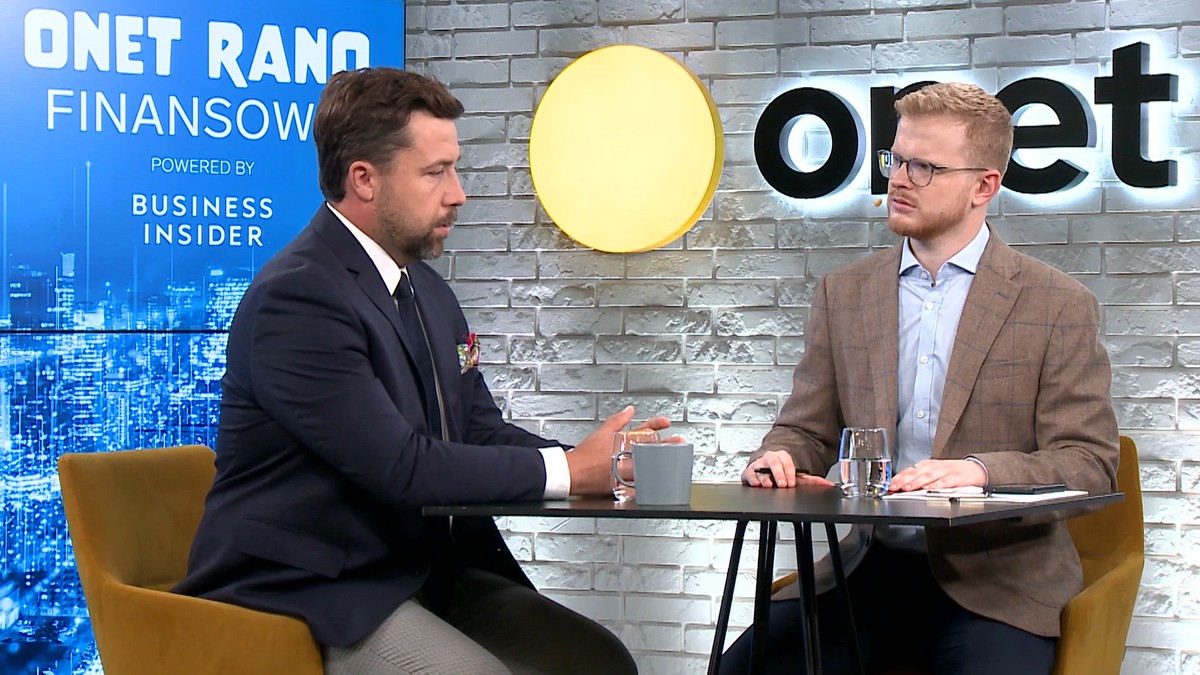
This week, the government issued a regulation on a new minimum wage. According to the document, in 2026 it will increase by PLN 140 gross to PLN 4866. Mariusz Zielonka referred to this in the morning in the morning in the morning.main economist of the Lewiatan Confederation. – Indeed, these PLN 4,866, it seems, I will not say that a good solution, because we have a mathematical formula recorded in the act, which says that this growth should be lower than PLN 140. The government went a straight path – inflation, level of inflation forecasted next year by 3 percent. more. This is a good direction – he assesses.
A breakthrough in the government's pay policy
The increase is a slowdown in relation to dynamic increases from previous years. “It must be remembered that in recent years we had an increase in salary at 19, by 20-23 percent in 2024, which They were absolutely detached and unrelated to what was happening in the economy. What's more, they were driven by an increase in salaries, “explains Zielonka.
According to the Lewiatan economist, the scale of previous increases was inadequate to the economic situation. “Medium salary was growing at that time by 11 percent at the moment, however, this government went, however, a more reasonable path,” says the expert.
Labor costs were reached by historical maxima
In his opinion, the main reason for a moderate approach to the increase in national minimum should be record -breaking labor costs in Polish enterprises. “Labor costs in Poland or the share of labor costs in the entire costs of the company's operations achieve its maxima. According to the National Bank of Poland, it is 14.3 percent and it was not even in Covid's time, so labor costs are actually the most current to employers at the moment”-explains Zielonka.
Eurostat data confirms the fears of entrepreneurs – in the second quarter of 2025 labor costs in Poland increased by 9.5 percent. year to year, which puts our country in 6th place in the European Union in terms of growth dynamics. This pace is twice as high as the EU average of 4 percent.
Lewiatan expert points out that labor costs “can even be said that they are ahead of the costs of energy whose apogee lasted right after Russia's invasion of Ukraine.”
Stable consumption despite smaller increases
When asked about the risk of weakening internal consumption, Zielonka answers categorically: “It will not weaken, because it can be seen in retail data that we have changed our purchasing preferences a little. We buy a lot of more durable goods, which also means that we have already rebuilt our savings.”
The economist resembles the context of recent years: “We this period, when the salary dynamics reached 10-11 percent, it was a period when Poles exerted quite a lot of pressure on employers to compensate for this period of very high inflation. Recall-In February 2023 inflation [wynosiła] Over 18 percent year on year. We actually felt a loss in our pockets. “
Automation not for everyone
Zielonka is skeptical about the arguments that higher labor costs will automatically translate into larger investments in robotization and automation. “Looking at who invests at all – large companies invest and invest companies from industrial processing branches. And where are the labor costs very important? These are micro and small enterprises” – he explains.
Data on the International Federation of Robotics confirms Poland's delays in the field of automation – in 2023 the density of robotization was only 78 robots per 10,000 employees, while the EU average exceeds 100, and South Korea has over 1000 of them. “You can see how much we have space to catch up when it comes to this element of robotization automation” – admits Zielonka.
The incident with drones will not affect investments
Referring to the violation of Polish airspace by Russian drones on the night of September 9-10, Zielonka reassures: “Those who invest very much, I will use an economic return, have already discounted what is happening in our region. These incidents in violation of the aerial space do not negatively affect how investment Poland is seen.”
More – according to the economist, the incident can even positively affect the perception of Poland. “We did very well with this situation, working with other European Union countries. This shows some strength and some resistance or the possibility of opposing possible aggression” – he argues.


