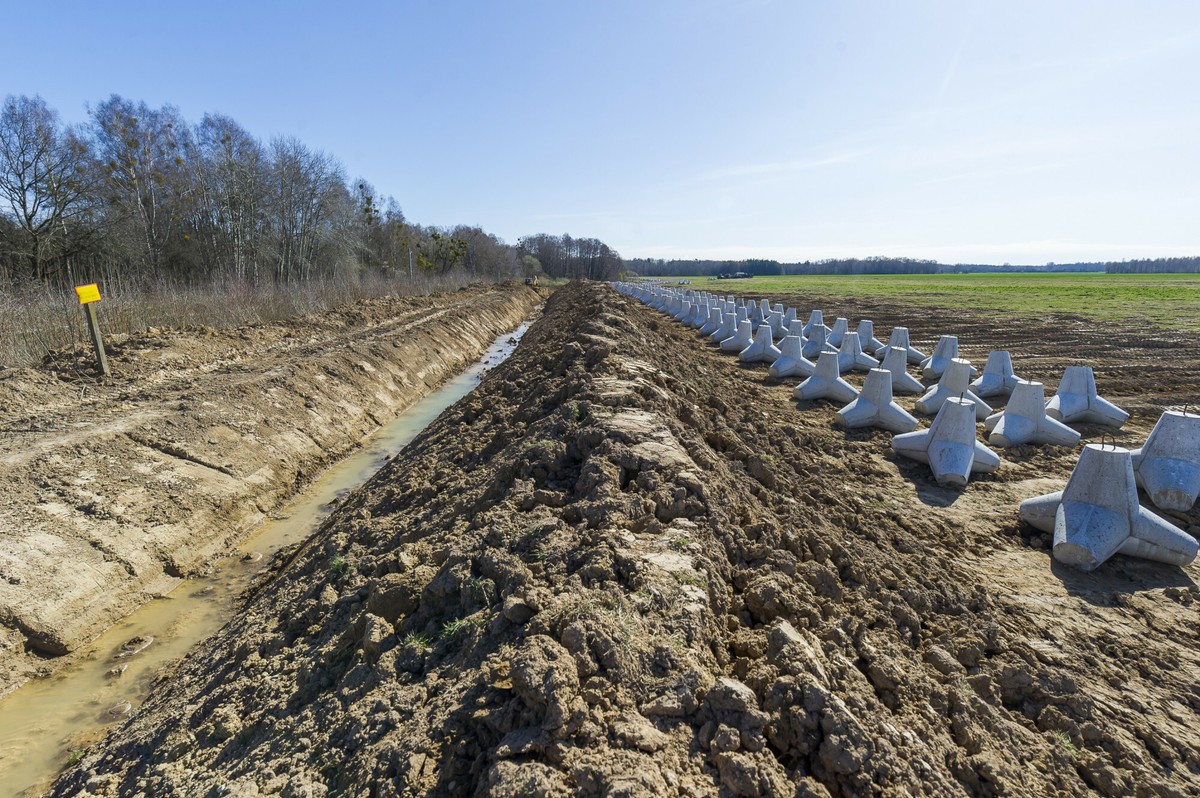
The first 500 -meter anti -tank ditch was dug in Vinski, south of the connected tanks of the Pejpus (Czudzki) and Pskowski lakes.
– In two years we should have over 40 km of anti -tank ditches, as well as almost 600 bunkers – said Lt. Col. Ainar Afanasjev from the Engineering Inspectorate at the General Staff of the Estonian Armed Forces.
The plan to strengthen the border with Russia provides for the construction of a defensive zone about 100 km long and about 40 km wide into the territory of the country. Estonia has a good natural barrier that stops the enemy in the form of the Narwy River in the north and Lake Pejpus on the eastern section. – In swamp areas, the construction of fortifications and barriers is not needed. You can't get there with the help of (advanced vehicles) technologically – the military pointed out.
This year, in the north and south of the country, it is also planned to create military support bases, consisting of bunkers and warehouses.
The entire Estonian border with Russia is 338 km, of which about the 135-kilometer land section runs mainly through hard-to-reach forest and swamp areas. The 76 km section is marked by the Narwa River, while 127 km of border is located in the waters of Lake Pejpus.
The Baltic line of defense is a common inter -state project of Lithuania, Latvia and Estonia. The agreement on its implementation was signed in Riga at the beginning of 2024. The purpose of this undertaking is to strengthen the NATO eastern flank, including protection against the invasion of troops from Russia and Belarus. The Baltic line is to be connected to the Polish shield East.