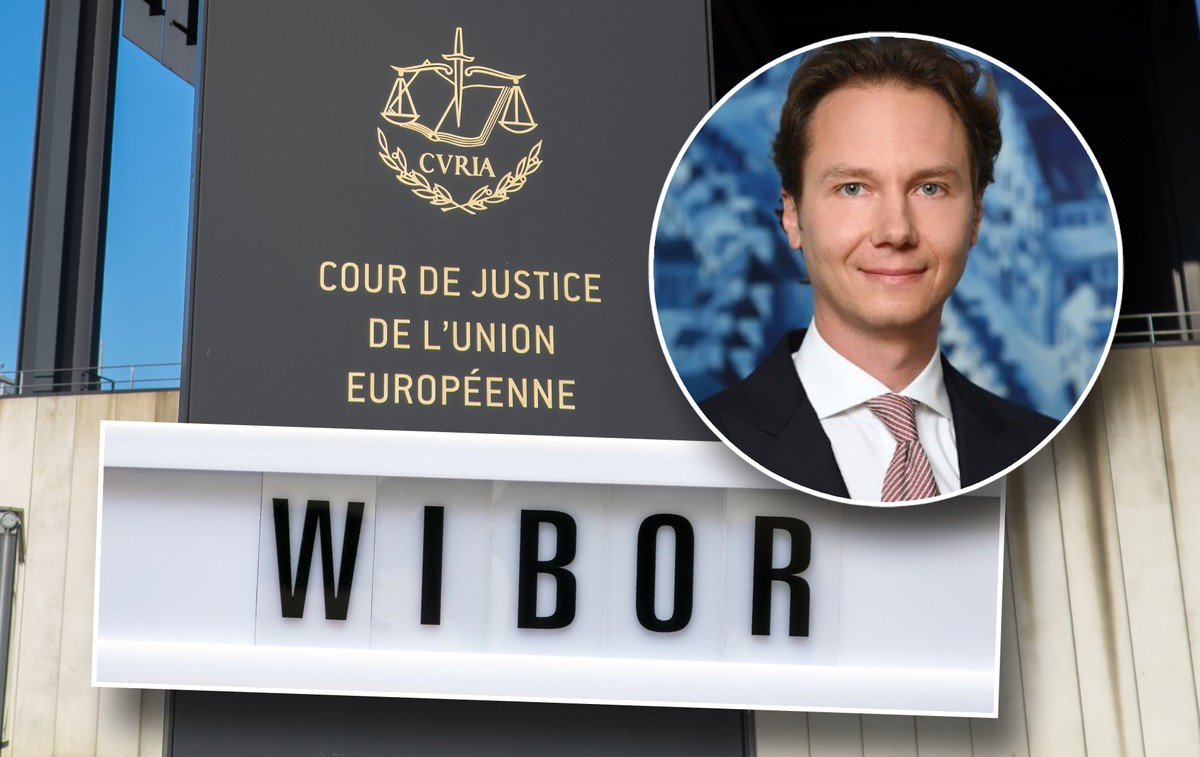
On Thursday morning Laila Medina, the general spokesman of the CJEU, issued an opinion on housing loans in zlotys based on the WIBOR rate. This opinion may affect the verdict, which is expected at the turn of this and next year (reference number C-471/24). The voices of consumer lawyers immediately appeared that the CJEU was on their side. Bank representatives cool this optimism.
See also: Who is right around the dispute about WIBOR. Contradictory interpretations of the opinion flowing from the CJEU
Lawyer Bartosz Miąskiewicz from the CMS office admits that According to the opinion of a variable interest rate, WIBOR -based can be theoretically assessed at an angle of unauthorized nature, but at the same time the correctness of the WIBOR method has been confirmed.
– indicated that national courts “They cannot examine the method of determining such indicators on the basis of the aforementioned directive” – emphasizes attorney Miąskiewicz.
See also: Dispute about WIBOR. Lawyers refute the myth of lack of supervision [OPINIA]
In addition, in his opinion, the spokeswoman decided that the allegation of the borrower's representative regarding the alleged lack of sufficient information about the rules for determining WIBOR is unfounded. – She indicated that the bank was obliged to provide only information required by law. Information about the methodology is publicly available – in the regulation itself and, in more detail on the administrator's website. She did not share the allegation of the borrower's attorney that the bank misled the consumer, conveying too few details about the WIBOR methodology. The law firms do not have a universal argument that would allow all contracts to challenge. It is worth recalling that the District Court in Częstochowa, in the justification of a preliminary question, had no objections to the information provided by the bank about the risk of interest rates. And it is the national court that is to assess whether the obligations have been fulfilled. So we return to the starting point and current case -law, which is beneficial to banks – emphasizes Miąskiewicz.
As for the criteria for assessing the integrity of clauses, Miąskiewicz pays attention to two issues. – The spokeswoman proposes to maintain the criteria for the assessment of honesty, adopted in previous rulingswithout introducing new, sharper. In the scope of contracts based on WIBOR, the National Court may not examine them in terms of compliance with BMR. We are dealing here with a limitation of control. Secondly, the court should check whether the relevant information about the risk of changes in the indicator (similarly to the established case -law) has been provided – explains Bartosz Miąskiewicz.
He also draws attention to the fact that the spokeswoman did not refer to the last question of the Polish court – about the hypothetical legal effects of undermining WIBOR. The Tribunal decided that it did not have to decide it.
Therefore, according to Miąskiewicz, if the CJEU issued a judgment in accordance with the opinion of a spokeswoman, this would not mean a breakthrough in Polish case -law. In his opinion, you must first wait for the CJEU's decision, because it will indicate the direction.
In practice, this means that not every contract can be challenged. It all depends on when it was concluded and how it was formulated.