
The stretched traps of the West Russians. Romanian expert from the US: “It would be the perfect gift for Putin, but our biggest mistake”


Politicologist Grigore Pop Elecheș, a professor at Princeton University, explains, in an interview for “Adevărul”, the way Russia is trying to deceive the West and convince the Allies to abandon Ukraine.
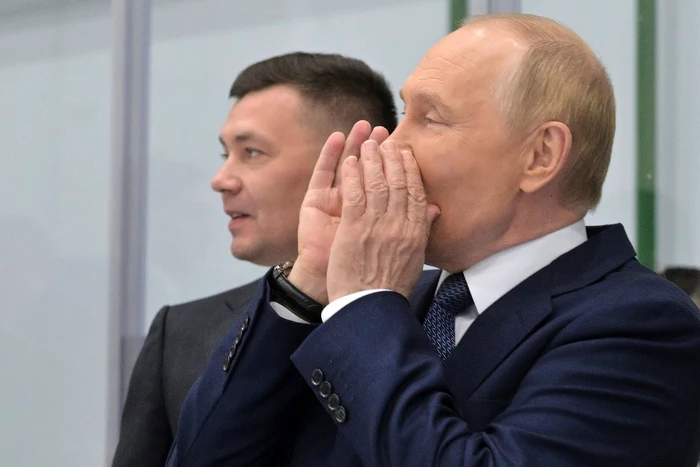
Putin has prepared traps over traps to American and European negotiators. Profimedia photo
The West is about to repeat an error it has made and not once in history. It happened in 1994, when the memorandum in Budapest was signed, but also 20 years later, in Minsk. Each time, Russia has managed to deceive Westerners and Ukrainians, based on extremely skilled negotiators and showing a total lack of scruples.
In 1994, just three years after Kiev had proclaimed his independence, Moscow people managed to convince Ukrainians to give up the nuclear weapons inherited from the former Soviet Union. However, the competition and the United States and the United Kingdom, who, eager to escape any headache with Kiev's nuclear weapons, have given a CEC in Moscow, accepting that Ukraine will remain a satellite in the Russian sphere. Thus, 31 years ago, he signed, in Budapest, the memorandum, after which Ukraine agreed to give up the nuclear weapons that would have guaranteed its independence and accepts the guarantees of Russia, the United States and the United Kingdom. As a signatory part of the agreement, Russia has made a firm commitment to respect the independence of Ukraine, and even intervene if another power had used the strength against its territorial integrity.
Only relations with Russia followed a negative evolution. This is how Russia arrived in 2014 to take over Crimea, it is right, without firing any firearms, and so the two states arrived around the war. A war postponed for almost a decade, during which time in the east of Ukraine there was a real civil war between the Russian separatists in this area, with the support of Russia and the Kiev authority.
And France and Germany failed
France and Germany intervened in the negotiations, and Ukraine and separatists supported by Russia agreed on a 12-point plan, known as Minsk 1. The understanding aimed at ceasing the fire along the contact lines, but the agreements did not last long, because both camps resorted to violence. The peace agreement Minsk 2 followed, also signed in the capital of Belarus. Signed in 2015 between Russia, Ukraine, France and Germany, the agreement seemed to lead to some results, but as its provisions were implemented only partially, the inevitable occurred. Shortly, Russia and Ukraine violated the provisions. It was the second time the West was seen pulled on the Russians, without reacting.
Seven years later, the Russian Federation invaded its neighbor, and the war continues from 2022 and until now. Arch over time, the two belligerents are ready to negotiate again, but Westerners and Ukrainians seem to have learned the lessons of the past.
Politicologist Grigore Pop Elecheș, a professor at the well-known Princeton University, believes that history could be repeated. The West seems in many moments tempted to negotiate with Russia in the terms of Vladimir Putin, ready to sacrifice Ukraine. Even though Europeans still support Volodimir Zelenski, the Trump administration is much less inclined to help Kiev.
The perfect gift for the little
Instead, Donald Trump is more interested in an agreement with the Russian Federation that will allow the resumption of Russian-American relations and to provide important gains to America. Transactional spirit, the businessman became president in Washington juggles and agreed to provide some guarantees of Ukraine, but only as Kiev will purchase $ 100 billion weapons from the US.
“So far, the negotiations have not led to anything. On the contrary. Ukraine is increasingly pressed to give up its own territories, already occupied by the Russians, but to give up some of the ones it controls. It is a big mistake from the Trump administration to push Ukraine to such compromises. And Europeans must remain and will remain to support this country. Tired and decrease the interest and support given to Ukraine. says the Romanian teacher.
The stretched stretched traps of the Russians
In the opinion of Grigore Pop Elecheș, the Russians do not even have the interest to make peace, given that they are on the offensive and gradually gain land.
“Objective speaking, the Russians have no interest in making a reasonable peace. This is because Trump seems influential, and after the Alaska meeting it seems to have changed their opinion and supports Vladimir Putin that there is no need for armistice and can be directly to peace. Then the Europeans are divided. Trump.
believes the expert.
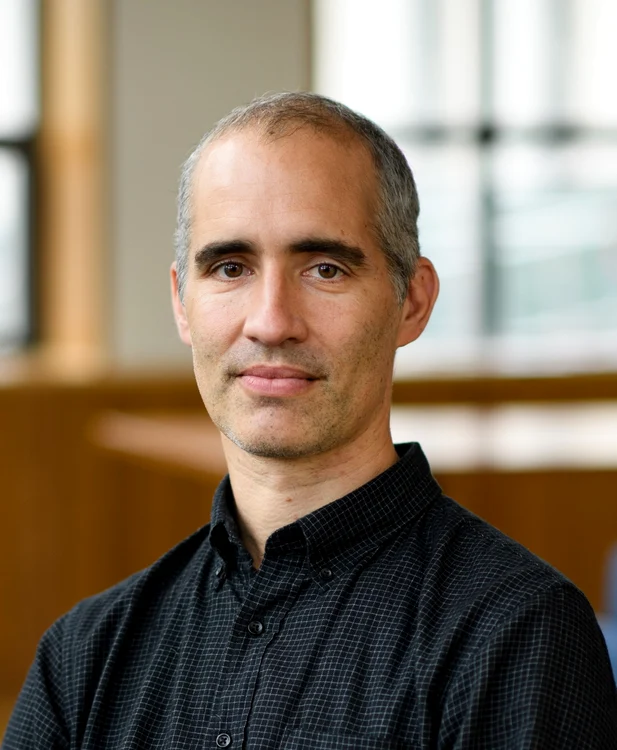
Grigore Pop Elecheș. Photo: personal archive
And because the Russians have very well trained negotiators, they managed, at least partially, to induce the impression that the Ukrainian side is the one who does not want peace. On the other hand, the Russians want to induce the opinion that ordinary Ukrainians want to give up the territories only to make peace, to put pressure on the Ukrainian authorities and the Allies.
“In reality, the Ukrainians are indeed more willing to make peace now than they were a year or two ago. Almost the whole population now supports negotiations with Russia and demands peace. What is not true is that the Ukrainian people would be willing to give up all the territories required by the Russians to make peace. The Russian propaganda tries to accredit the idea that President Volodimir Zelenski goes over the will of the people and does not want to make any compromise. Russians“Adds Grigore Pop Elecheș.
Russians are the masters of manipulation and misinformation
Another trap stretched with the ruins of Russians is the propagation of another false idea, namely that Moscow is ready to exchange territories with Ukraine.
“Maybe the Russians would be willing to leave some crumbs to the Ukrainians, but for that they demand the important territories that they did not conquer, nor are it sure they could. It is as if someone were stealing 1,000 lei, then they would invite and pay for coffee and say it is the most fair exchange.”, Is the comparison of the Romanian teacher.
In addition, the Russian Federation has shown that it is a master of national treaties. Starting from the hypothesis that the Russian Federation would persuade Ukraine to give up their territories and sign peace, it is not certain that Moscow would not send their troops to attack their neighbor from the west.
“Russia, that it was called the Tsarist Empire, the Soviet Union, the community of independent states or the Russian Federation, has not shown in history that it respects the treaties it signs. It always finds a portion, a reason to violate them, so no understanding with them is sure. We find out! ”explains Grigore Pop Elecheș another “trap” that Russia and her diplomats have always known to stretch to the opponents.
Why are we still away from peace
It is no less true, says the expert, that at the moment any agreement between the Russian Federation and Ukraine seems distant. And not the fault of Ukraine or its allies.
“It is difficult for Ukraine to give up its territories that have been practically stolen. That Crimea is, that his Donbass or another Ukrainian land, Kiev cannot be so easy for him. And therefore a peace treaty somewhere seems impossible to me in these conditions. And the idea that yes, they will not change, Guarantees that a new government and a new Russian president would rush to make these territories return. says Grigore Pop Elecheș.
Transnistria model, replicated by Russians in Ukraine
A more plausible scenario would be for Ukraine to accept at one point an armistice, which he already requests, but without giving up the territories occupied by the Russians. In this way, when power would change in Russia, discussions would restart from another base.
“In principle it could be an armistice, practically a conflict from this frozen as it is in Transnistria and as it is in Georgia with Abhazia and South Ossetia. According to the same model, as neither the Government of Chisinau nor the one from Tbilisi do not recognize the independence of those regions or their belonging to the Russian Federation. Support of of course by the Russians“Adds the expert.
There is also the risk that over the years any attempt by the Ukrainians to regain the territories by negotiations will be doomed to failure, even if a more liberal government would come to the lead, given that, warns Grigore Pop Elecheș, the population of Ukrainian origin, which was a minority in the region, will continue to refuge in the country, Russian colonists.
Who is Grigore Pop Elecheș
Grigore Pop-Eleches is a professor of political science and international relations Princeton University. He has been a professor at Princeton since 2003, after getting his doctorate in political science at another top American university, UC Berkeley. He is the codorer of the Princeton workshop on post -communist policy.
Its main current research interests are comparative political behavior, with an emphasis on authoritarian and post-authoritarian regimes (mostly in Eastern Europe and the former Soviet Union). Professor Pop-Elecheș also worked on the comparative and international political economy of Eastern Europe and Latin America, as well as democratic democratization and regress, focusing on the role of electoral behavior and political parties.
His first book, entitled “From the economic crisis to the reform: the IMF programs in Latin America and Eastern Europe,” was published by Princeton University Press in February 2009. His second book, “The shadow of communism: Historical heritage and contemporary political attitudes” (collaboration with Joshua A. Tucker), was published in 2017 by Princeton University Press. His works have also appeared in a variety of academic magazines, including The American Journal of Political Science, The Journal of Politics, World Politics, Comparisan Political Studies, Comparative Politics, Quartly Journal of Political Science, International Studies Quarterly, Journal of Democracy, Studies in Comparisan International Development and International Development East European Politics and Societies.


