The failure of negotiations between the US and Russia in Alaska illustrates a generalized misunderstanding of the factors that determine the foreign policy of Moscow, writes the Swedish professor of political science Andreas Umbland, in a text published today by Hotnews.
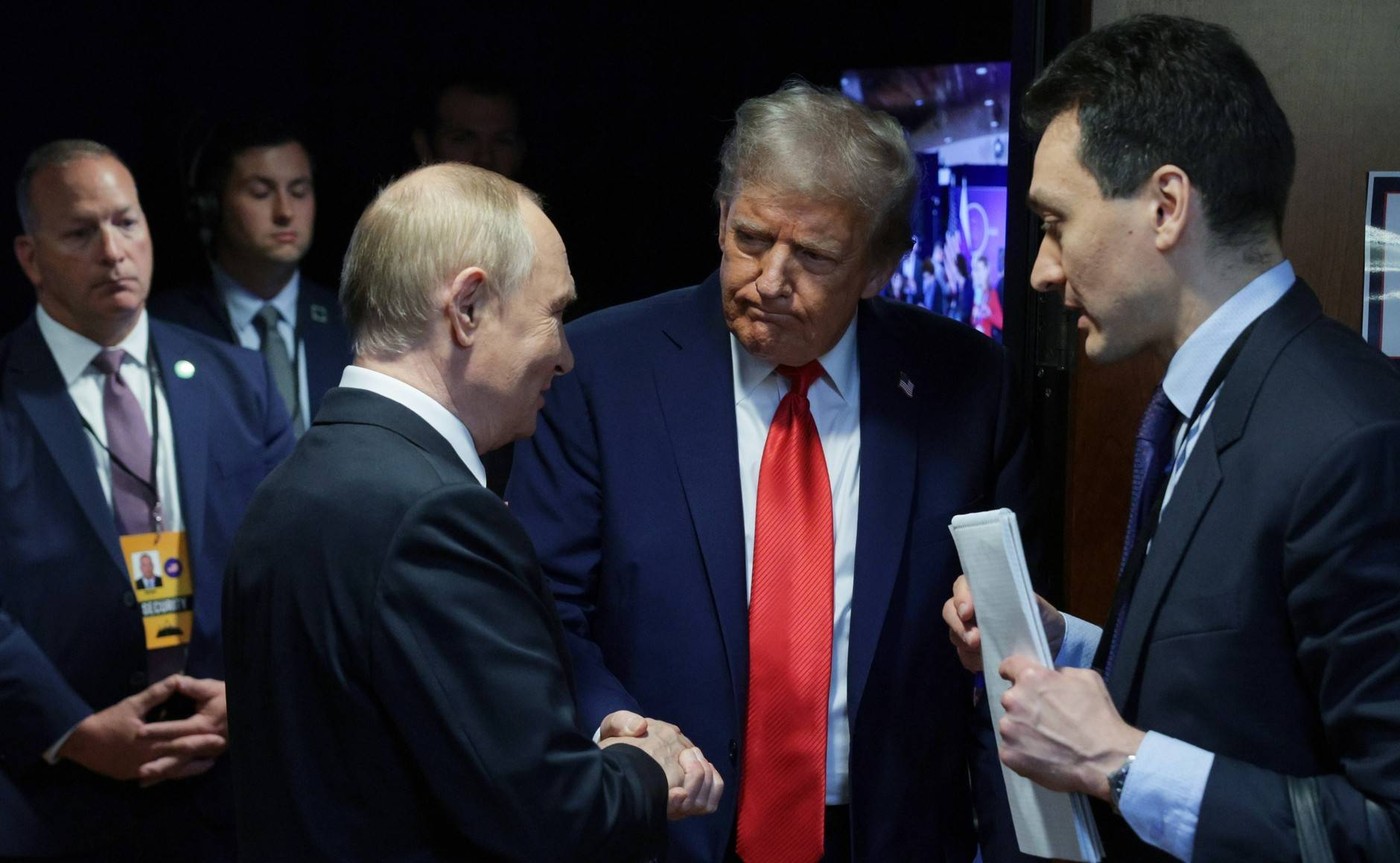
The recent high level meeting between Donald Trump and Vladimir Putin from Anchorage was as embarrassing as their last official meeting in Helsinki, 2018. If then the common press conference ended with a disaster, this problem started from the arrival of the two presidents: Red Carpet for Putin, Applauding the Kremlin leader, a common ride in the American presidential limousine and so on.
Russia is trying to destroy post-Soviet states, bombing civil buildings to Ukraine, deports thousands of children and tortures widespread war prisoners. However, the US courts Putin as a great state man. The fact that a propagator of the war, a president responsible for mass crimes and for violating human rights as Putin is received in such a manner by US president is a scandal in world politics and shocked Ukrainians. It is a behavior that betrays the fundamental values that the West defends.
A possible internal problem for Trump
The final political repercussions of the scandalous summit remain to be seen. The bizarre images from Anchorage could become an internal problem for Trump. By his demonstrative proximity to Putin, the US president also turned into a Kremlin host. It could become a serious problem for Trump if Putin does not give now, at least partially, back on Ukraine. The tension between Trump's praises to his negotiator skills and the dark reality of the war continued to exist before the Alaska summit. If journalists, politicians and other American opinion leaders will become more and more dissatisfied with Trump's behavior, this could be to Ukraine's advantage.
The US president seems to hope that by his demonstrative act of flating Putin he will conquer Putin's favors. Behind this error of appreciation is not only the general naivety of Trump and his entourage in terms of world affairs. More important seems to be a fundamental misunderstanding of the reasons for the White House.
The narrative according to which the West is guilty for Moscow's aggressiveness due to NATO expansion to the east or the lack of respect of the West towards Russia is widespread not only in Europe, but also in the US. Trump and his entourage apparently believe that, behaving friendly to Putin, I can neutralize the public declared by Russia for attacking Ukraine. If there is no hostility between the US and Russia, why continue the war?
Origins in the Russian imperial tradition
However, Russia's aggression is not a reaction to the behavior of the West, but it has historical, ideological, cultural and political causes. Moscow's military expansion has roots in the Russian imperial traditions, in the mechanisms of internal political legitimacy, in geostrategic ambitions and in the irredentist claims on the former territories of the Tsarist Empire and the Soviet Union. Regardless of the actions and reactions of the West, Putin wants to expand and strengthen his power and that of Russia. He and most of today's Russians want to bring Ukraine back under the control of Moscow – preferably without the use of weapons and through negotiations. If necessary, however, Russia's leadership and population are ready to resort to brutal military and mass terror, as is the week after week.
For Trump, on the other hand, the Ukraine war is just an annoying problem that he wants to escape. During the election campaign he blocked himself in a deadlock when he pompously announced that he would end this war in 24 hours. Here, after a few good months he is in the same situation as before, without tangible results.
Meanwhile, the internal pressure on him increases. Despite the intense pro-Russian and anti-Ukrainian propaganda from the US ultra-conservative media, Ukraine's popularity remains high among ordinary Americans. Surveys even show that support for Ukraine and American weapons to Kiev has recently increased among Republican voters. This means that the future direction of US policy towards Russia is not nailed and that a return to America's active help is possible.
During the period intergenum Until a possible normalization in Washington, Europe's position will be decisive. The roles were reversed: Europe was the one who used to press for concessions to Moscow; Now, the United States, once pro-Ukrainian, are more inclined to ally with Russia. Military support must come as first of all from Europe. If Europeans would change the course, not only the Ukrainians would have to lose.
If Ukraine falls, there is a risk of returning to the global chaos that ruled before 1945
In Ukraine, the fundamental principles of international relations of 1945 are now at stake. Through the open terrorist war that Moscow from 2022 leads not only to stand up on human rights. Since 2014, through the annexations it has made so far in Ukraine, Russia undermines the foundations of norm-based order-territorial integrity and national sovereignty of states. As a Soviet republic, Ukraine was a UN co -founder in 1945. Since independence in 1991, it has ratified the Treaty of Nuclear Polishment and became a participant in the OSCE and a member of the Council of Europe. If this country is now dismantled and plundered by its independence, something similar could happen to other UN Member States. If Ukraine falls, there is a risk of returning to the global chaos that ruled before 1945.
The means to prevent this are well known: sanctions against Russia and military and financial support for Ukraine. However, after more than 11 years of war, these instruments are used inconsistently. For example, about $ 300 billion from Russian state funds remain frozen in Europe, but only interest in these funds were used to support Ukraine. In Russia's ghost fleet there are still dozens of oils that are not sanctioned or only partially sanctioned. There are also numerous other gaps that allow sanctions, and rockets, drones and other Russian military equipment contain much of Western technology.
The best weapons of the West are unused
Above all, the quantity and quality of Western military support remain insufficient. The weapons that arrive in Ukraine are too few and too old. The most important task of a large part of the Western and, in particular, European weapons industry is to allow the protection of NATO and EU states and their allies against Russia. And, starting in 2022, produced equipment could be used in Ukraine to weaken the enemy potential. However, the best weapons of the West are unused in bases, warehouses and hangars, instead of fulfilling their goal in Donbas, around Kharkov or Crimea.
Only the external and internal pressure will force Moscow to engage in serious negotiations. Neither Trump's friendship, Europe's diplomatic efforts, nor third -country mediation attempts will be successful. Since 2014, the Kremlin participates with pleasure in peace discussions at different levels. But these are mostly only facade negotiations to gain time and sow confusion and discord among its opponents. Sometimes, as is the case in communication with the US, negotiations offer the opportunity to achieve advantages that should otherwise be obtained by military means. But none of this will diminish the appetite of Russia for expansion.
Text originally appeared on contributors.