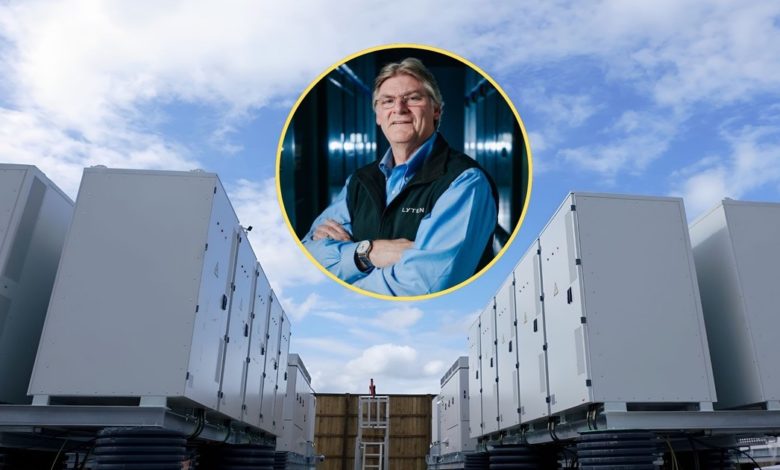
Szymon Majewski, Business Insider Polska: Why did Lteten decide to take over the two ESS energy storage system in Gdańsk, who belonged to Northvolta in Gdańsk? What decided about its attractiveness?
Dan Cook, CEO of start-up Ltenten: The takeover of the plant in Gdańsk will allow Lteten to focus on the market where we record rapid development. Last year, we observed a clear increase in the demand for battery energy storage based on lithium-sulfur technologies. We offer an alternative solution using cheaper materials that allow you to limit the imported scale of raw materials from China. This is important for both European and American energy independence.
We were looking for plants that in response to more and more demand will allow us to clearly speed up production. The two ESS factory in Gdańsk previously belonging to Northvolta is a world -class facility equipped with the latest automation technologies. It fits perfectly to the development of our strategy in the area of battery energy storage systems.
The Gdańsk factory is the largest production plant in the energy storage industry in Europe. In addition to the most modern solutions in the field of automation, it is distinguished by a very competent engineering and performance team. The location in Gdańsk allows you to easily supply the market in Poland, but also export energy storage systems to consumers in Europe and around the world. This is of great importance to us – customers interested in Lteten products are already in over 18 countries. The combination of these factors made Gdańsk very attractive to us.
Was the production resumed immediately after the takeover of the plant from Northvolt?
We have announced a formal purchase plan for the factory – a transaction in which the Polish branch of the International Fieldfisher office advises, is to ultimately end in the third quarter of this year. We have not yet taken over the full ownership of the object, but we are actively working on restarting plans, which will occur immediately after the sales process will be closed. In the fourth quarter we want to start delivering energy storage systems to customers.
What will be the main areas of applications produced in Gdańsk lithium-sulfur batteries? Apart from drones or space technologies, will they also be able to directly serve the energy system, integrated with renewable sources and network?
Currently, lithium-sulfur batteries that we produce in the USA are sold to the drone and defense market. In the coming months, batteries will also be introduced to an international space station, which will enable them to commercialize in this sector. The lightness of lithium-sulfur batteries also raises the interest of industries such as transport (including heavy transport) micromobility or automotive.
We start urgent work on integrating lithium-sulfur batteries with energy storage systems that will be produced in Gdańsk. Starting the factory again, we will start with the original NorthVolt project, which was based on lithium-ion batteries, but over time we will supplement it with our own technologies. We are already recording customers' interest in energy storage systems using lithium-ion batteries to integrate renewable sources with the network and improve its stability, but also for data centers and the AI industry, emergency power supply for industrial plants or telecommunications infrastructure power supply.
How do lithium-sulfur batteries differ from other energy storage technologies?
Lithium-sulfur batteries can be considered primarily an alternative to lithium-ion batteries. Today, two main branches are dominating the market-nickel batteries and lithium-spray-phosphate accumulators. Nickel batteries are characterized by the highest energy density among existing solutions. This is due to the use of many intensively extracted critical raw materials, such as nickel, manganese, cobalt and graphite. This, however, makes them expensive, and their supply chains remain largely dependent on China, which have almost gained a monopoly on the critical raw materials market.
On the other hand, lithium-raw-phosphate batteries will use cheaper raw materials-the costs of their production are lower, but at the same time we get a lower energy density and storage of its smaller amounts per kilogram of mass. Almost all batteries of this type are today produced in China, which control most intellectual property rights for technology and related supply chains.
Lithium-sulfur batteries offer an alternative. First of all, sulfur is a raw material with much higher density than those used in lithium-ion batteries; lithium-sulfur batteries are about 50 percent lighter. Lithium-sulfur batteries also use locally, raw materials that are created as waste from the oil, gas, mining or chemical industry. Thanks to this, they do not contain nickel, manganese, cobalt or graphite. As a result, we get a simplified and cheaper supply chain free from geopolitical uncertainty. Lithium-sulfur batteries are also distinguished by a lower risk of overheating, which increases their safety. The combination of performance, prices, locality of supply and safety chains affects the growing demand from subsequent sectors.
You mentioned earlier about a qualified team at the Gdańsk factory. How do you assess the preparation and skills of Polish staff?
Polish frames were one of the key factors that led Lteten to buy a factory in Gdańsk. It is not without reason that Northvolt has built his plant in your country – there is a unique combination of experience and high executive qualifications with large traditions of engineering talents. The factory in Gdańsk was therefore and will continue to act as a world-class production plant equipped with the latest technologies in the field of robotics as well as the research and development center. We will continue to work on innovation, developing more products for energy storage.
More and more countries around the world are switching to renewable energy sources, and battery storage systems are therefore crucial. It is the warehouses that will create the spine of the future global network infrastructure and data centers for the AI industry. We want Gdańsk to become a hub of innovation and production of energy warehouses with export throughout Europe, strengthening the energetic independence of the entire continent. Without highly qualified employees from Poland, however, this vision will not come true.
However, Lteten is an investor from the USA. Will the tension between the United States and the European Union around the customs policy not hindered an investment similar to that in Gdańsk?
America and Europe have remained allies and trading partners for many decades and we do not anticipate that this would change. Both sides want to increase their production capacity in industry, restoring its key branches, which in recent decades have been transferred mainly to Asian states. Both the US and the EU want to reduce their dependence on the raw materials from China.
We believe that close cooperation is the best way to achieve these goals, and policies will be accepted on both continents that will help to realize them. During the whole process of taking over the two ESS factory in Gdańsk, we remain in close contact with the US administration, the Polish government and the European Union, and we can safely say that all parties have hope in our plan.
What role can the energy storage sector play in the development of green industry, which can strengthen Polish and European competitiveness?
The energy storage sector will not only play an important role in the development of green industry, but also is one of the most important tools for strengthening EU security and energy independence. Even the biggest players from the oil and gas industry, such as Exxonmobil, predict a rapid increase in the demand for electricity over the next three decades, which in about 85 percent. It will be satisfied by renewable sources and warehouses. Cheap energy from the sun and wind is already available, however, the power tools of the transformation remain, however, the power network, and especially the storage of energy when renewable energy does not work. Battery warehouses are just responding to these challenges.
There are no scenarios in which the demand for electricity would fall. Along with the development of artificial intelligence and data centers, an increase in demand faster than in recent decades is practically certain. The network is not ready for such high consumption, which results in its lower reliability and higher costs. Installation of warehouses, especially on the outskirts of the system close to energy consumption, is the key to costly effective infrastructure scaling and preparation for a huge increase in demand. We are deeply convinced that we are still at a very early stage of the development of energy storage systems, and the plant in Gdańsk will operate for the next decades of progressive electrification.