Pressure oil market. How Russia uses the Energy Levisher and FSB controls to remove competition

The tense relations between Moscow and its neighbors in the Caspian Sea region, with a new dimension, with the emergence of incidents and measures that, as a whole, suggest a concerted strategy of economic and geopolitical pressure, writes, in Zerkalo Nedeli, Mihailo Honciar, the president of the Center for Global Studies “Strategy XXI”.
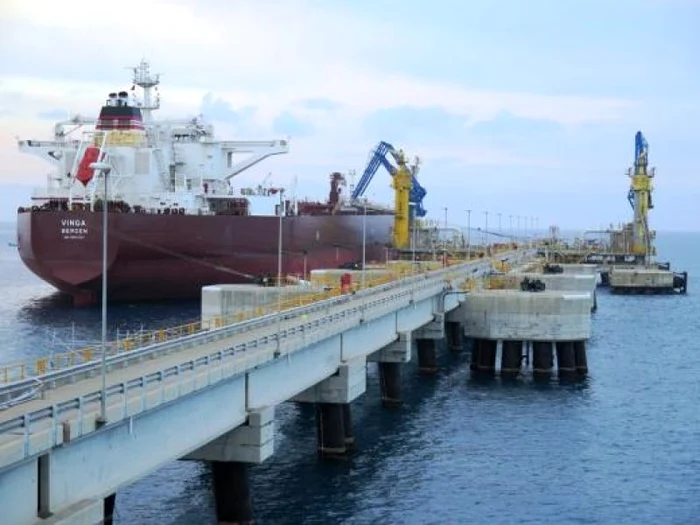
Ceyhan/ photo oil terminal: Water
On July 22, in the Turkish oil terminal Ceyhan, the final point of the Baku -Tubilisi – Ceyhan (BTC), authorities have detected the presence of organic -colored compounds in the delivered oil – a contamination that can affect the refining processes. Usually, such an incident would have remained a subject of strictly technical interest. However, against the backdrop of damaged relations between Russia and Azerbaijan, the moment and nature of the incident raises question marks.
Almost simultaneously, in the Russian port Novorossiisk, the controls on foreign ships intensified, based on a new presidential decree signed by Vladimir Putin on July 21, 2025. According to him, all the vessels entering the Russian ports outside the country must obtain a prior approval from the Federal Security Service (FSB), regardless of the type of trading.
The new maritime rules
Decree no. 502 changes the entry regime in the maritime ports of the Russian Federation, strengthening the FSB control over international maritime traffic. The new regulations provide for compulsory notifications at least 24 hours before entering the port and maintaining continuous radio contact during port. These measures come in the context of a series of non -working sabotages on oils carrying Russian oil.
Officially, the new rules are justified by the need to increase maritime security. Unofficially, however, they seem to serve a larger objective: limiting the export capacity of competing states to the global energy market.
Kremlin and pressure on Kazakhstan
Kazakhstan is deeply dependent on the port of Novorossiisk for the export of its key resources – oil, coal, cereals and fertilizers. Even though Astana authorities are trying to diversify routes through the Caspian Sea and Turkey, Russia's controlled infrastructure remains vital. Thus, the measures adopted by Moscow increase the pressure on the Kazahe economy, already tense by the cold relations with the Kremlin.
Kazakh oil export represents about 69 million tonnes annually, with a total production of 90 million. Western companies, such as Chevron, Exxonmobil, Shell and Totalenergies, hold significant positions in the Kazakh energy sector. It is precisely these connections with foreign investors increase the vulnerability of the state in the face of Russian measures.
A geopolitical game with many stakes
-Moscow's strategy seems to target several goals simultaneously:
-reducing the volume of non-Russian oil on the market, to stimulate prices;
-the construction of the relations between Kazakhstan and the Western investors, in the context of respecting the OPEC+quotas;
-Determining American companies to lobby besides the Trump administration to reduce military support granted to Ukraine;
-leaving the front of Western sanctions, especially in the energy field.
In parallel, Russia tries to provide priority for the oil of American companies in its ports, conditioning the access of a more favorable attitude towards the interests of the Kremlin.
The Azeri Light case and the suspicions regarding sabotage
The contaminated oil discovered in Ceyhan mainly comes from the Azeri -Cirag -Guneshli oil fields, which are in a decline phase, which requires methods of intensifying extraction – some of them involving organic -colored compounds. However, experts do not exclude deliberate external contamination.
The BTC also transports small amounts of oil from Kazakhstan, delivered through the Aktau terminal and transferred to the pipe after crossing the caspian sea. This increases the suspicions regarding the exact origin of contamination – and in the context of regional tensions, the suspicions are heading to Moscow.
Analysts also note the presence of employees of security companies related to Russian private military companies in the structures that offer protection for the Kazakhstan energy infrastructure. A possible infiltration of them increases the uncertainties regarding the safety of the alternative energy routes.
Controlled diversion or political warning?
Russia has the technical ability to cause incidents in the energy infrastructure of its neighbors, under the pretext of technical accidents. But the consequences of such an act – including diplomatic tensions with Turkey, the EU and the US – would be major. Therefore, more subtle methods are preferred: temporary interruptions, unforeseen controls, ambiguous incidents – actions that transmit clear signals, but cannot be easily attributed.
The message seems clear: the countries that choose to bypass Russia in the energy transit are likely to face costly obstacles.
A blackmail blackmail
These actions are registered in a broader practice of “uncertainty control” used by the Kremlin in relation to Western energy companies. Recent examples include partial suspension of activity in the port of Novorossiisk shortly after critical statements of former President Donald Trump. Subsequently, the corporate lobby-especially from Chevron and Exxonmobil-contributed to the attenuation of anti-Russian rhetoric in Washington.
On the other hand, Russia offers a “quo status” for American companies involved in Kazakhstan – with a condition: reducing the support given to Ukraine.
Russia's recent actions reflect a complex strategy, in which energy instruments, security regulations and corporate relations are combined to model the geopolitical developments in the region. Although there is no official connection between Azer oil contamination and new FSB measures, the general context suggests a recognizable model of indirect pressure.
In the face of this dynamics, the reaction of the European Union and the United States will be essential. The consolidation of alternative energy routes, the application of firmer sanctions and the support of Ukraine can be viable responses. However, for the countries at the intersection of these influences, such as Kazakhstan and Azerbaijan, the maneuver margin remains dangerously narrow.