“Transalpine” roads to nowhere, desert tracks and abandoned cable car. How to waste public funds

The austerity measures announced by the Government of Romania are increasingly complained about the local administrations, directly affected by their implementation. However, a lot of public investments have aroused controversy on their usefulness, efficiency and costs.
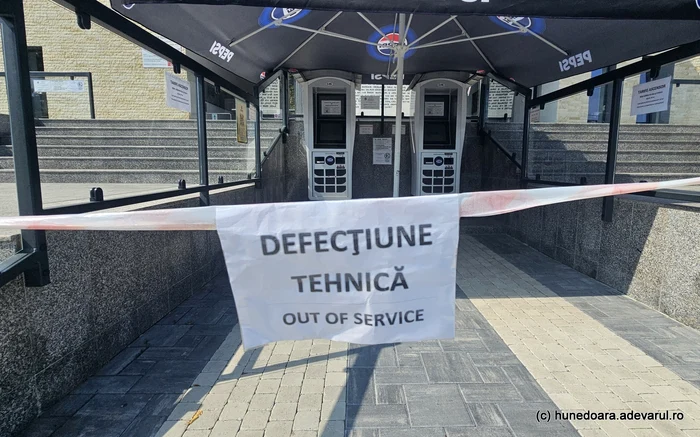
Deva cable car was stopped in 2025. Photo: Daniel Guță. TRUTH
Authorities have attracted government and European funds or found money in local budgets to allocate investments viewed with many Romanians.
In some cases, the funds were used for the construction of roads that stop in the wild and on which cars are a rarity, for bicycle runways, in isolated and inaccessible areas, for chairlifts that have not been used in a row, or for tourist information centers in villages where tourists only happen.
The controversies related to the public funds allocated for the organization of festivals such as “Commune Days” and “City Days” or the important funds invested in non -performing sports clubs were not lacking.
The peaks of the mountain peak, in villages inhabited by the elderly
The communes of Bătrâna, Cerbăl and Bunila (Hunedoara county), located in the forest of the Poiana Ruscă Mountains, count less than 700 inhabitants, most of the elderly. The schools here have been abolished for many years, and some villages, inhabited by several families, are on the verge of extinction. The paved roads are also a rarity, and the electricity and water network has not included all the settlements of the communes.
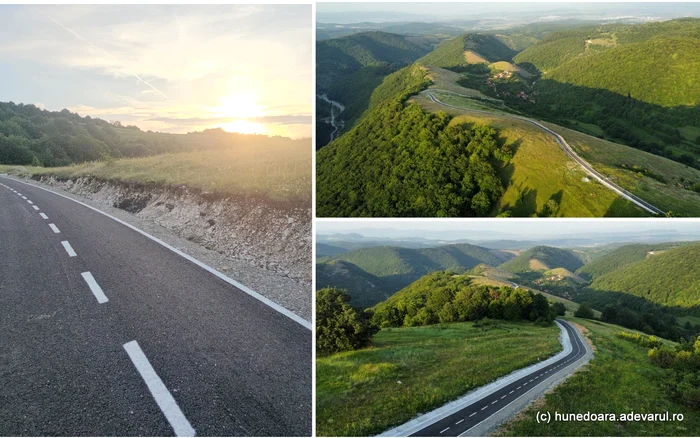
Cerbăl bicycle lane. Photo: Daniel Guță. TRUTH
However, the authorities have succeeded, in recent years, to attract funds for the construction of bicycle tracks, through the National Plan for Redress and Resilitis (PNRR).
In Cerbăl commune, a 2.5-kilometer bicycle track connects the village of Ulm, with 15-20 inhabitants, to the village of Cerbăl, with 50-60 inhabitants. The route of the runway follows a steep slope that slips through the hills, linking the two isolated settlements of the forests.
“For us it is not very useful, because we do not have bicycles. But if we had, we would not dare to climb the slope or to descend here by bicycle.”, says an elder from Ulm village.
The villages Cerbăl and Ulm are 15-20 kilometers from the Old Center of Hunedoara, so the investment in such a runway could have utility for the Hunedoara or tourists who want to start by bicycle, on the Zlaști Valley, towards the Forest County.
Some villagers from Cerbăl say that the track is used as a road and have not yet seen cyclists on it.
Two other bicycle tracks stir up more controversies. One is built on the outskirts of Vadu Dobrii (Bunila commune), inhabited by several families. The settlement, located at over 1,000 meters altitude, is about 60 kilometers from Hunedoara, at the end of some forest roads, unpaved, which in winter becomes impractical with cars. At its edge, the roads are lost in the vast forests in the Poiana Ruscă Mountains.
However, the authorities in Bunila found the place for the construction of a bicycle track of about 2.5 kilometers, to the amazement of the few locals of the village (video).
“The roads are often broken by wood machinery, in winter we are almost isolated because of this, but we will have bicycle track, in a place where you meet bears than tourists”, says a local.
Bătrâna commune, with less than 80 inhabitants, about 80 kilometers from Deva, also offers a paradox.
His hamlets, the red face, stone and Răchițaua, inhabited by several families, have no current and water, but on the edge of the commune will be built a 2.5 -kilometer bicycle lane, with PNRR funds. The last 25-30 kilometers of the road to olda are forestry. The future track on the edge of the village is not very useful to the locals, some of them say.
“I arrived again by the smell of the world. In the 2000s, they fired optical fiber for the Internet, although in the old woman's hamlets there was no electricity. He did not use anything then,” He remembers a local in the red front.
For the local authorities of the three communes, the PNRR projects represented an opportunity to attract European funds in the commune, which they could not access for the construction of roads.
The roads that stop in the wild
Not only the bicycle streams built in recent years in isolated places have become claimed by Romanians. Some new roads, for which local administrations received money, also aroused controversy.
In Hunedoara, the Hunedoara County Council submitted, in 2021, financing applications in the National Investment Program “Anghel Saligny” for the rehabilitation of over 170 kilometers of county roads. Some road sectors are considered essential by the authorities, and although the contracts have been signed, the projects risk being blocked.
“The suspension or freezing of the investment projects carried out in Hunedoara County through the National Investment Program” Anghel Saligny ” – which aims at water supply, sewerage, road infrastructure, expanding gas networks – represents a harsh blow to local communities. The consequences are dramatic: over 150 water, channel and road projects, in various stages of implementation, worth over 1.1 billion lei, risk being abandoned, and another 20 projects on the extension of gas networks, worth 340 million lei, can be lost permanently”, Transmits the Hunedoara County Council.
According to the representatives of the institution, these projects represent commitments, signed contracts, sites started.
“By cutting these financing, you are buried rural Romania in mud, in resignation, in isolation. We return at least 20 years ago. Entrepreneurs who have already started these works risk to go bankrupt, which will generate extensive social problemsLe ”, shows the Hunedoara County Council.
Ten million euros for the road in the forest
However, some of the investments proposed and ongoing have attracted the wonder of the locals. Such a road sector, modernized through the “Anghel Saligny” program, is the new road from Valea de Pești, located in the site from the spring of 2024.
The road of over five kilometers, in which 48 million lei are invested, climbs on the right bank of the Valea de Pisi accumulation (video), located ten kilometers from the city of Uricani, and stops at the limit of Hunedoara and Gorj counties, in the middle of a forest.
From his end, a forest road continues in Gorj County, towards the keys of Sohodol. Some locals looked at him as a future travel route between the two counties, provided that the forest road in Gorj is also modernized.
However, other locals believe that the road, being in an isolated mountain area, will remain deserted. In similar situations there are other new roads. Such a road, built with funds from the county budget Hunedoara, connects over the hills Curechiu and Almașu Munte. The investment has been up to over 32 million lei, but the new road is rarely used.
Among the new roads that stop in the wild is the road in Vâlcan Pas, with the end on a ridge, at the limit of Hunedoara and Gorj counties. In the same situation is the road from the Cernei Valley, which stops in the forest, at the edge of Lunca Cernii de Jos, at the limit with Caraș-Severin county.
Equally spectacular, “Transluncani” (video), the mountain road from the limit of Timiș and Caraș-Severin counties, is also stopped in the middle of a forest, at the intersection with a forest road inaccessible to cars.
Gondole put on the hubs
Investments in the tourist infrastructure have been regarded as a solution to develop several localities, but some of them have proven expensive and inefficient.
In Iasi, the chairlift on Lake Ciric was inaugurated in 2013, being included in an investment of 1.5 million euros, part of a larger project funded with European leisure area arrangement. The length of its installations of only 360 meters, offered the travelers, the occasion of a short walk in the forest on the lake, but few were interested in it. Without customers and with technical problems, the chairlift has not worked.
In Deva, another expensive investment seems to have a similar fate. The new cabin that climbs into Deva Fortress was inaugurated in the spring of 2024 (video), after an investment of four million euros, financed from the local budget of Deva.
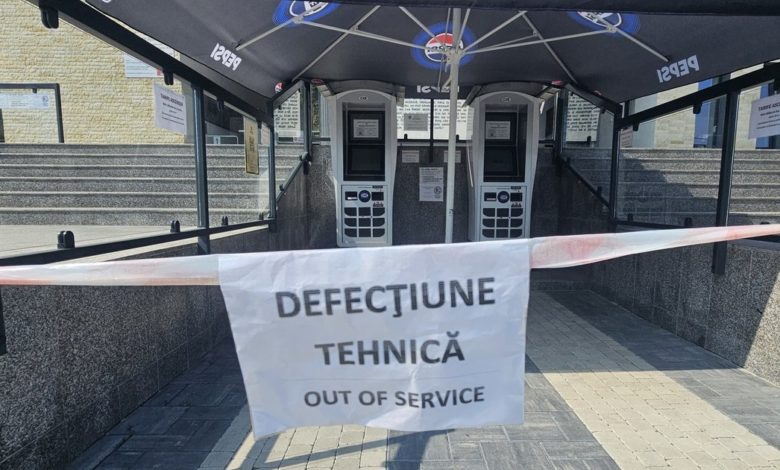
It was installed instead of the old cable car, but it worked only a few months, with numerous interruptions. Since the beginning of 2025, it is stopped, waiting for the authorization and certification of the operation by the State Inspectorate for the Control of Boilers, Pressures and Lifting Installations (ISCIR).
The builders of the installation were called to Deva to verify and remedy the deficiencies, so that they meet the safety norms provided by law and can be put into operation, said Mayor Lucian Rus.
During this time, many tourists who reach the foot of the fortress of Deva give up visiting the historical monument.