The city of Romania bypassed by foreigners in the 1990s: “On the European tourist maps, next to him is the dead head”

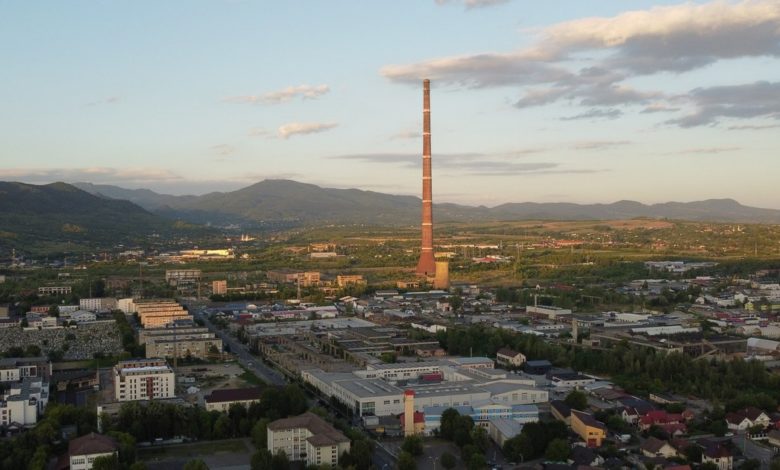
Baia Mare has kept two emblematic towers: one – almost six centuries old – adorns its historical center, reminding its medieval importance. The second, inaugurated three decades ago, remained a symbol of its industrial era, but also of historical pollution.
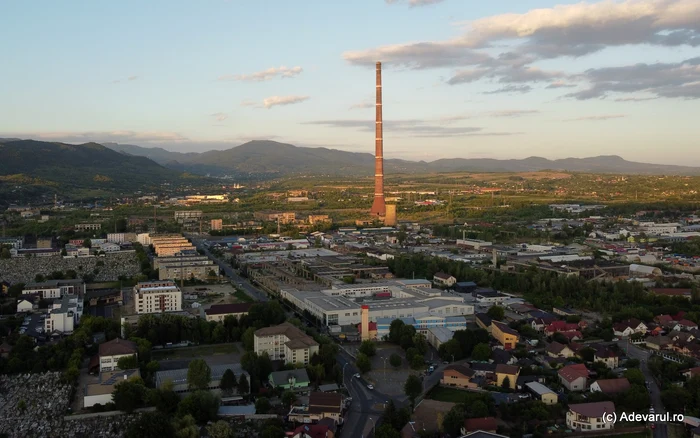
The chimney in Baia Mare. Photo: Daniel Guță. TRUTH
A basket of smoke over 350 meters watches over Baia Mare, the “capital” of Maramureș and one of the former large industrial cities of Romania. The tower was built in 1992 and inaugurated in 1995, even by the former President Ion Iliescu, being considered a solution of damage to the serious pollution problems of the area, kept silent in the years of communism, when the city was called the “Citadel”.
The “Capră City” hid big pollution problems
In the 1980s, the factories in Baia Mare were manufacturing copper, selenium, lead, gold, zinc and numerous chemicals, such as different sulfur and sulfuric acids, inorganic salts, discolorative lands, reactive and liquefied oxygen. They had over 10,000 employees and a history of over a century, Baia Mare being in the past an important mining center of Transylvania.
Immediately after 1990, the problem of pollution in Baia Mare became known throughout the world, and the locals demanded urgent measures to protect the city's population, with almost 150,000 inhabitants, and the localities in its surroundings. The Romplumb plant, on the outskirts of the city, and the Phoenix metallurgical combination, surrounded by its neighborhoods, were responsible for atmospheric pollution, but also soil and water.
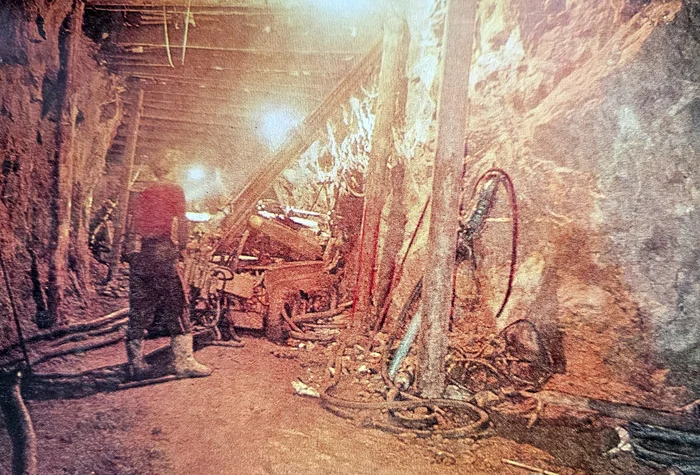
Mine in Maramureș in the 80s. Photos: Sandu Mendrea, Album Maramureș, Sport Publishing House – Tourism, 1
“Tourist city, wears the sweets of the Maramureş, to the charming lands of the Lăpușului Country, Baia Mare is bypassed as possible by foreign tourists. pollution. breathing ”, inform the newspaper Youth Liber, in 1991.
Chimney, industrial emblem of Baia Mare
In the early 1990s, the international press plays in gloomy descriptions the ecological disaster that affects the historical settlement of Maramures, Baia Mare being considered one of the most polluted cities in Europe.
“In the dense forests around the city of Baia Mare, 240 miles northwest of Bucharest, the toxic emissions of this metallurgical center have reduced the growth of plants to half. About one third of the approximately 30,000 forest acres were devastated. Some trees lost up to two thirds of their foliage,” the authors in the New York.
The journalists noted that even in the least affected areas, the acid rain covered the leaves with brown spots.
“The human cost is awful. For the 150,000 residents in Baia Mare, life expectancy is 50 years, almost 20 years under Romanian average. Children, according to a health study by UNESCO, have high lead concentrations in their bones and teeth. Chronic lung diseases are endemic. sulfur dioxide in the air, which lead to levels of 100 to 200 percent over the Romanian norms ”, The journalists of The New York Times showed.
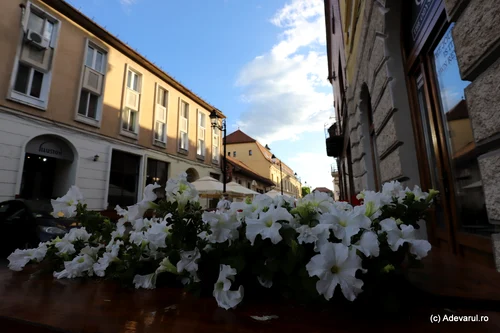
Image 1/13:
Baia Mare Photo Daniel Guță Adevărul (10) JPG
In 1992, the construction of the huge tower in Baia Mare began. The specialists of the handset then explained that, due to the depression, characterized by a great atmospheric calm, the degree of pollution in Baia Mare can only be reduced by the dispersion of the pollutants.
“From the 350 meters of the giant from Baia Mare, the pollution is seen otherwise. The construction, in only six months, of the gas dispersion basket, within the Phoenix SA commercial company, represents a world unique due to the design conception. For meters, and inside there is a structure in the form of wheels – a kind of “basket in the basket” – which ensures the protection against the corrosion of the “aggressive” gases and their evacuation at the tip of the basket at a speed of 35 m/s. The basket in Baia Mare has the possibility to withhold the noxes by condensation on the walls of the gas exhaust tube and the gas mixing chamber ”, In 1992, the representatives of the Phoenix Combined were informed.
The highest construction in Romania
The tower cost $ 11 million, was inaugurated in 1995, during a visit from the then president of Romania, Ion Iliescu, but it was inefficient in combating pollution that threatens the area around the municipality. American journalists have been drawing attention since 1992 to its operation.
“The chimney, over 300 feet high, planned in the communist age, before the 1989 Revolution, has the role of transporting the emissions from Phoenix to a higher height in the atmosphere. But this has only transformed a local problem into a regional one,” The New York Times reported journalists.
In the 2000s, the big factories in Baia Mare were closed, like most mines in the vicinity of the city. The industrial platform around the construction was gradually demolished, and large areas occupied in the past by its sections remained viran land. The mining and metallurgical center in the north of the country, with a history of almost two millennia, has left behind over 300 barren dumps and almost 20 mine ponds. Some have not been green, and in recent years, pollution issues have been frequently restored today.
Stefan tower, built by Ioan de Hunedoara
In the historical center of Baia Mare, another emblematic tower reminds the importance that the city had in the past. The old bell tower of the former church with the dedication “Saint Stephen” was built in the fifteenth century, being one of the foundations of the voivode Ioan de Hunedoara.
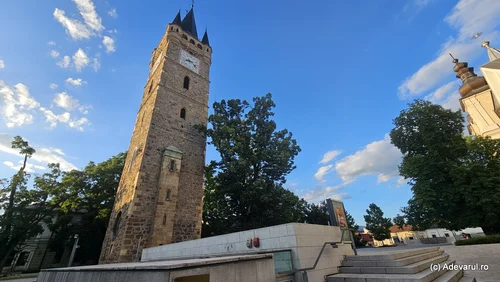
Image 1/20:
Baia Mare Photo Daniel Guță Adevărul (72) JPG
“The first documentary attestation of the Church” Saint Stephen “dates from 1347, but the construction is officially inaugurated only in 1387. The tower, built of massive stone, was erected at the initiative of Prince Ioan de Hunedoara, to mark the victory from Ialomița (1442) against the Ottoman. Corvin ”, It shows the description of the tower, published by the City Hall of Baia Mare.
In 1619 the upper part was restored, with the shape of a pyramid with a square base, with four turrets and is endowed with bells. Nine years later he was mounted a month.
The tower over 40 meters was a restaurant a few years ago and from its porch, it offers a panorama on the whole city.
Near the Stefan Tower is the Iancu de Hunedoara House (or the Elisabeta House, as the construction is known), erected in 1446, as part of a medieval castle raised by Ioan de Hunedoara for his wife, Elisabeta. The castle was completed in 1490 by Iancu de Hunedoara's son, Hungarian king Matia Corvin. The building is mentioned with the entrance of the city in the possession of Iancu de Hunedoara's family, in 1446, according to historians, as a reward for the victorious struggles against the Ottomans.