2025-06-20 10:06
publication
2025-06-20 10:06
On Friday, EU finance ministers will give Bulgaria green light to the introduction of a common currency on January 1, 2026. The head of the Polish Ministry of Finance, the head of the Polish Ministry of Finance, announced that Poland did not work on joining the euro area.
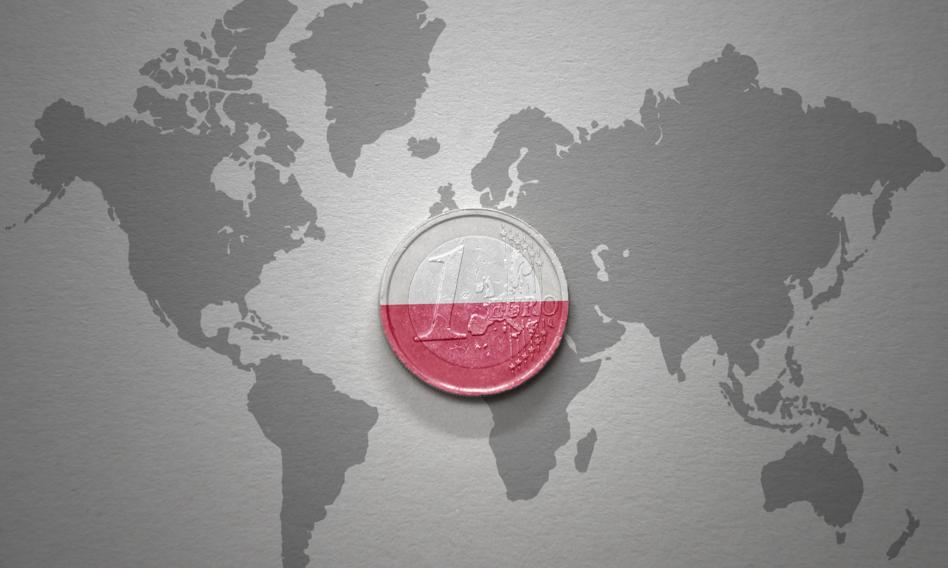
The European Commission announced on June 4 that Bulgaria met the so -called convergence criteria and may join the euro area on January 1, 2026. It will then be the 21st Member State of the European Union, in which the common currency applies.
The matter will be determined on Friday by the Ministers of Finance of the Member States who will accept recommendations in this matter. This will pave the way to finalizing legal acts enabling Bulgaria to introduce the euro at the latest in January 2026.
“Poland's macroeconomic situation is different than (…) Bulgaria,” said Domański, when asked about the perspectives of the introduction of a common currency in the country. “We have one of the highest economic growth temperature in the EU, the lowest unemployment, growing investments” – he mentioned.
“Poland is currently not working on joining the euro area” – he said.” In my opinion, this condition is optimal. Poland does not meet the convergence criteria at the moment, so this discussion is really a substitute discussion” – added Domański.
EU member states, which remain outside the euro area, are, next to Poland and (by the end of the year) Bulgaria: Sweden, the Czech Republic, Hungary, Romania and Denmark.
Convergight criteria are: price stability (low inflation), stable public finances (budget deficit below 3 % of GDP and public debt below 60 percent of GDP), stability of the exchange rate (participation in the so -called ERM II mechanism, so -called euro zone waiting rooms, for at least two years without serious exchange rate disorders) and convergence of long -term interest rates) (Average nominal long -term interest rate can be higher with a maximum of 2 percent percentage points in three EU countries with the lowest inflation).
From Luxembourg Magdalena Cedro (PAP)
mce/ akl/ js/