NATO asks the European Member States to expand their terrestrial air defense capabilities five times to cover an essential vulnerability to the threat of Russian aggression, familiar sources with the subject for Bloomberg said.
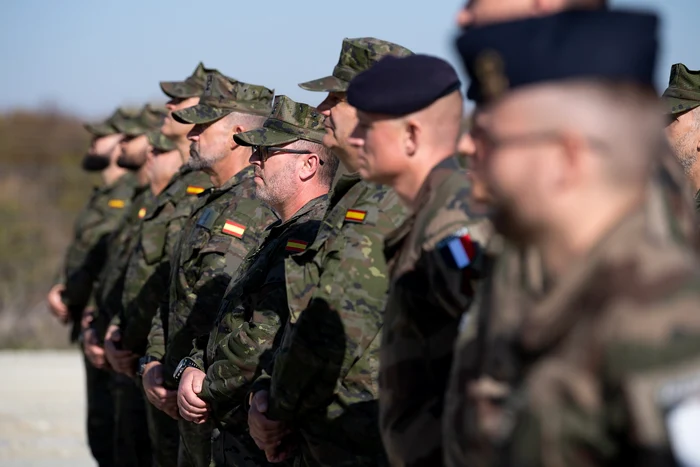
NATO asks European states to grow its Facebook photo capabilities five times
The subject will be discussed on Thursday, at the meeting of the defense ministers within the North Atlantic Alliance, which will take place in Brussels. The sources, who wanted to remain anonymous due to the confidential character of the discussions, argue that the target five times higher are a collective effort of NATO member European countries, the individual levels will vary from state to state. It is not clear for now what is the deadline for this initiative.
The defense ministers are already about to approve, within the same meeting, one of the most ambitious commitments to additional weapons in the Cold War, as part of European and Canadian re -arming and reduction of addiction to American defense systems. The meeting in Brussels will lay the foundation for the NATO leaders' summit for June 24-25 in The Hague.
NATO states accelerate the increase in defense expenses
Arsenal consolidation is part of a larger plan to increase defense expenses throughout the alliance. Under the impulse of US President Donald Trump, NATO states converge to spend 5% of GDP-of which 3.5% for actual defense and 1.5% for related fields such as infrastructure, cyber defense and civil preparation.
“We are not in war, but not in peace,” “ said NATO Secretary General Mark Rutte on Monday at a meeting in Vilnius. “We must continue to strengthen our discouragement and defense, which means we have to move on to a state of total training.”
A high European military official has said that NATO has an urgent need to expand its terrestrial air defense systems, in the context in which threats have diversified and include increasingly sophisticated drones, rockets and fighter jets.
For three decades, such systems were neglected, given that the attention of the Alliance was directed beyond the geographical space of the Cold War, to the Middle East and North Africa.
Germany, in the foreground
The situation has changed radically after the Russian invasion of 2022 in Ukraine and due to the growing fears of the states on the eastern flank of NATO, which estimates that the Kremlin could be able to launch an attack in just a few years.
Air defense systems are essential for this effort – and among the most expensive equipment that the Alliance wants to purchase. Germany has offered to take over the leadership in European joints in this area, after Brussels asked for Member States to invest together in areas of common interest.
Chancellor Friedrich Merz is determined to accelerate Germany's defense expenses and to invest billions of euros in supplementing air defense capacity, according to a source close to Berlin discussions.
Most NATO states have touched the target of 2% of GDP
These plans include the expansion of the “European Sky Shield” initiative, launched by Merz's predecessor, Olaf Scholz. The project, supported by NATO, follows the construction of a European terrestrial air defense system capable of intercepting ballistic missiles.
Asked for a point of view, a NATO official said that air and missile defense, long -range armament, logistics and ground forces “are among our most important priorities.”
“We continue to review our military posture, modernize the control structure and strengthen the integrated air and missile defense.”said NATO official.