Europe's plan for Russia. This is the cheek for Putin. “We send a signal”

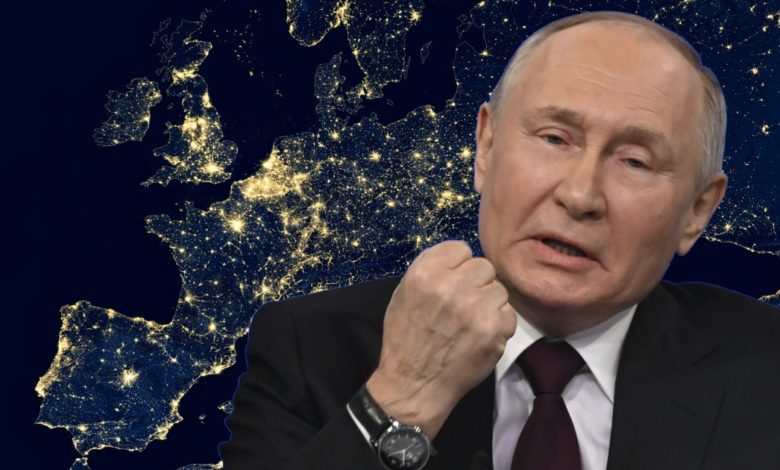
On Tuesday, the European Commission, the EU executive body, will present the long -awaited Plan to break the last energy connections of the block with Russia. According to two European diplomats, this plan will include a proposal to grant private companies new powers to withdraw from investments in Russia, enabling them to terminate the contracts and urging them to suspend all future transactions.
For the EU it is the last resort for the EU. Without support for further energy sanctions, and even in the discussions of some officials about the possible return to fuels from Moscow, Brussels is increasingly looking for other solutions. There is no retreat.
There is also US President Donald Trump, who publicly plays with the idea of abolishing severe sanctions against Russia. The EU turns to the market, trying to send a long -term signal that Brussels is determined to leave Russian fuels for good.
– Despite a significant reduction in dependence on Russian fossil fuels in recent years, in 2024 we still imported 19 percent. Russian gas. This threatens our energy safety, exposing us to economic blackmail and manipulation – says EU Energy Head Dan Jorgensen before announcing the plan in an interview with Politico.
– The action plan will help the EU regain energy independence from Russia – he adds.
– The demand for Russian energy is due to costs – explains Maria Szagina, an expert for sanctions from the International Institute of Strategic Studies. – EU Member States are afraid of competitiveness and deindustrialization, so Tania Russian energy in the context of the upcoming peace agreement becomes attractive again – he adds.
Narrative recovery?
The EU plan, which officials call the “road map”, was initially promised as one of the priorities of the chairman of the European Commission Ursula von der Leyen in its new term.
Jorgensen said earlier that The road map will focus “mainly on gas, but also on oil and nuclear energy”. The Energy Commissioner also promised to reveal the plan in the first 100 days, but the proposal was temporarily postponed due to “the development of the geopolitical situation”, i.e. the movements of Donald Trump.
EU officials suspended the plan, discussing a potential gas agreement with the US President's team, hoping to replace Russian gas, which Europe is still using American solutions. However, the contract did not take place.
The EU has already significantly become independent of Russian fuel supplies since Moscow's invasion of Ukraine in 2022, prohibiting the import of most oil and limiting the supply of natural gas. However, according to the Center for Energy and Pure Air Research, the Helsinian NGO, Since the beginning of the war, the EU has spent over 200 billion euros on Russian energy (855 billion 580 PLN), of which about half was allocated to the purchase of gas.
In recent months, the purchases of Russian liquefied natural gas by the EU have even increased, despite the efforts to replace it with supplies from the USA.
Tuesday's plan aims to reverse this trend and indicate the way to the complete elimination of Russian energy.
– This is primarily aimed at sending a signal to market participants that in the current situation, when there are other suppliers, buying Russian gas is unacceptable – says Politico former EU Commissioner for Energy Kadri Simson.
Szagina claims that one of the important signals that the EU can send are “legal options enabling the breakdown of long -term contracts without being punished.”
In particular, Hungarian Prime Minister Viktor Orban announced that he would block all new energy restrictions and consistently threatens to annul the entire EU sanctions system, which requires unanimous extension every six months.
This puts officials from a dilemma, forcing them to look for solutions that do not require the consent of all 27 EU Member States. However, even these solutions meet with the resistance of Hungary: Just before the announcement of the plan on Tuesday, the Hungarian EU Commissioner Oliver Varhelyi raised a procedural objection to the Russian energy plan. This move illustrates the difficulties that Brussels is facing, but should not affect the approval of the plan.
This situation frustrates EU members who press more decisive actions.
– Sanctions against the Russian energy sector are still a way to limit the financing of the Russian war machine – says Andres Sutt, the new Minister of Energy Estonia. – Everyone who is against it is basically opposite to the peace – the opposite better future for their own economy.
Warning against chaos
There is also no guarantee that companies will benefit from new, optional mechanisms.
Patrick Pouyanne, general director of the French giant Totalenergies, said that “would not be surprised” if the pipelines connecting Siberian gas fields with Central Europe began to pump gas again. He also added that the continent would “not be completely based” the offer of cheap energy.
Cristian Signoretto, head of the Eurogas gas industry lobby and director of the Italian ENI ENGI giant, warns that “Serious obstacles” complicate all attempts to resume business relations with Russia.
It points to “complex legal framework” and damaged infrastructure. “We don't really know what can be reactivated,” he believes. In addition, as he says, enterprises have already adapted their models to sanctions and found alternative energy sources to fill “the gap left by Russian gas”.
– Europe diversified its energy sources, thanks to which we now have a much more stable and reliable system – he emphasizes.
In this context, EU plans may ultimately give way to basic market factors.
“There is a lot of noise and speculation,” Signaretto argues, talking about EU plans. – But ultimately, long -term prices depend on supply and demand.
Estonian Minister Sutt warns that The bosses of energy enterprises focused on profit should remember the chaos that occurred after the supply of deliveries by Moscow after the invasion three years ago.
– People should look at the chart of natural gas prices ” – he emphasizes. – What happened in 2022? Do you want to import gas from Russia? […] Do you want to be dependent on Russian gas? Here's what you will receive! – he sums up.