“Santa Pisoi”, the hero in the shadow to which we owe the appearance of the first Romanian state

One of the most fascinating and discreet characters in the history of the Romanians was Colonel Nicolae PisoSki, a loyal friend, but also the prisoner of the ruler Alexandru Ioan Cuza. Revolutionary and progressive he avoided the light of the spotlight although he decided the fate of the Principalities, in 1859.
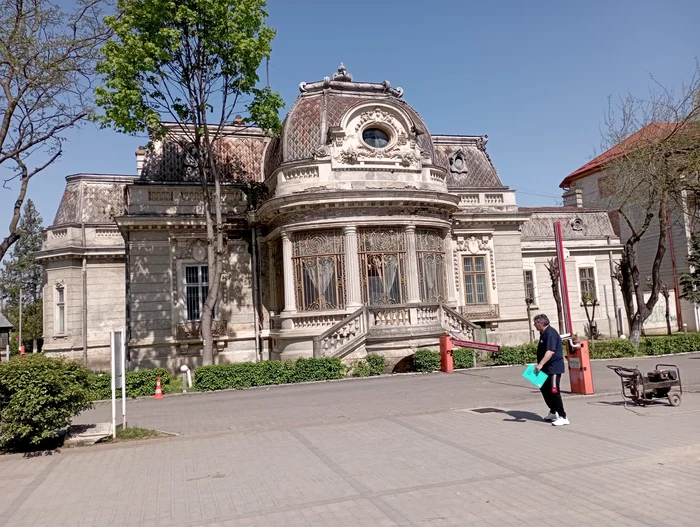
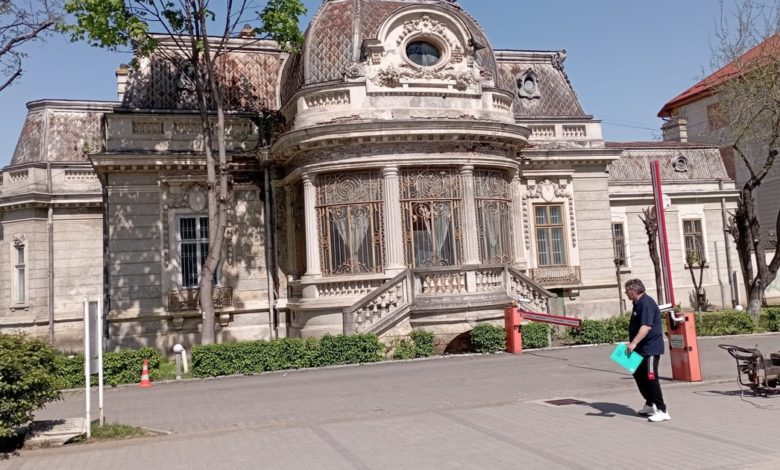
Nicolae Pisoski's house in Botosani PHOTO Cosmin Zamfirache
The history of Romania has some very well -known personalities who have shaped the destiny of this nation. However, there are also characters who have had a major impact in the construction of modern Romania, with a decisive role in key moments of today's state becoming, but who preferred to stay away from the spotlight. Those shadow heroes of Romania. Among them is a Botosani with Polish origins, Colonel Nicolae Pisoski, a fascinating and mysterious character, at the same time.
Moments that decided the fate of the Principalities
Following the Paris Peace Treaty of 1856, the one who officially concluded the Crimea War (1853-1856), the ad-hoc meetings were organized by which the population was consulted on the organization of the Romanian Principalities and their union in a political formation with separate rulers and governments. That is, a partial union. The great Western powers wanted to achieve a buffer state in the way of Russian expansionism. For the Romanian patriots, especially for the progressive intellectuals and boyars was an unexpected chance they wanted to take to the maximum. It was the only time when Moldova and Wallachia could walk together on the path of modernity.
The results of the ad-hoc elections, although with adventures and intrusions from the great enemies, were clear. The Romanians wanted the union of the Principalities. Elective assemblies were set up both in Moldova and in the Romanian Country for the election of the rulers. With separate rulers and governments, the union of Romanians was not complete, it was fragile and reversible at any time. Here, however, the Romanian patriots intervene, with a glittering intelligence and power. Especially the character I discussed at the beginning of the article, Colonel Nicolae Pisoski (no in 1858-1859 had the rank of major). The Great Elective Assembly of Moldova consisted of 50 deputies chosen among the boyarism (most), of the trim, but also of the peasantry (the fewest).
The assembly was divided between the national party (progressive, with small and medium boyar, Târgoveţi, generally young people) and the conservative match (made up of great boyars and clergy). The conservative party supported Grigore Sturza as a gentleman. Although the majority, with 33 deputies to the 20 conservatives, the national match did not yet have a chosen candidate. The situation was serious, because if the national party proved undecided and divided, the conservatives would have imposed it easily, even in the minority. On January 3, at home at Costache Rolla, in Iasi, in the current “elephant hall” of the Museum of Natural History in Iași, the national match met to understand on a candidate to support. Vasile Alecsandri, Costache Negri and others were taken into account. The first two categorically refused. The situation was particularly serious. The members of the national party were arguing on nominations, and the favorable moment of the Romanian nation risked escaping their fingers. It was 23.00 and the quarrels continued, without any decision.
The man who imposed the Lord of the Union
At that moment our character intervened. Nicolae Pisoski made a discreet sign to Lascăr Rosetti who closed the doors of the room. Pisoski got up and said that no one comes out of that room until a nomination is made. It would even have removed the revolver.
In one of the variants it is stated that he has threatened to fly his brain if they do not decide on a candidate. The other variant indicates that Pisoski would have threatened the deputies to fly their brains if they did not decide faster. “Initially Alexandru D. Xenopol in his well-known work” The History of Romanians in Dacia Trajan “, says that N. Pisoschi would have prevented the exit of progressions by forcing them to resume the discussions (…) in some works, regarding this crucial event in national history, recently put into the scientific circuit, it is mentioned that Nicolae Pioschi. Frederic Dame, in the work on “The History of Contemporary Romania from the reunification of the earthly gentlemen to this day” attest that Nicolae Pisoschi has posted at the door of the room saying that his brains are flying if there is no decision in that meeting “says the specialist Maria Dogaru in the article “From the gallery of participants in the fight for Unire-Nicolae Pisoschi”, from the specialized magazine, Hiesus.
“It was a decisive moment. The doors of the room were closed and no one could go out until a nomination was clear, to be presented in the meeting on the big meeting on January 5”the Botoşănean historian Sergiu Balanovici said. Moreover, Nicolae Pisoski proposed without the right of appeal Alexandru Ioan Cuza, the former Pârcălab de Galați, the candidate of the national party. No one has cried. The national party went with the proposal in the Great Elective Assembly and imposed with the majority of votes.
It is assumed that Pisoski would have come with the idea that Alexandru Ioan Cuza would be proposed in the Romanian Country. In any case, Pisoski immediately drove to Wallachia to send to the national party the choice of Moldovans and the desire to support them. And in Bucharest, the progressive boyars were imposed, and with the help of the crowd to put pressure on the conservatives, and Europe was facing the fulfilled fact. The Romanian countries joined and walked on the path of modernity.
“Santa Pisoi”, Cuza's basic friend and basic man
The nomination of Alexandru Ioan Cuza was not a coincidence for PisoSki or a momentary inspiration. He was a good friend of the future ruler. They had known each other since 1848, when Pisoski signs with Cuza, Alecsandri and Costache Negri, the memo to Soliman Pasa, against the regime of Prince Mihail Sturdza.
Subsequently, it was overcome by the revolution of 1848, Pisoski will meet with Alexandru Ioan Cuza abroad. “After the revolution, N. Pisoschi left abroad. He took the West's way, stopped in Vienna where Alexandru I. Cuza and Dimitrie Rosetti but also other revolutionaries being all witnesses to some large political confrontations.”says Maria Dogaru in the same work.
After Cuza's double choice, Pisoski becomes the ruler's hardman. Although he was a vase character of the national party, a man who was practically due to the nomination of Cuza, Pesoski prefers to stay away from the spotlight, a friend and devoted ally of Cuza.
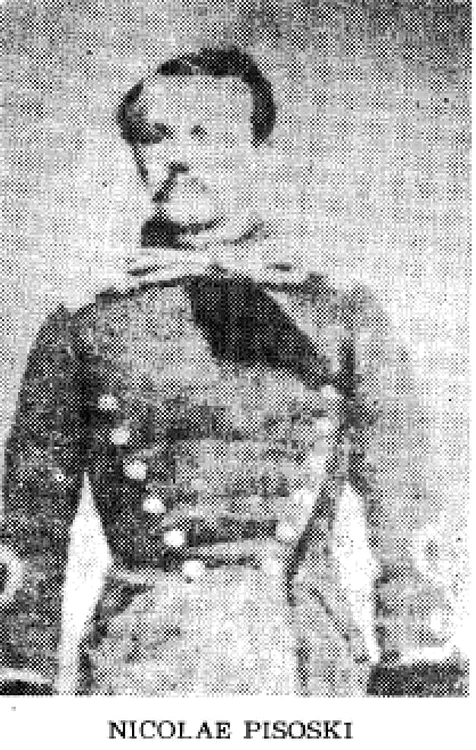
Nicolae Pisoski PHOTO Archive picture
“As a hazelier, Pisoski accompanied him all over Cuza. He defended him from any aggressions, being always armed, defended him from scandals and was also a good friend. Pisoski was the kind of military man who liked to do his duty, not to shine in the light of the spotlight.”stated the historian Gheorghe Median. He was highly appreciated by contemporaries, seen as a patriot, a man dedicated to duty and honor. His friend, Vasile Alecsandri nicknamed “Santa Pisoi” for his legendary seriousness.
He even composed a poem in 1878. “Brother Pisoschi/ Your friendships/ in my soul have wake up/ pleasant feelings, sweet feelings/ And a long longing for life/ I am happy that poetry/ have taken me to their mouth; Hora, to jump in the game.
Pisoski always remained close to Cuza. On the night of the palace blow he tried to defend him, and then followed in exile. He resigned from the army and stayed with Cuza until his death. Then he returned to his native Botosani.
Revolutionary and great patriot
Nicolae Pisoski was a fascinating character. He came from a family of boyars with Polish origins. He was born in Botosani in 1812, son of the Stolnic Costache Pisoski and Maria Brănișteanu. It was the sixth of the family's eight children. “Leash, over 180 years old, were boyarnaşi, until the time of Mr. Cantimir. Then, one of them became a pyet and also between the boyars were also with cynics, and without cynics, until Mr. Calimah, when on a Mihalachi, who were Samiş in Tecuci, they made a cup”is shown in the “Arhondology of Moldova” written by the bishop Constantin Sion.
Nicolae made the first years of school in Botosani afterwards attending private schools in Iași. He was, later, one of the first recruits of the earth militia, established after the Adrianopole Treaty of 1829, eager to serve his country. Man cultivated and intelligent, Pisoski was recruited in the administration. He is employed in the Interior Department of Moldova and represents the Iași Government in the Commission for the demiliation of the border between Moldova and Transylvania. In 1849 it reaches the rank of postelnic and in the early 50s of the 19th century, it is called the span of the Botosani land (ie leader of the whole county or held). But Pisoski was first and foremost a patriot. He also gave up his well -paid functions to fight for the national cause. In 1844 he participated in revolutionary actions against the ruler and is arranged at a monastery. In 1848, he participated in the Revolution, in Iasi and then in Cernăuți, facilitating the links with the Transylvanian revolutionaries. He is always an important pawn of the national party, a supporter of the modernization of the Principalities. Visa at the Union of Moldova with Wallachia under the scepter of a foreign ruler.
He nominated on Cuza because this was how the circumstances asked. And remained faithful to his decision. In 1856, Pisoski was part of the group of 12 who on May 25 set up the Union Society, with a very important role in the union of the 1859 principalities. After the death of Alexandru Ioan Cuza, in 1873, “Moș Pisoi” returns from Heidelberg, to his native fair. At that time, Botosani was a cosmopolitan, developed city, a multi-ethnic merchant hub. “He then returned to Botosani, where he was often seen on the balcony of his house. He is described by Nicolae Iorga as an elderly, worthy man and a white beard who went out to his house.”stated the historian Gheorghe Median. Pisoski died in 1888.
Pisoski's house, art museum
Nicolae Pisoski's gorgeous house is at the end of the Unirii pedestrian, in the municipality of Botosani, even opposite the building of the County Museum of History. An absolutely delightful area of the city, over the road from the Vârnav Public Garden, today “Mihai Eminescu” Park. After the Communists came the house was transformed into the security headquarters. Later, after 1990 he hosted the Passport Service and then the population records. Later he remained in comparison. The County Council will adopt, next week, a horror through which Piski's house will pass into the public domain of the county. The house would be completely rehabilitated and transformed into a plastic art museum.