The US window closes. Americans can make a mistake of Hungary and Turkey

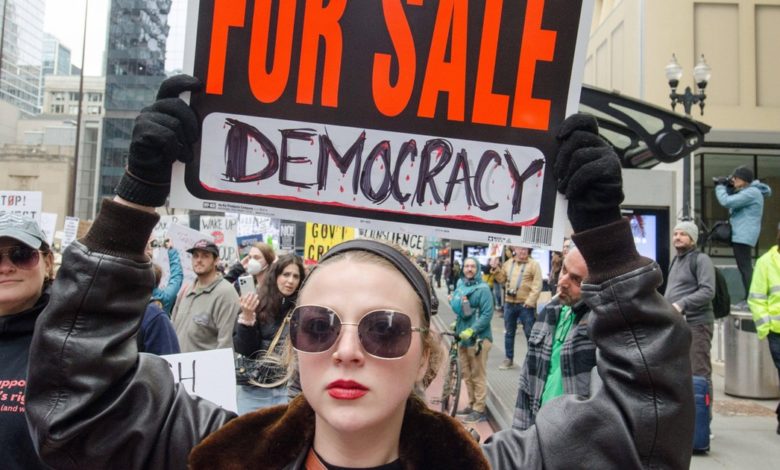
Everyone who survived the fall of democracy knows this script – the authoritarian leaders often come to power on the wave of public anger. Their initial popularity can delay resistance, making it seem risky and even anti -democratic – and it is then that real damage is done.
The longer the resistance movement, the more democracy falls.
Tenants of research on democracy regression show that time and scale matter. This means that there is a narrow window for action before the future autocrat consolidates power. This window closes faster than most is aware of this.
In addition, mass mobilization itself is not enough to counteract authoritarian tendencies. It must be combined with real institutional opposition.
For example, in Hungary, the ruling party of Fidesz Prime Minister Viktor Orban gradually hollowed out democratic institutions of the country, taking over the courts, media and universities, while their opponents hesitated. The leaders of the Hungarian opposition now admit that they acted too slowly. Many were afraid that too early resistance could seem anti -democratic, so they waited. They did not know how quickly the system would erosion.
On the example of Turkey, we have seen that mass protests can signal resistance, but they can not always stop the country's stinging towards authoritarianism – at least not alone. Even huge demonstrations, such as protests in Gezi Park in 2013, were not prevented by the consolidation of President Recep Tayyip Erdogan's power. And when the authoritarian movements take control of the institutions, the situation changes. Resistance becomes more difficult and much more dangerous.
Many years later, Türkiye stood on the edge of what democracy researchers call the authoritarian final game. The arrest of the mayor of Istanbul, the Imamogle, the most powerful rival Erdogan, sets a new reference point in the continuous process of the country's democratic regression.
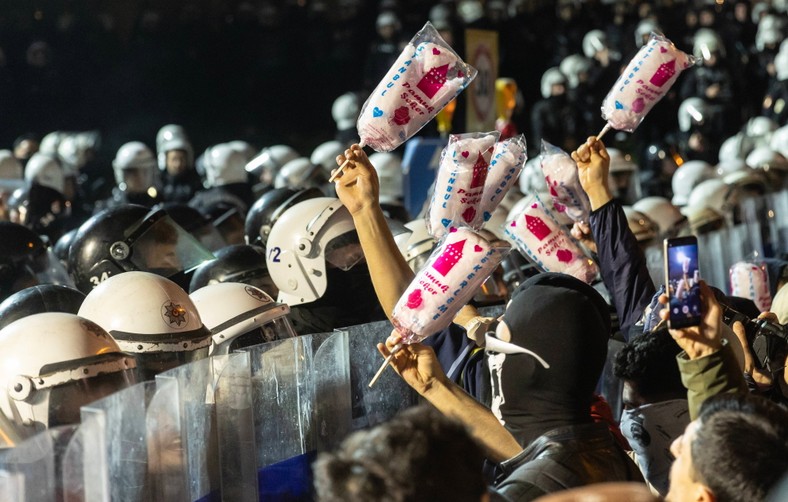
Demonstrators show cotton candy of the Turkish police during a protest against the detention of the mayor of the Imamogle, Istanbul, Türkiye, March 24, 2025.
Finally, in recent months, Serbia's citizens have also emerged to question the rule of President Aleksander Vucia. However, years of inaction and crushed opposition allowed him to tighten his hug. And just like in Turkey, although civic momentum maintained democratic ideals alive, it was not enough in itself to reverse the damage.
Authoritarian regimes do not fall apart by themselves
Let's now look at the countries where mobilization has changed something. For example, in Slovakia, after the murder of journalist Jan Kuciak in 2018, mass protests forced the prime minister to resign and amounted to the President's reformation. At Guatemala, weekly rallies against corruption in the government led to the fact that the Congress in 2015 deprived the incumbent President of immunity. A few days later he resigned. In Romania, on the other hand, mass protests in 2017 against attempts to weaken anti -corruption provisions forced legislators to change the course.
These actions had an effect not only because of the dissatisfaction of the public, but also because this mobilization went hand in hand with the desertion of the elite, which had pressure on institutions.
The same civic energy is now starting to wake up in the United Stateswhich can be seen from recent protests. The size and energy of these demonstrations are important. They show that Americans are sensitive to the current danger and ready to act.

People participate in a protest rally against the policy of Donald Trump in Oakland, California, USA, 19 April 2025.
But resistance must also be coordinated and strategic, and its one goal must be to drive actions in Congress, courts and among party leaders. Counting on the fact that autocrat will lose popularity is a trap – authoritarian regimes do not fall apart by themselves. However, society can change them, especially when it receives a convincing alternative and real options.
This means that opposition parties should use all available constitutional tools. They can block nominations, refuse a quorum and submit court lawsuits – just like when the Democrats have recently suspended the nomination as a federal prosecutor in Washington. They proved that the congress still has levers to fight the authoritarian drift.
Democratic “red lines”
And this is where leadership is most important. Examples from around the world show that institutions do not work by themselves – people inside them must initiate movement. This means the need to oppose when it is uncomfortable, and not only when it is safe. So far, democrats have shown flashes of such determination. The 25-hour speech of Senator Cory Booker condemning Trump and meetings with residents led by senator Chris Murphy and a representative of the House of Representatives Maxwell Frosta helped mobilize society and clearly showed what the game is going on.
I need more such activities – on the part of Congress members, judges and civil service officials who will Determine clear democratic red lines before they are erased. And they will do it loudly enough for others to follow in their footsteps.
You also need to build wide democratic alliances. In Slovakia and Guatemala, such coalitions helped transform the public indignation into institutional pressure. Business leaders, trade unions, civil rights groups and conservatives who value the rule of law, must also join forces in this matter. This is not about ideology – it is about protecting barriers that make the difference of sentences possible.
A Turkish oppositionist once told me that in the early years of Erdogan's rule The opposition played in checkers while the government was already playing chess. “We waited too long,” he admitted. – We thought the rules were still in force. The US cannot afford to make the same mistake.