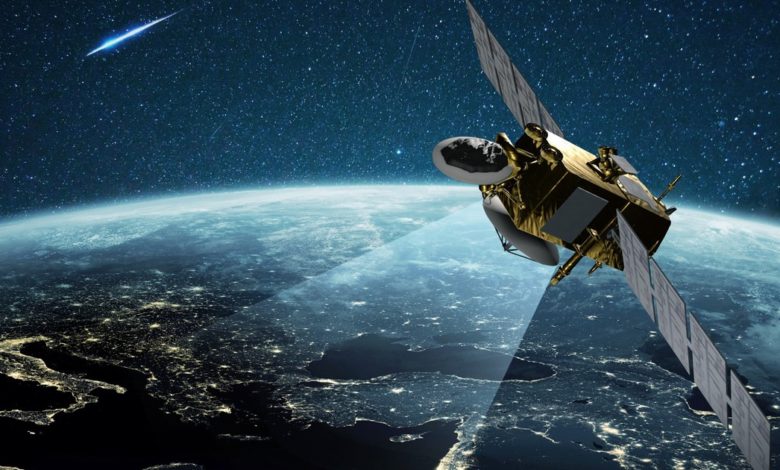
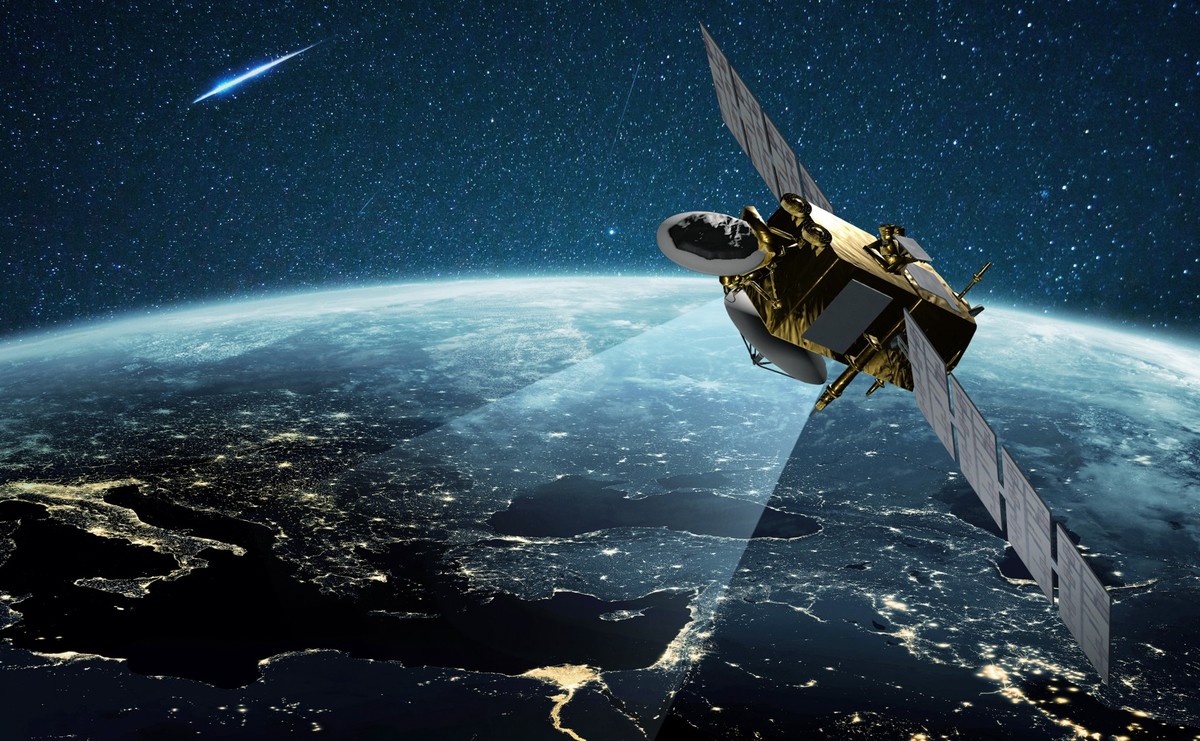
For now, Starlink emphasizes that D2C is a layer “wherever there are no masts”. It starts with text messages, and data (e.g. downloading data from the Internet) and the voice are to attach in stages.
How does Direct -to -ce connectivity work? Technically The Starlink D2C satellites are equipped with the Enodeb (LTE) modem, which from the phone's point of view looks like an ordinary LTE cell – but “hangs” in low orbit. The broadcast takes place in the licensed band of the mobile operator, and on the side of the network traffic is still transmitted by inter -aatellite connections and ground stations to the operator core. In a nutshell, the whole is integrated like roaming with a business partner in space. Starlink directly describes this architecture as “a cell tower in space”.
In the US, the Federal Communications Commission (FCC) adopted in 2024 the legal framework of Supplemental Coverage from Space (SCS), which allow satellites to provide services in earth bands with the consent of the license holder (Here is specifically about T -Mobile). The regulator described, among others A set of bands approved for SCS and temporary requirements for managing alarm connections. The regulations opened the way to tests, permits and commercial starts T -Satellite.
In practice, T -Mobile/Starlink use a narrow section of the PCS G (1900 MHz) band. This T -Mobile spectrum is rented for the needs of SCS and allows LTE terminals on the phone to catch a signal without additional equipment.
Leo satellites move quickly towards the user, so You have to deal with various obstacles, delays and very low power of transmitters on the phone. Spacex describes that it required large channel antennas, own integrated circuits and complex algorithms of shaping/planning of beam.
Check also: Starlink Elona Muska will gain a rival. Amazon will go to orbit – he will take thousands of satellites
What it can – and what not – a new layer of range
D2C great “Hole” patch in a remote area. SMSs, calling for help, simple contact in the field are possible where there is no standard range. However, T -Mobile reserves that The service works in most areas outside, when you can see the sky, it can have delays, and temporary breaks result from satellite movement. In other words, this is not a solution for deep interiors or dense forests.
The bandwidth limit on the phone is low by mobile standards. Elon Musk himself indicated ~ 10 Mb/s for a beam for the first hand, and earlier statements at the announcement of the project spoke about 2–4 Mb/s – enough for the text, but not for mass video streaming. Newer materials from the tests confirmed rather a dozen or so Mb/SW favorable conditions, which still remains a resource shared by everyone within a beam range. This is why T -Satellite starts with SMSs, and the data/voice is planned in later stages.
T -Satellite works by default on dozens of models (iOS/Android), without application and without aiming the phone in the sky as you need to do it when we use the satellite and home internet Starlink. The list of compatible devices is regularly updated by T -Mobile and the operator It also announces the launch of MMSs and small data packages.
Read also: Clash of giants in space. Amazon starts the competition with Starlinek
Europe: who, when, on what terms
Switzerland has gone the furthest in Europe. Salt as the first operator on the continent sent a successful SMS via Starlink D2C in a non -commercial test under the regulator's aegis (ofcom). Ukraine (Kyivstar) has permission to D2C tests and declares the launch of services (from SMSs) in 2025/2026 – which would be one of the first implementation in the EU/EEA.
Starlink also mentions European partners on its website and announces commercialization, among others in Switzerland and Ukraine.
As for regulations, unlike the USA, the EU is still refining common rules for D2D/SCS. RSPG (EC Advisory Group for Specter) recommends that the Commission should commission a CEP to develop harmonized technical conditions for D2D -IMT in cellular bands, yes that Member States could issue permits with the protection of ground network. Until European harmonization, each country will use its own procedures and licenses – this can extend the start of services in individual countries.
Is this the end of dead zones? The short answer is: no, but there will be fewer of them. D2C will significantly increase the availability of basic communication (SMS, help call, simple telemetry) in the mountains, water, forests or in the fields. However, it will not replace the terrestrial network where we use the Internet every day – streaming, video sets or remote work – because the capacity and signal inside the buildings will remain restrictions.
Even in the EU, where 5G already includes over 94 percent. households, 5G range in rural areas is clearly lower (approx. 80 percent in 2024) and this is where further investments are needed. D2C reduces the number of places with an absolute lack of coverage, but does not replace dense infrastructure.
See also: The billionaire will fulfill the dream. Will take a walk in space and test the internet
Why in the villages the network is weaker
GSMA reports have been indicating the three largest cost items in the countryside for years: the base station, the (Backhaul) and energy. In poorly populated areas, revenues for the sector/square kilometer are much lowerand the costs were even twice as high as under construction and up to three times higher in maintenance than in the city – especially when fiber and power supply in places without infrastructure needs to be provided.
In addition, there are building permits, difficult terrain and the fact that modern, higher bands have a smaller range of a single cell, so you need more stations for similar covering.
This is why governments and regulators promote the sharing of infrastructure and subsidies for the so -called last mile. The European Commission in the Digital Decade 2025 package emphasizes that although the basic availability of 5G is growing rapidly, “5G targets in every populated location” until 2030 are threatened without further outlays, especially outside cities.
From the perspective of the user in Poland and more broadly in Europe It can be expected that first a “rescue and text” layer will appear in operators cooperating with Starlinek, and the voice and data will be extended as the constellation and spectral permits are expanded. At the same time, masts and optical fiber will determine the quality of everyday internet in the countryside. D2C makes sense as a safety net and emergency communication, but not as a substitute for base stations.
Author: Grzegorz Kubera, Business Insider Polska journalist