The thought turns out loud. A breakthrough AI neuroprosthesis allows you to speak without opening the lips

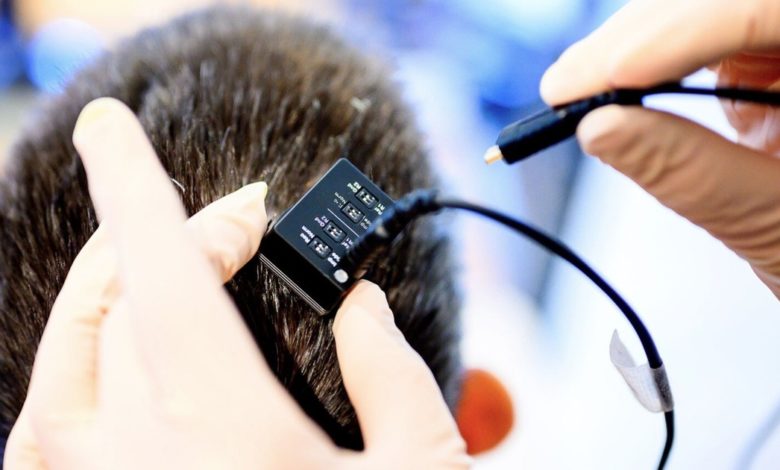
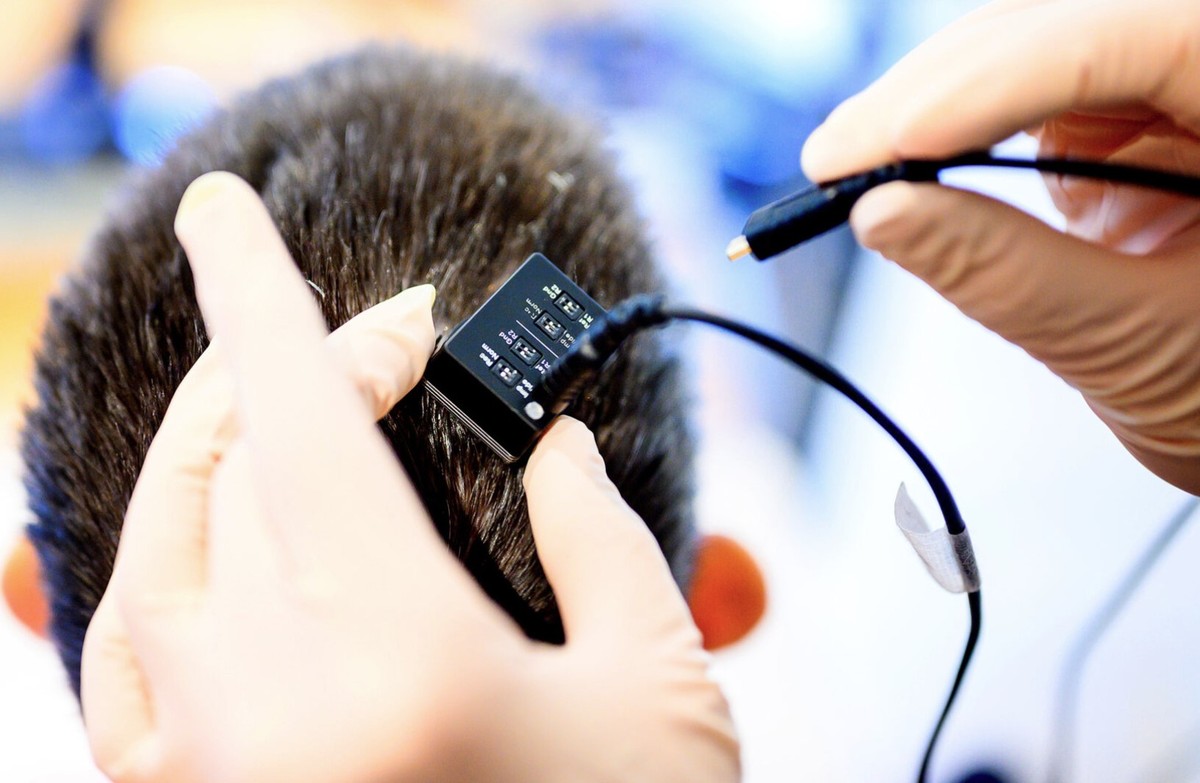
Technology uses algorithms based on artificial intelligence to immediately process brain signals into sound. This introduces the possibility of effective communication to people who have completely lost their ability to speak.
As the creators explain, in previous attempts the conversion of thoughts into words took up to a few seconds. Now, thanks to the new approach to streaming decoding, the same statement can be heard almost simultaneously with its formation in the patient's mind. “Our streaming approach ensures the same fast speech decoding ability to be offered by Alexa and Siri devices, but in neuroprosthesis” – argue Gopala Anumanchipalli, Robert E. and Beverly A. Brooks from UC Berkeley. The authors of the study and tests add that using a similar type of algorithms, they discovered that we can decode neural data and for the first time allow almost synchronous voice streaming. The result is a more natural, smooth speech synthesis.
This discovery is important not only from the perspective of technology developmentbut above all the quality of life of people with serious paralysis who are unable to speak.
“This new technology has enormous potential in improving the quality of life of people affected by a heavy paralysis affecting speech,” comments neurosurgeon Edward Chang from UCSF, coinating with research. The researcher conducts clinical tests of speech neuroprosthesis, using the high density of electrodes placed directly on the surface of the brain. “It is exciting that the latest achievements of artificial intelligence significantly accelerate the development of the brain interfaces for practical application,” he adds.
Check also: Animals will speak in a human voice? AI can ensure inter -peak communication
Promising test results
During the research, it was also shown that the developed system is perfectly coping with various types of interfaces recording brain activity. This in turn shows that The method itself is universal and can be flexible.
“Thanks to the fact that we demonstrated the exact synthesis of the voice from the brain using other quiet speech sets, we showed that our technique is not limited to one specific type of device,” notes UC PhD student Berkeley, Kaylo Littlejohn, co -author of the publication. “The same algorithm can be used in different solutions, if good quality signal quality is provided.”
The heart of the new technology is decoding signals from the motor cortex, which is responsible for articulation of speech sounds. These signals, before they transform into a heard voice, are captured and turned into speech using AI.
“In fact, we capture signals in a place where the thought turns into articulation, in the middle of speech muscle control,” explains UC PhD Berkeley and co -author of the research, Cheol Jun Cho. And he adds: “So we decode what is happening after making a decision about what you want to say, what words to wear and how to start the right muscles.”
However, before the scientists developed the AI model, they had to collect data for training the algorithm. Patient named Ann She read the sentences displayed on the screen, then tried to repeat them silently. Thanks to this, the brain impulses were associated with specific words, although the woman was unable to broadcast any sounds.
To supplement the missing sound and give it the patient's voice identity, scientists used ready -made speech synthesis solutions, supplemented with the recordings of the voice of Ann before the loss of speaking ability. They took advantage of the previously trained Text-to-Speech model to produce sound and simulate its target shape. They reached for the voice of Ann before the injury, so that when decoding the effect would sound close to the original.
Read also: H&M creates ads with models generated by AI. Savings at the expense of people [ZDJĘCIA]
Speaking without opening your lips
An important achievement is the ability to generate pronounced words with a very low delay and without losing the accuracy of decoding. According to researchers, the delay between starting to speak and the appearance of the first sounds does not exceed one second, which makes it for the patient The impression of almost natural statement.
“We can see that the first sounds appear in relation to the signal of speech intentions in the first second,” notes Anumanchipalli. “The device can constantly decod speech, so Ann can speak without interruption.”
To confirm that the system really learns speech patterns, and not just plays known phrases, scientists checked its operation with the help of 26 rare words from NATO phonabeth, such as “Alpha” or “Bravo”, which were not used during system training. They wanted to check if it would be possible to generalize decoding to previously unknown words and actually read patterns of patient speaking. They discovered that their model is doing well. This proves that he really learns the components of the sound of the voice.
Ann herself was also more responding to the new method involving the streaming of the sound in real time, compared to the previous solution displaying the text. “She told us that the synthesis in the stream mode meant that she had a sense of greater control, and hearing her own voice in a time similar to the actual deepened her impression of embodiment” – sums up Anumanchipalli.
New applications
Scientific discovery has a chance to affect the market for both medical devices and technologies related to broadly understood voice assistants.
Companies have been developing and commercializing products based on artificial intelligence for yearshowever, the creation of a working neuroprosthesis brings this field to much broader applications and gives prospects for improving the lives of people with speech dysfunctions. Scientists already announce the development of their algorithm so that it can generate a richer expression of the voice, including changes in tone, height or volume, which in natural communication serve to express emotions.
According to experts, the solution may soon revolutionize the market for communication support products, and the commercialization of such technology brings hope for people around the world. At the same time, researchers ensure that Despite the promising results, they still conduct further tests and improve both hardware and softwareto be able to vote even faster and more faithfully.
“This is a breakthrough that gives hope for further progress in every layer – in engineering and in the algorithms themselves. We intend to improve the system so that it speaks better and faster” – emphasizes Cho.
Everything seems to indicate that in the next few years we can expect the rapid development of AI neuroprosthesis and an increase in their availability. For people deprived of speech, it is a huge opportunity to break the communication barriers, for the industry – an impulse for further innovations and the possible birth of a completely new market, combining medicine, robotics and advanced AI systems.
Author: Grzegorz Kubera, Business Insider Polska journalist