Red lines for the USA. Yes, Iran can shake America. “Nobody knows what to do”

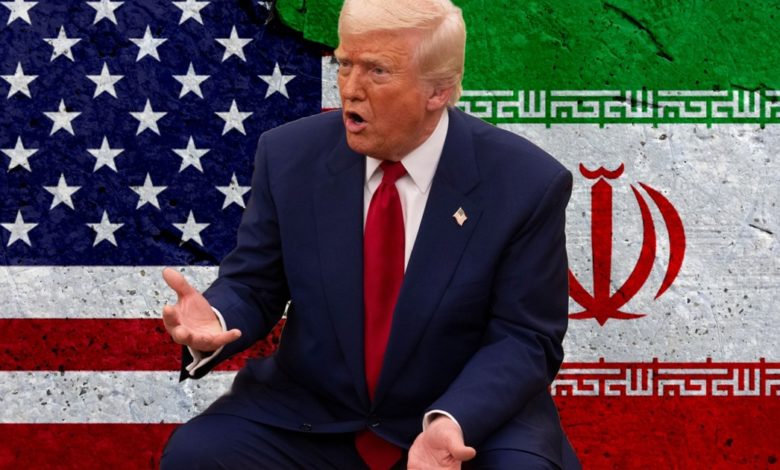
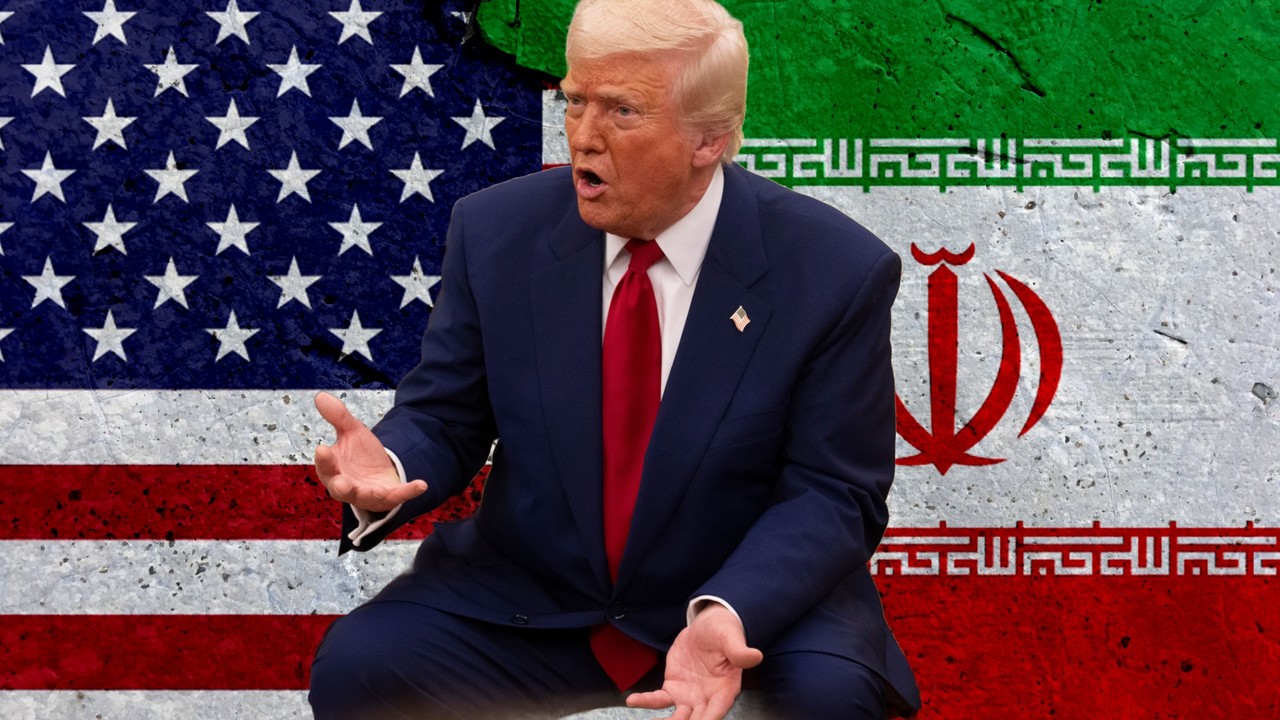
US President Donald Trump does not want to determine the clear course towards Iran. “Nobody knows what I will do,” he said on Wednesday in response to the question whether he is considering hitting Iranian nuclear objects. – I could do it. I could not do it – the American leader continued – and if he does, he will not announce it in advance.
In recent days, speculation has intensified that Washington has militarily supported Israeli attacks on Iranian nuclear objects. It is not clear, however, whether this will actually happen. Below are Review of possible scenarios and escalation options that Iran still has. What sounds like an apocalyptic scenario from a Hollywood film today is currently the subject of discussion of nuclear weapons experts.
The main goal and ultimate cause of American intervention would be to destroy the Uranus enrichment plant in Fordo. This object is located in the mountains northeast of the saint for the Szyites of the City of Kom and is mostly underground.
It is estimated that it reaches 90 m under ground level. This place protects its own S-300 anti-aircraft battery. For a long time this object was kept secret. It wasn't until 2009 that Iran confessed to its existence after he was discovered by Western intelligence services.
There are many indications that Fordo occupies a central place in the Iranian nuclear program and its possible military dimension. Iran uses its most modern IR-6 centrifuges here, the use of which is prohibited under a nuclear agreement of 2015. Two years ago, inspectors of the International Atomic Energy Agency (Maea) found traces of uranium enriched to 83.7 percent, i.e. almost to 90 percent. necessary for the production of nuclear weapons. Iran explained this with the failure of the installation.
However, most experts are convinced that among all known Iranian nuclear facilities it is In the Fordo regime, he would most likely carry out top secret nuclear activities. Currently, there are very specific concerns about what actions can be ordered by the leader of the revolution Ali Chamenei: the construction of an explosive nuclear charge.
This possibility itself shows that the threat resulting from the Iranian nuclear program will be really eliminated only then, when Ford is subjected to comprehensive Maea control or simply immobilized. However, it is not known how it could be achieved.
Israel is apparently not able to destroy the object, otherwise he would do it. Simply does not have explosives that would allow you to effectively hit an object so deeply buried in the ground. Probably the only bomb that could do this is the American GBU 57, also called Massive Ordnance Penetator (MOP). This is not only one of the strongest non -novas bombs, but also was specially constructed to penetrate deep into the ground before detonation.
However, even a mop may not be able to reach Fordo. The depth of this weapon is about 60 m, and the facility in Ford is to be located up to 90 m under the surface of the earth. The American armed forces have been discussing for a long time whether a few MOP bombs could destroy an anchored object, or whether it would be necessary to send commandos to the site of the Fordo department.
Here, a dilemma that is Ford and which makes the rule of Israel and the USA delay for so long: on the one hand It is impossible to win the fight with the Iranian nuclear program without the victory in Fordo. On the other hand, this may require land surgery, and decision -makers responsible for this may be afraid of this due to unpredictable consequences.
Iran – US opponent
Only that they are technically outdated and most of the unable to act. Because Israel and the USA have an air advantage over Iran, land forces are currently less important. However, a large number of potential fighters in Iran can become a huge problem for security in the region if the state order falls and militia will start working in an uncontrolled manner. Israel has already eliminated many high -ranking commanders, and the command structures are in chaos.
In his attacks on Israel, Iran focuses on ballistic missiles that are not precise, but have great destructive potential. The arsenal is estimated at up to 3000 rockets, but not all of them can reach Israel. In each attack, Iran has fired up to 200 rockets at the same time, and The interception coefficient by the modern Israeli system is 90 percent. Israel is currently focusing on the destruction of mobile launcher systems, often mounted on trucks.
Due to the limited number of medium -range rockets and the fact that about 40 percent The Iranian launchers of these rockets have already been destroyed, the possibilities of escalating the conflict by Tehran in Israel are limited. However, the situation is completely different in a much closer region of the Persian Gulf.
If the United States joined the conflict, American bases in the Persian Gulf would become the first target of the muds. “Iran would not accept American attacks without retaliation,” says Daniel Shapiro, US ambassador to Israel during the time of Barack Obama, in an interview with Foreign Affairs.
– explains Shapiro.
Tehran did this after the murder of Kasem Sulejmani in 2020 by the Americans, the head of the revolutionary guard intelligence.
The problem of Americans also lies in the fact that Iranian short -range rockets are much more accurate than medium -range rockets, which Tehran shot towards Israel, and more difficult to defend. As reported by “The New York Times”, citing anonymous American officials, Iran has prepared such strokes.
Tehran could also attack civilians or energy infrastructure in the Arab Gulf countrieswhich Tehran could consider as a complicit US attack, says Shapiro. Such action could be modeled on Iranian attacks on Saudi oils of the oil processing of the Aramco group in ABQAIQ and Khurais in 2019. Then Iranians using a swarm of drones and maneuvering missiles defeated Saudi anti -aircraft defense in a surprising attack and caused significant damage.
Iran's allies
According to their own data, the Proiran militia in Iraq have over 200,000 fighters, however, more reliable estimates talk about a five -digit number. Militia is a remnant of the Iranian network in the Middle East, the so -called resistance axis. In the event of a possible collapse of mulets, these groups may consider this a threat to their existence and take independent actions – even if the Iraqi government wants to avoid expanding the war.
The possibilities of escalation by other proxy groups (substitute groups), such as Huti or Hezbollah, remain limited. While the almost broken terrorist militia, Hezbollah in Lebanon, solidarity with Iran, its representatives officially emphasize that Tehran did not ask them for help.
Huti, however, declared during the Sunday attack on Israel that they were in consultation with Iran. This is the first case when a terrorist organization allied with Iran publicly announces cooperation in the field of attacks. Contrary to the expectations of Huti, however, they did not intensify attacks on the Jewish state despite the escalation of the conflict between Israel and Iran.
Escalation possibilities
What possibilities do Tehran remain now? Iran could consider the “closing of the Strait of the Ormus for tankers transporting oil and gas, and establishing a sea blocking using sea mines or coastal mines that would be installed with the help of Iranian motor boats, or a combination of all these funds,” says former ambassador Shapiro in an interview for “Foreign Affairs”.
According to The New York Times, it is a script actually considered by the Mulłów. In fact, Tehran, having maneuverable motor boats, repeatedly managed to disturb the navigation in the Persian Gulf and kidnaping or firing tankers and other trade ships.
The arrest of oil and gas exports from the Persian Gulf region would have serious consequences for the world economy, including India and China. However, Iran would take a significant risk and could lose much more military resources than as a result of current Israeli raids.
Tehran would thus expose his military ports in the Persian Gulf and his Navy. The American operation “Praying Mantis” from 1988 should be a warning for Iran. At the end of the 1980s, the war between Iran and Iraq expanded to the Persian Gulf, and the United States was forced to ensure the escort of tankers of their allies to protect them from Iranian attacks.
When the Iranian face seriously damaged the American frigate of USS Samuel B. Roberts in international waters and almost sank it, Ronald Reagan's government decided to answer. As a result of attacks from the air and the sea The Americans then destroyed about half of the Iranian Navy ready to act in the largest American maritime battle since World War II. Two Navy bases of the Revolution Guardians were destroyed. Washington sank three ships, including two frigates, and five more were seriously damaged.
Each escalation on the part of Iran, therefore, carries a serious risk for the country itself. Nuclear escalation scenario remains. American intelligence services claim that, contrary to Israel's claims, Iran was not close to the ending of an extremely complicated construction of a nuclear bomb. The regime has an enriched fuel to build “dirty bombs” that contaminate their goals radioactively.
However, the regime is aware that such a use of weapons would provoke Israel's subsequent partners to act, and his days would be finally counted.