The Russians are facing an amazing increase in prices for a traditional preparation, also found in the daily menu of Romanians

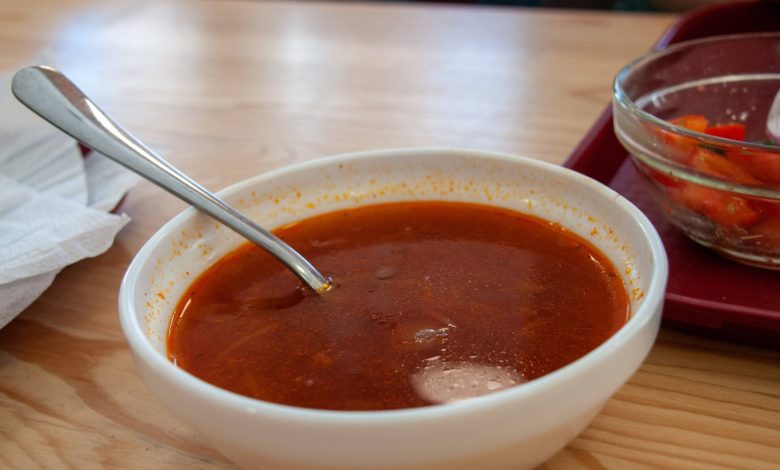
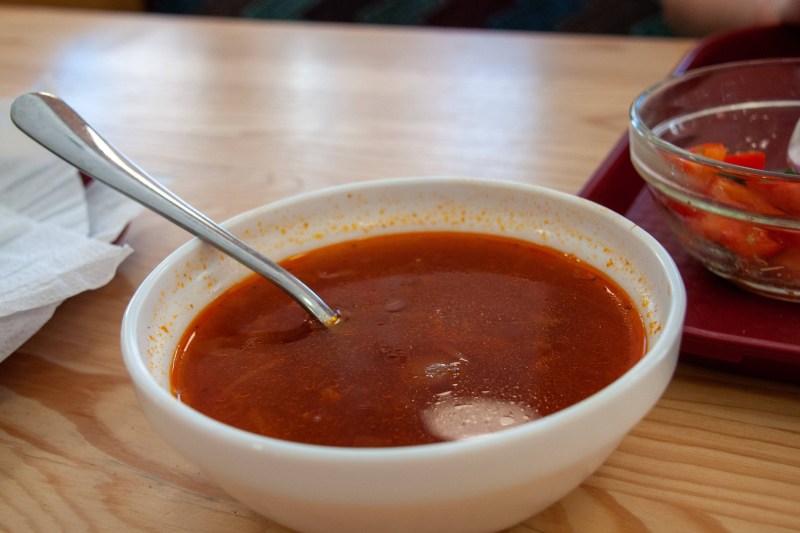
The traditional Russian Borș (soup). Samara region, Russia, July 8, 2024. Photo: Svetlana Vozmilova / Imago Stock and People / Profimedia
The price of the vegetables needed for the preparation of the traditional Borch has increased suddenly in Russia over the last 12 months, the Kommersant economic publication wrote on Thursday, citing official data.
The so-called “Borș index” has been used as an indicator of economic welfare in East-European countries, because the ingredients of this traditional broth include basic products that are frequently found in kitchens throughout the region, notes the independent publication The Moscow Times.
With the exception of potatoes, which have registered an amazing increase in 166.5% of the price in the last year, onion and cabbage have registered the highest price increases between the vegetables used in the traditional Russian Borș.
The average retail price of the onion increased by 87.2% in May compared to the same period last year, reaching 72.3 rubles ($ 0.91) per kilogram, Kommersant said, citing Rossat National Statistics Agency.
The white cabbage was expensive with 56.8% in the same period, the prices reaching 75.2 rubles ($ 0.94) per kilogram.
At the same time, the price of beet increased by 11.9%, and that of tomatoes by only 1.2%, according to Rossat.
Weight resurrections are one of the main factors underlying the price increase, Russian economic analysts said.
Onion and cabbage harvests were weak in one of the main cultivation regions, the Volgograd region, due to drought and water supply problems, another Kommersant expert said.
A farmer interviewed by the Russian economic daily added that the increase of the costs of fertilizers and chemicals to protect the crops has led to the increase of the production expenses for cultivators.
The Ministry of Agriculture has transmitted that it intends to expand the areas cultivated with vegetables this year, a measure that, according to the institution, will contribute to stabilizing prices in the next harvesting season.
In the context of persistent inflation, the share of the income of Russians spent on food has reached the highest level after the invasion of Ukraine, according to Romir analysts.
On average, 34.6% of the expenses of Russian households were intended for food in April 2025, increasing compared to 33% at the beginning of the year and compared to 28.6%, an increase registered in the previous year.