
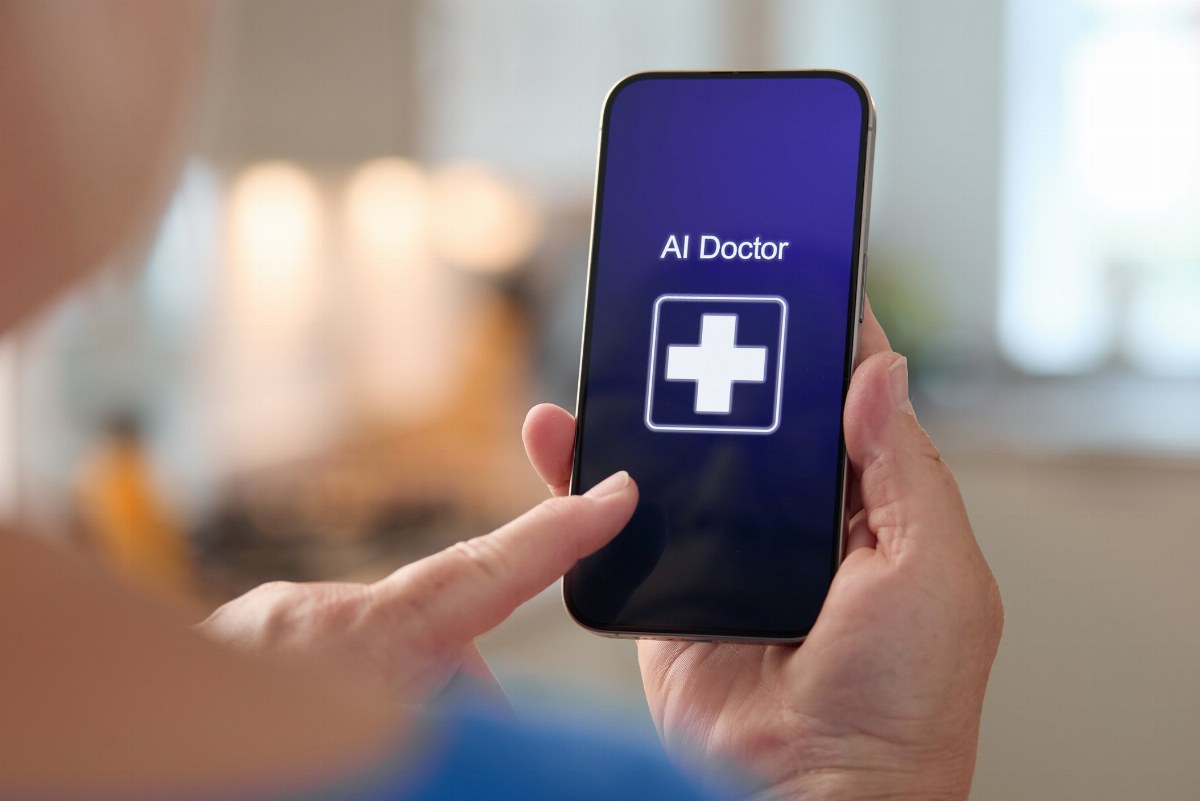
Researchers at Microsoft have announced the development of an artificial intelligence (AI) tool designed to diagnose patients sequentially, akin to the methods employed by doctors. This tool has demonstrated over twice the diagnostic accuracy of general practitioners when addressing complex medical cases, according to a study published in the journal “Science” and reported by Reuters.
The model identifies and organizes the questions that should be posed to patients, as well as the examinations and tests to be requested. It utilizes an “orchestrator” to manage the way AI approaches a problem, simulating a group of clinical experts collaborating to resolve diagnostic challenges.
Existing AI medical models typically take a more generalized approach, analyzing all of a patient’s symptoms, lab results, and imaging studies to generate a diagnosis. In contrast, this AI model, with the help of the orchestrator, first determines which questions to ask about the patient’s medical history and what aspects are significant during the physical examination.
Based on the information gathered, it decides which tests to request, analyzes the results, and may ask for additional tests if necessary. Throughout this process, it continuously updates its working hypotheses and plans, according to the research coordinators in an interview.
More Than Twice as Effective as General Practitioners
Tasked with diagnosing over 300 highly unusual and confusing medical dilemmas, the AI model employing the diagnostic orchestrator was found to be more than twice as precise in “evaluating” patients and determining diagnoses compared to general practitioners who rely on manuals and the internet.
Moreover, the tool outperformed human doctors when presented with scenarios drawn from a significant database of emergency room admissions. Evaluations comparing these older systems to human physicians typically utilize multiple-choice questions, researchers stated.
“AI has become very good at achieving a 100% pass rate on these,” said Dr. Dominic King, corporate vice president of Microsoft AI Health, whose team is developing the new technology. “But, of course, that does not reflect reality. No patient has ever come to me with a well-structured summary.”
Researchers also observed that the diagnostic processes are less costly when the orchestrator designs the medical investigations, compared to situations where this is done by human doctors.
“We are not only measuring the accuracy of the systems. We are also measuring how judiciously and carefully the diagnostic process is carried out,” stated Harsha Nori, head of the AI department at Microsoft AI Health.
In collaboration with Beth Israel Deaconess Medical Center in Boston, researchers will continue to test the tool’s ability to triage patients in emergency department waiting rooms.


