On Thursday, European Union leaders firmly opposed a new budget proposal for the period from 2028 to 2034, casting doubt on the likelihood of a consensus before the year concludes.
The EU member states engaged in a somewhat “cold” exchange of views regarding the future budget, revealing widespread dissatisfaction with the current proposals, according to Dutch Prime Minister Rob Jetten.
“It was a somewhat cold and fairly predictable exchange, which briefly showed that everyone is dissatisfied,” Jetten stated upon his arrival for the second day of the EU leaders’ summit in Brussels.
Jetten’s remarks unveiled insights into the discussions behind closed doors in Brussels. However, public statements made by European leaders had already indicated that debates surrounding the 2028-2034 budget would be complex.
Last Saturday, Ireland, currently holding the rotating EU presidency, introduced a revised European budget draft for 2028-2034, which proposed a reduction of approximately €159 billion.
On Thursday, officials expressed strong opposition to this new proposal, with each faction having different reasons for rejecting it.
Additional Meeting Scheduled for November
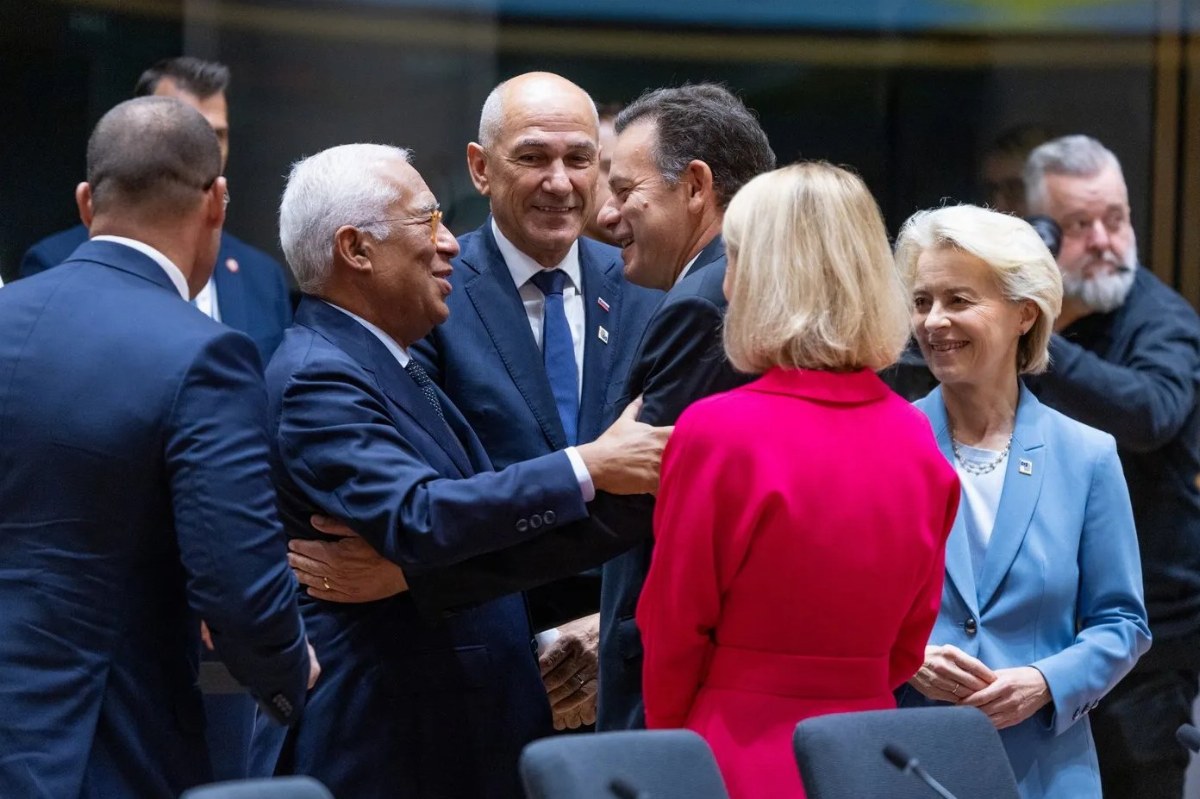
On Thursday, European Council President António Costa announced that an additional meeting will be held on November 26 in an attempt to resolve disagreements and lay the groundwork for a final agreement in December.
To facilitate a compromise, he plans to present new budget figures ahead of the meeting, according to an EU official cited by Politico.
Costa is pressuring leaders to finalize negotiations by year-end—before elections in France, Italy, and Poland in 2027 could derail discussions.
In a speech to leaders, Costa warned that missing the year-end deadline would delay EU payments to farmers until after January 1, 2028, when the new budget is scheduled to take effect.
If leaders fail to reach an agreement in December, the electoral calendar could postpone finalizing a deal until May or even October 2027, Costa cautioned leaders, according to two EU diplomats informed about the discussions.
The Election Dilemma
Costa’s plan received a significant boost on Thursday from French President Emmanuel Macron, who informed fellow leaders that he would not have a political mandate to sign an agreement close to the French presidential elections in April 2027.
This represents a major shift for France, which had previously been reluctant to commit to the year-end deadline.
Macron’s comments intensify pressure on governments to accelerate negotiations in the coming weeks, although some question his genuine intentions.
Hours before the leaders’ meeting, Marine Le Pen, a frontrunner in the upcoming French presidential elections, reiterated calls to halve France’s contributions to the EU budget if she wins next year.
She described rushing a budget agreement ahead of the French elections as “a democratic scandal.”
Frugal States’ Demands
The factions confronting each other in the budget debate are not new; however, the discussion is now heightened by the multiple crises facing the EU bloc.
The so-called “frugal” EU states—Germany, the Netherlands, Austria, Sweden, Denmark, and Finland—publicly declared that last week’s Irish proposal, which suggested a €159 billion cut to the budget, does not go far enough.
On Thursday, Belgian Prime Minister Bart De Wever, who joked during a press conference after the summit, said, “I’m married to a Dutch woman, so I’m very frugal in my personal life,” joined the six hardline supporters.
Swedish Prime Minister Ulf Kristersson stated on Thursday, “It’s far too large, far too costly. It would increase Sweden’s net contribution by nearly 60%. This is simply unacceptable,” he asserted.
A Divided Response
Despite this, behind closed doors, proponents of a stricter budget stance adopted a more conciliatory tone.
German Chancellor Friedrich Merz—an unofficial leader of the “frugal” camp—acknowledged that the Irish proposal made progress, though further cuts are still needed, according to two EU diplomats informed about the discussions, cited by Politico.
He suggested that EU payments to poorer regions, rather than subsidies for farmers, could be a possible source of cuts.
Conversely, Spanish Socialist Prime Minister Pedro Sánchez insisted that the budget is much too small.
“It’s a distribution of poverty,” he told fellow leaders during discussions, according to diplomats. Italian Prime Minister Giorgia Meloni echoed his sentiments, insisting that no further budget cuts would be accepted.
Romania and the Cohesion Friends Group
Meloni and Nicușor Dan hosted a meeting on Thursday of the so-called “friends of cohesion” group, which opposes cuts to the EU budget.
The meeting included several leaders, including the Prime Ministers of Greece, Poland, the Czech Republic, and Hungary.
“We will remain united throughout the negotiations concerning the next EU budget, focusing on four priorities,” Dan stated following discussions held just before the European Council.
The “friends of cohesion” advocate for protecting cohesion and agriculture, both in terms of funding and implementation rules, oppose budget cuts, seek “fair contributions from member states,” and demand “sufficient resources to address all our common priorities.”
New Funding Solutions for the Budget
To bring the parties closer to an agreement, Costa promised to expedite progress on EU-level taxes, or own resources, to finance the next seven-year budget and reduce national contributions.
He will consider proposals from the European Parliament regarding taxing cryptocurrency firms, online gambling, and tech giants, as well as Greece’s idea to direct future national revenue from the sale of 6G mobile frequency spectrum to the EU budget.
However, given the level of opposition, convincing EU countries to accept any of these options will not be an easy task.
“It’s time to be realistic and work on what is plausible and reasonable, rather than relying on illusions,” stated another EU diplomat, as cited by Politico.