The construction of Poland’s first nuclear power plant is taking a significant step forward with the initiation of the Marine Off-Loading Facility (MOLF). This facility is critical for transporting the heaviest components of the plant, including the reactor vessel and steam generators, which will be delivered by sea. A specialized port for unloading these large elements is required for this operation.
The Regional Director for Environmental Protection in Gdańsk issued an environmental decision on September 30, allowing for the construction of the MOLF, a specialized unloading facility in the Baltic Sea, along with a technical road leading to the future plant site. This decision facilitates the next formal steps required to commence construction. The hydro-technical structure will be prepared by the Maritime Office in Gdynia, while Polish Nuclear Power Plants will handle the technical road.
MOLF extends over a kilometer into the sea
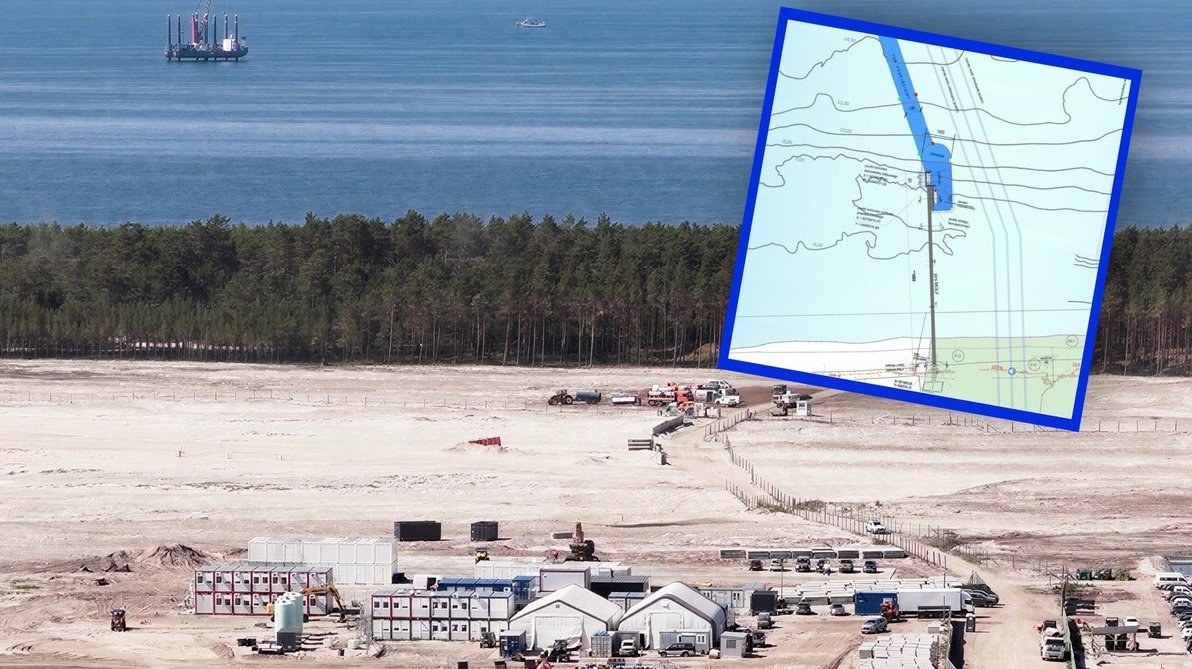
The MOLF is designed as a permanent reinforced concrete pier supported by steel piles, measuring 1,112 meters in total length, with 970 meters extending into the sea. Besides the pier, the facility will include a broader unloading area, mooring positions, and preparation for maneuvering areas, turning basins, and approach channels, as reported by Polish Nuclear Power Plants.
This facility will enable the unloading of the largest components directly from ships, with subsequent transportation to the construction site via the technical road. Unloading will be facilitated through cranes and by sliding cargo onto transport platforms.
The construction of this marine terminal aims to reduce the need for transporting oversized components by road and rail.
Arkadiusz Marchewka, the Secretary of State in the Ministry of Infrastructure, emphasized that obtaining the environmental decision for MOLF brings them closer to realizing infrastructure essential for building the first Polish nuclear power plant. Utilizing maritime transport for delivering the largest and heaviest components will leverage the potential of Polish ports and marine infrastructure.
The open structure of the facility will allow sediment movement between the supports, minimizing its impact on natural processes occurring in the coastal zone.
Preparations for the MOLF construction have utilized extensive research conducted over the years on the coastal zone near Lubiatowo by the Maritime Coastal Laboratory of the Institute of Water Building PAN, which has been monitoring wave action, currents, sediment movement, and changes in the shoreline, beaches, and dunes for decades, according to Trójmiasto.pl.
Who will construct MOLF?
The Maritime Office in Gdynia is expected to submit applications for a location decision and water law permit in the coming days. The next step will be obtaining a construction permit, while a tender process is ongoing to select the contractor for the MOLF construction work.
According to Anna Stelmaszyk-Świerczyńska, Director of the Maritime Office in Gdynia, timely preparation of the hydro-technical, road, and rail infrastructure is vital to ensure supplies and commence the subsequent phases of the power plant’s construction.