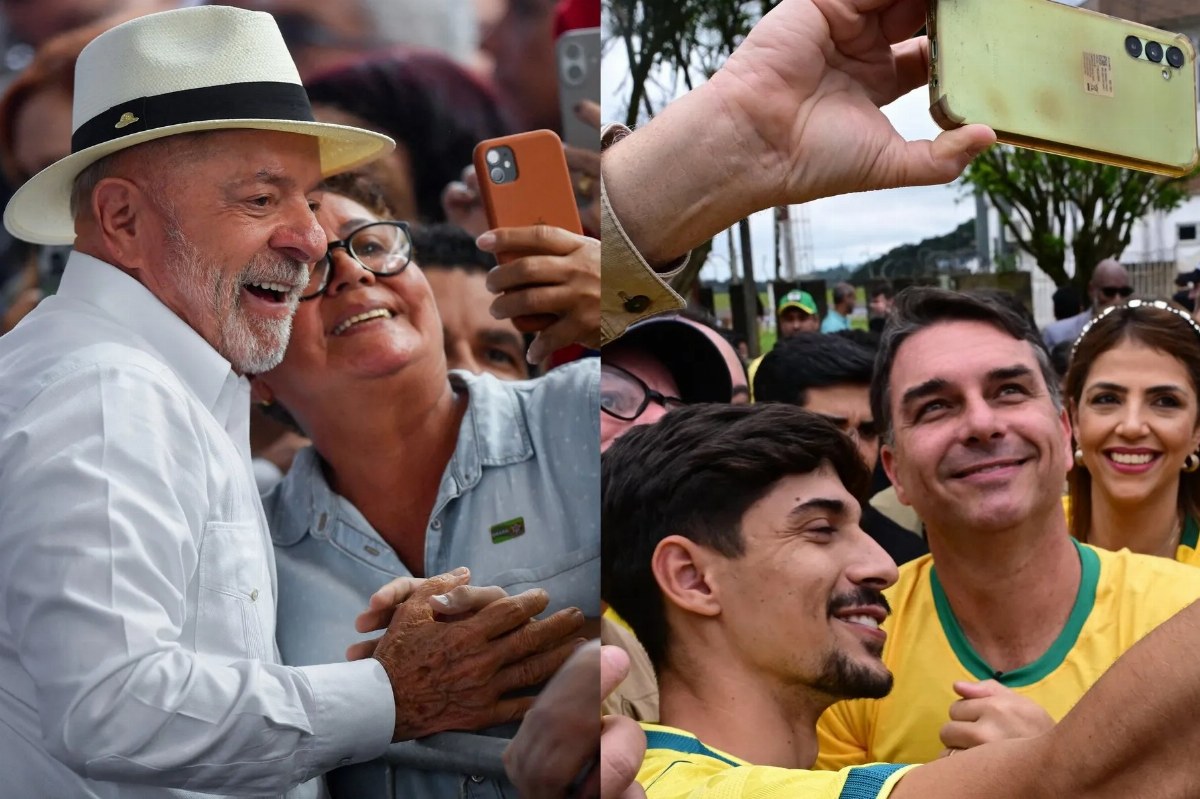
Lula da Silva, the current leftist president of Brazil, is locked in a closely contested race with Flavio Bolsonaro, son of his former rival Jair Bolsonaro, as the country approaches its presidential elections on October 4 and 25. This election is significant not just for Brazil, but also for Latin America and Europe.
According to the latest Quaest poll, Lula leads with 39% to Bolsonaro’s 34% in the first round, but they are tied for a potential runoff on October 25. Lula is attempting to portray Bolsonaro as a representative of a broader right-wing movement, linking him to figures like Argentine President Javier Milei, Israeli Prime Minister Benjamin Netanyahu, and former U.S. President Donald Trump.
However, Lula’s path to a second term is fraught with challenges. Despite achievements in reducing inequality and unemployment, his administration faces voter dissatisfaction over rising living costs and has struggled to overcome nearly a decade of polarization within the country, as reported by Reuters.
A Significant Electoral Contest
The international interest in this electoral race was highlighted during Lula’s visit to New York for the UN assembly, where he met with representatives of the progressive movement in the U.S., including Mayor Zohran Mamdani and Senator Bernie Sanders.
Paulo Abrao, executive director of the Washington Brazil Office, noted that international observers perceive Brazil’s election as a pivotal moment that could influence the balance of power in the ongoing global struggle between democracy and authoritarianism. Several leaders at the UN expressed concern about Brazil’s future following these elections.
The European Union is also closely monitoring this election, following its recent comprehensive trade agreement with Brazil.
Lula’s Promise
Lula’s victory in 2022 against Jair Bolsonaro marked a remarkable comeback. After leaving office 12 years ago with an 87% approval rating, Lula faced a harsh climate of animosity. In 2016, he became the target of a corruption investigation amid Brazil’s turmoil, ultimately spending 580 days in prison before his sentence was annulled due to irregularities.
Despite past challenges, Lula remains a symbol for much of the global left, engaging with visitors ranging from former Uruguayan President Pepe Mujica to philosopher Noam Chomsky. He returned to power believing that Brazil is at the forefront of a broader fight against the global right. The January 8, 2023, attacks by Bolsonaro supporters on government buildings in Brasilia further solidified this conviction for many.
Lula has asserted, “As long as I am alive, the far-right will not return to power in this country,” during his electoral campaign.
The Cost of Living Crisis
Voter confidence, however, seems tenuous. Nearly half of Brazilians believe the economic situation has worsened in the past year, according to a September Quaest poll, while only 19% feel it has improved. The rising cost of living has become central to Bolsonaro’s campaign, who frequently compares current supermarket prices to those during his father’s presidency.
Lula’s campaign responded with a website titled “Market of Lies” to counter these claims and filed a complaint with Brazil’s Superior Electoral Court, accusing Bolsonaro’s campaign of misinformation regarding prices. Experts suggest that the debate over living costs reflects a disconnect between improved labor market indicators and inflation versus the everyday realities faced by many households.
Thomas Traumann, a political analyst, compared Lula’s situation to that of U.S. President Joe Biden, who faces challenges in reconciling positive macroeconomic data with negative consumer sentiment.
While food inflation has slowed significantly—prices even dropped from June to August—years of rapid price increases continue to strain household budgets, keeping prices well above pre-pandemic levels. Moreover, household debts have risen amid easily accessible but high-interest loans from fintech companies and the online gambling boom, pushing many families into financial difficulties.
Flavio Bolsonaro’s Unexpected Competitiveness
Flavio Bolsonaro’s competitive nature has surprised many. Unlike his siblings, he has faced allegations of corruption, including running a purported bribery scheme that benefitted the family of a police officer accused of leading a hitman gang.
Among Jair Bolsonaro’s three elder sons, Flavio has been the least combative, adopting a more balanced image. His candidacy announcement shocked markets, and skepticism emerged from other conservative parties, prompting some right-wing candidates to declare their own presidential runs.
For months, Flavio struggled to secure allies for his electoral list, eventually choosing a little-known parliamentary figure from his Liberal Party as his running mate.
Despite national hesitance, his candidacy has been rapidly embraced by the global conservative movement, which is eager for Brazil to join the regional wave of right-wing leaders who have risen to power in Argentina, El Salvador, and Ecuador.
Thanks to his brother Eduardo Bolsonaro, who was ousted from the Brazilian Congress after relocating to the U.S., Flavio secured a meeting with Donald Trump in May, with Trump describing him as “a smart young man who loves his country very much.” Flavio’s campaign faced a significant setback after an investigation revealed attempts to solicit funds from a disgraced banker accused of running a billion-dollar fraud scheme to finance a biographical film about Jair Bolsonaro.
The revelation led to immediate backlash, causing a drop in his poll support and prompting some allies to turn critical. Flavio dismissed the investigation as political smear tactics and has since recovered in the polls.
Regional Stakes
While Lula has strengthened ties with China and revived Brazil’s leadership within the BRICS block of emerging nations, recent victories of the right in South America and a contentious relationship with the Trump administration have left him increasingly isolated in the Western hemisphere.
Some Brazilian diplomats assert that Washington views Brazil as the last significant barrier against a Trump-aligned offensive in Latin America, following right-wing triumphs in Chile, Colombia, Honduras, and Peru, along with an unprecedented expansion of U.S. power in Venezuela post-military intervention.
In Argentina, opponents of libertarian President Javier Milei see Lula’s potential reelection as a boost for their prospects in next year’s elections.
The EU is Watching Brazil Closely
European diplomats from liberal governments, who have supported Brazil’s progressive climate initiatives, are also monitoring the situation closely. An anonymous European ambassador stated, “If human rights are grossly violated or if the Amazon is deforested on a large scale, it will be much harder for us to collaborate with Brazil.”
Furthermore, the elections occur amid Brussels’ efforts to strengthen ties with allied countries in response to a surge of Chinese exports and the protectionism of the Trump administration. Brazil, home to 213 million residents and rich in essential minerals, plays a key role in this effort.
The EU is particularly concerned that a presidency under Flávio Bolsonaro could complicate the politically sensitive Mercosur trade agreement, potentially aligning Brasília closer to Washington, where Trump has presented himself as a staunch ally of the Bolsonaro family.
After more than 25 years of negotiations, the EU-Mercosur trade agreement provisionally came into effect in May, although final approval is on hold pending a ruling from the EU Court of Justice on its compliance with EU treaties.
Interference in Elections
Lula’s resistance against Trump and his tariffs appears to have bolstered his popularity among voters, while some progressives have dubbed Flavio Bolsonaro “Tariflavio” in reference to the senator’s recent visit to the U.S. to seek support from Trump. However, in recent weeks, allies of Lula have expressed concerns that the Trump administration might refuse to recognize the election results if he wins, citing ongoing interference attempts.
They referenced U.S. Secretary of State Marco Rubio’s statements blaming Lula for the failure of trade negotiations that resulted in increased U.S. tariffs on Brazilian goods. There was also an unsuccessful attempt to send U.S. officials to Brazil for discussions on “electoral integrity,” according to the State Department.
Before the 2022 elections, former President Joe Biden dispatched the CIA director to convey to former President Bolsonaro to refrain from interfering in the elections, and ensured that the U.S. was among the first countries to recognize the outcome.
Last week, 31 Democratic lawmakers, including Congresswoman Alexandria Ocasio-Cortez, urged Rubio to respect Brazil’s election results, expressing deep concern over a sustained campaign of interference and destabilization in Brazil.