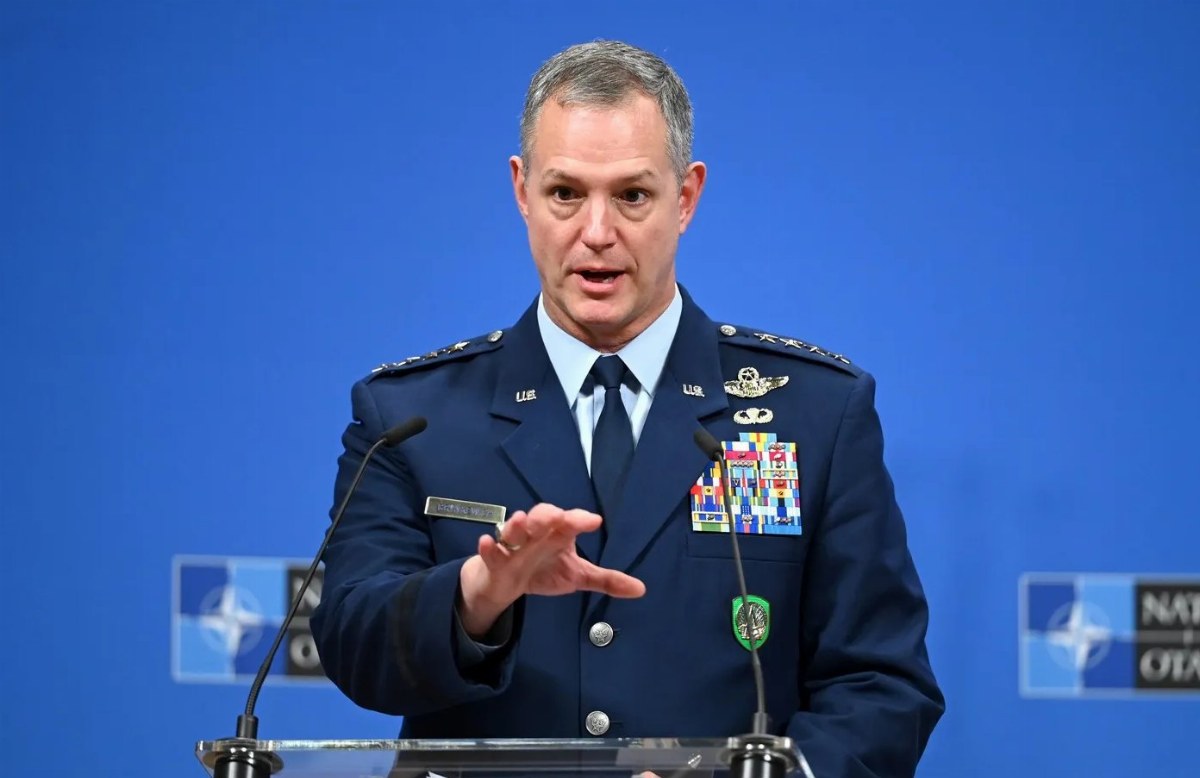
NATO countries are increasing intelligence sharing in response to a surge of sabotage incidents seemingly linked to Russia. General Alexus Grynkewich, the Supreme Allied Commander in Europe, stated that the alliance should remain “calm and confident” in its ability to address any threats posed by Moscow.
Grynkewich emphasized that although a large-scale Russian attack against NATO is unlikely, it cannot be completely ruled out. This assertion follows a warning from Denmark’s military intelligence suggesting that Russia may escalate hybrid warfare tactics against the West in the coming months.
The Danish intelligence service noted there is a “low but increasing risk” of Moscow launching a limited military attack against NATO countries bordering Russia. Grynkewich expressed concern over the recent series of incidents, including a drone attack attempt from Leipzig/Halle Airport in Germany and a Russian ship firing warning shots at a Danish military helicopter.
He assured, however, that the alliance—”the strongest alliance in history”—possesses the necessary tools and mechanisms to manage the risks in this context. He described the Danish assessment of potential threats as “fairly balanced.”
Despite ongoing tensions, Moscow has consistently denied involvement in hybrid warfare or sabotage operations against NATO countries, claiming no intention to provoke confrontation.
Grynkewich Warns Putin Against Aggression During His Tenure
In a recent telephone interview with Reuters, Grynkewich, while en route to a command handover ceremony at NATO’s Norfolk, Virginia headquarters, discussed the risk of a limited Russian attack on NATO territory. He underscored the alliance’s preparedness for such emergencies, asserting that while such developments are “unlikely, we cannot exclude them.”
He stressed that “currently, we are all countries on the eastern flank” of NATO, given the nature and scope of the threats faced by the alliance. Grynkewich dismissed suggestions that Russian President Vladimir Putin might view an opportunity to attack NATO, despite the depletion of U.S. precision missile stocks due to the conflict with Iran.
“Absolutely not. He would do well not to attempt that while I am in command,” Grynkewich stated, adding that NATO is well-positioned to defend every inch of its territory. He expressed confidence in his authority to take measures to deter any aggression against the alliance if emerging threats arise.
NATO’s Transformation: Europeans Taking a Greater Role
The command handover in Norfolk to a European commander is part of a broader reorganization aimed at fostering greater European responsibility for security, a requirement emphasized by U.S. President Donald Trump. A European commander will also take charge of NATO’s Allied Joint Force Command in Naples, responsible for operations in the Arctic and northern Europe, as well as securing transatlantic resupply routes.
In an effort to reassure European allies concerned about the ongoing review of U.S. forces on the continent, Grynkewich stated that Washington will continue to provide essential but limited capabilities to NATO as Europeans assume a more significant role. He clarified that there is no “preset outcome” regarding the number of American soldiers remaining in Europe or which capabilities might be relocated, as approximately 80,000 U.S. troops are currently stationed on the continent.
Trump has repeatedly threatened that the U.S. may withdraw from NATO, which has been dominated by American leadership since its establishment in 1949, accusing European nations of taking advantage of the security provided by the alliance.