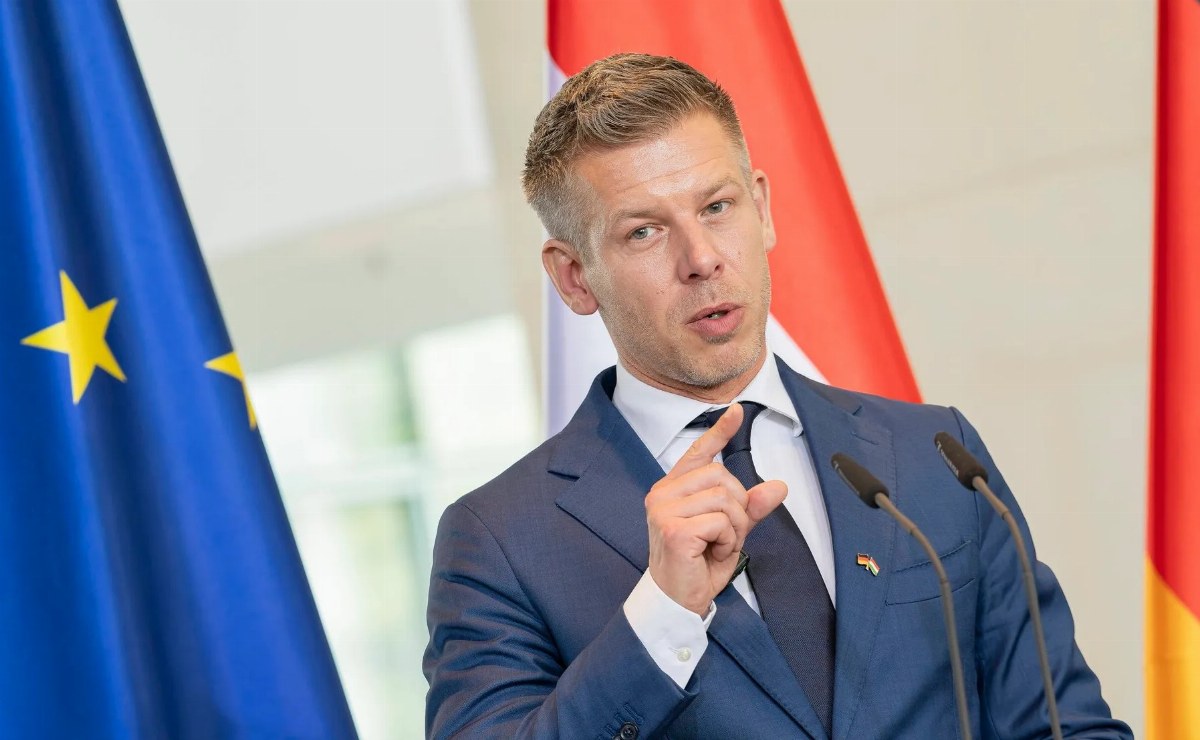
Kiev expressed surprise on Monday at what it described as the “unnecessarily confrontational statements” made by Hungarian Prime Minister Péter Magyar regarding Ukraine. This reaction follows Hungary’s decision to decline participation in the “Carpathian 8” summit hosted by Ukraine, which has led to escalating tensions and a series of unpleasant exchanges between the two nations.
Ukrainian President Volodymyr Zelensky convened the inaugural “Carpathian 8” summit over the weekend in the Ivano-Frankivsk region, aiming to enhance economic cooperation among regional countries. Attendees included Polish Prime Minister Donald Tusk, Romanian President Nicușor Dan, Serbian President Aleksandar Vučić, and representatives from the Czech Republic, Austria, and Slovakia.
The Hungarian Ministry of Foreign Affairs stated that the country was represented by the head of its embassy in Kiev. However, the Hungarian representative was absent from the group photo and did not participate in the opening speeches or panel discussions, as reported by a journalist from “Kyiv Independent” who covered the summit.
Hungary Cites Justification for Non-Participation
During a speech in the Hungarian parliament, Prime Minister Magyar claimed he had a “valid reason” for Hungary’s absence. “It is enough that I am the Prime Minister of Hungary, and if I am not aware of it, trust me, Hungary will not participate in this (forum),” Magyar stated. He added that if Hungary ever decides to take part, they will announce it.
Ukraine Criticizes Hungary’s Isolationist Policies
Ukrainian Foreign Minister Andrii Sybiha responded on Monday, expressing surprise at what he termed Hungary’s confrontational rejection of the Carpathian Integration Initiative. He noted that recent statements from Budapest suggest that the “obstructionist and isolationist” policies of Viktor Orbán persist even after his departure.
Sybiha remarked, “Orbánism has brought nothing beneficial to Hungary or the region in the past — and will not bring anything good to anyone in the future.” Relations between Ukraine and its EU neighbor Hungary had seen a slight thaw following Magyar’s appointment in May, which replaced the Kremlin-friendly Orbán.
Although Magyar ruled out providing military assistance to Ukraine or expediting its EU accession process, he expressed a desire to restore bilateral relations and foster a more constructive partnership with Ukraine.
Meeting Between Zelensky and Magyar Remains Elusive
Despite this, challenges persist, as Budapest has renewed its blockade on Ukraine’s EU accession negotiations, citing the rights of the Hungarian minority in Ukraine. A potential meeting between Zelensky and Magyar, which could mark a new chapter in their relations, was suggested as early as spring, but no date has been set yet.
“The President is prepared to meet; it is Mr. Magyar’s party that continues to obstruct progress,” stated Zelensky’s advisor, Dmitro Litvin, adding that the Ukrainian Ministry of Foreign Affairs is in contact with the Hungarian side.
Energy Agreement Sparks Controversy
A new point of contention has emerged regarding energy issues. On Saturday, Ukraine’s state energy company Naftogaz announced an agreement with Hungary’s MOL to construct oil storage facilities in Hungary to safeguard supplies against potential Russian attacks. This agreement has been criticized as a security threat by Orbán’s Fidesz party and provoked a strong response from Magyar.
“Under my government, no such storage will be built at the Hungarian-Ukrainian border or elsewhere,” Magyar stated on Monday. He also warned MOL to consult the government before entering into such agreements, emphasizing that the Hungarian state holds a 25% stake in the company.
Magyar added, “MOL’s practices are entirely unacceptable; henceforth, I expect the company to treat the Hungarian state as a shareholder with a 25% stake. We will see what the consequences of this will be.”
Sybiha also reacted to this issue, stating that such remarks “question the direct, pragmatic, and mutually beneficial cooperation between Ukrainian and Hungarian energy companies, as agreed upon in a bilateral memorandum.” He stressed that whenever politics interferes with pragmatic matters, “nothing good comes from that.”