France is backing Netherlands’ Klaas Knot to succeed Christine Lagarde as president of the European Central Bank (ECB), contingent upon the appointment of a French candidate as the chief economist.
Knot’s candidacy is reportedly endorsed by French President Emmanuel Macron, according to sources familiar with the negotiations. However, it is likely to encounter strong opposition from Germany, setting the stage for high-stakes political negotiations among key leaders in the Eurozone.
Eurozone Power Brokers at Play
The race for succession has intensified in recent weeks amid speculation that Lagarde and her Executive Board colleague Isabel Schnabel may both resign before their terms expire at the end of 2027, prompting a reshuffle at the top of the ECB.
The ECB president and five other Executive Board members are appointed by consensus among leaders of the 21 Eurozone countries, with the three largest economies—Germany, France, and Italy—having de facto permanent representation.
An early departure of Lagarde, a French national, and Schnabel, a German, would expedite decisions to be made in the coming year and pave the way for a broad agreement regarding their positions and that of chief economist Philip Lane, whose term ends in May.
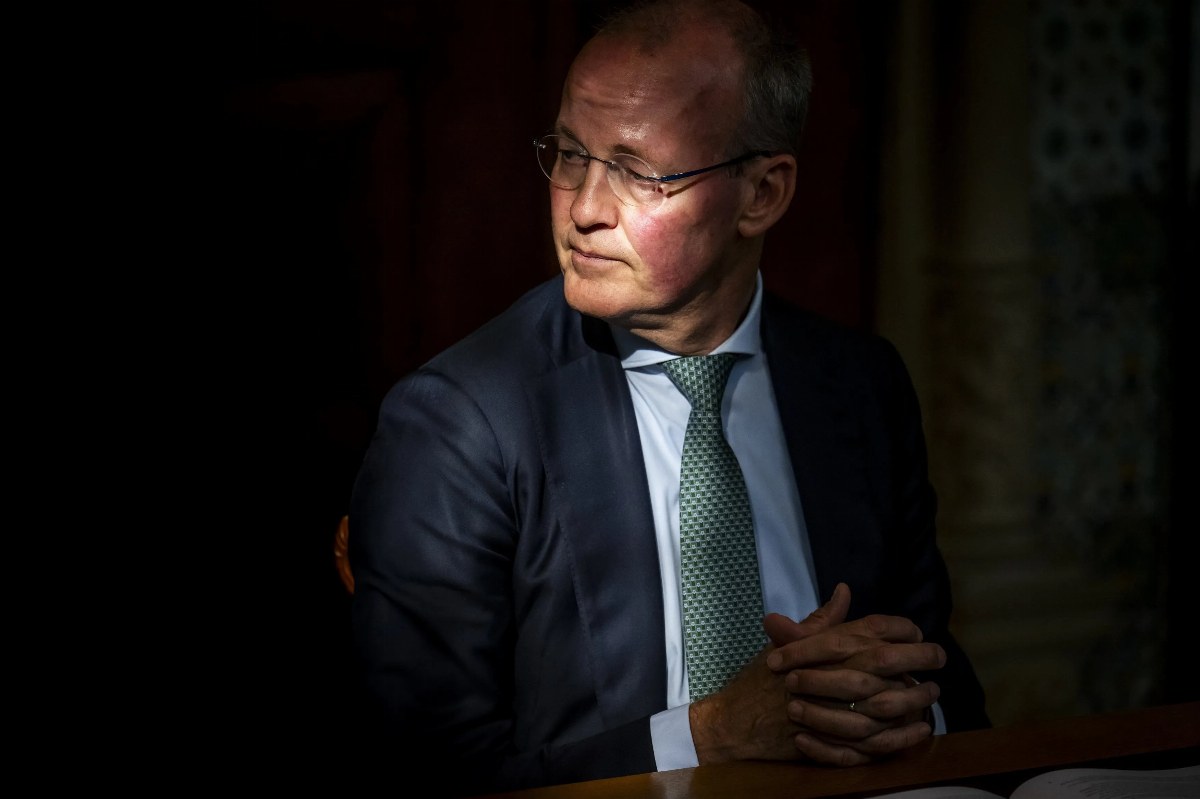
According to the plan, Knot, who has led the Dutch central bank from 2011 to 2025, would assume the presidency with France’s backing, the sources indicated, speaking on condition of anonymity as the negotiations remain informal.
Spanish Rival for Knot
Knot is viewed by market participants as pragmatic, naturally inclined toward a more restrictive monetary policy but flexible enough to adjust his course based on economic data.
“He supports restrictive monetary policy, but in an intelligent way,” a French official said regarding Knot.
Former Governor of the Bank of Spain, Pablo Hernández de Cos, is seen as Knot’s main rival. However, since de Cos hails from southern Europe, his appointment would likely necessitate that one of the “frugal” northern Eurozone countries assumes the chief economist role to maintain the power balance.
France’s Chief Economist Aspirations
In exchange for supporting Knot, France seeks the chief economist position—selected by the ECB president from among the Executive Board members—sources told Reuters.
Candidates on Paris’s shortlist include Agnès Benassy-Quéré, the deputy governor of the Banque de France, and Laurence Boone, a former chief economist at the OECD and deputy minister for Europe in a previous Macron government.
Hélène Rey, currently at the Bank for International Settlements, is another name proposed by France, sources indicated.
The appointment of any of these individuals would contribute to maintaining gender balance within the ECB Council, where Lagarde and Schnabel are currently the only women.
Germany’s Position
However, this maneuver risks an immediate negative reaction from Berlin. While the proposal would leave Germany with the vacancy left by Schnabel and her portfolio concerning market operations, officials there are also eyeing the chief economist position, widely regarded as the second most influential role in the Council.
France’s increasing debt issues have made Paris more eager than ever to maintain firm control over the Eurozone’s monetary policy levers.
Germany, being less indebted and more economically orthodox, remains cautious about any weakening of the ECB’s commitment to price stability.
Lagarde’s Tenure Outlook
Lagarde has publicly expressed her interest in promoting European integration in light of next year’s presidential elections in France, where far-right, Eurosceptic leader Marine Le Pen is gaining significant support in polls.
Her resignation before the May elections would guarantee Macron a decisive voice in choosing Lagarde’s successor before the end of her term.
Lagarde has not dismissed speculation regarding an early departure, stating only, “You won’t see me leaving before 2027.” The media has frequently linked her with leadership at the World Economic Forum.
Lagarde’s eight-year term officially concludes at the end of October 2027.