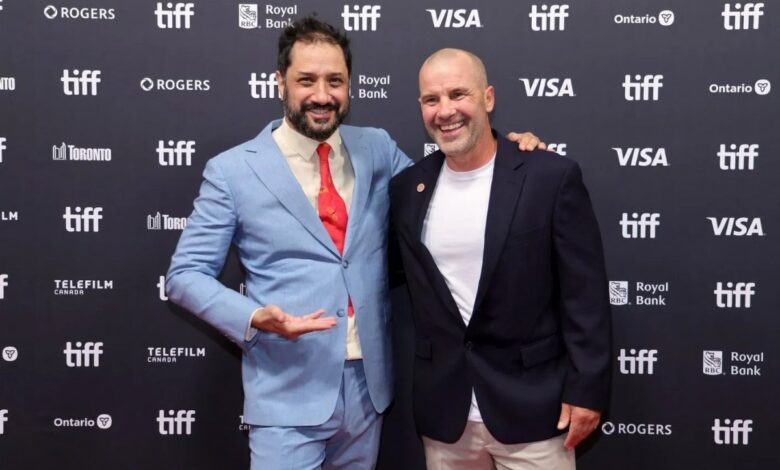
Tiberiu Uşeriu, a Romanian who served nearly a decade in prison, is featured in the documentary “The Ultra Runner,” which premiered during the Toronto International Film Festival from September 10 to 20, according to reports from France Presse.
The film chronicles Uşeriu’s transformation as he competes in some of the world’s most extreme endurance races, beginning from his impoverished childhood in communist Romania, marked by dictatorship and violence, to tackling the grueling 600 kilometers of the “6633 Arctic Ultra” in freezing temperatures.
“Completing a race shows me that I can surpass myself, that I can reach a new version of myself,” Uşeriu stated to AFP prior to the film’s premiere directed by Canadian Mila Aung-Thwin, which took place on Friday, as noted by Agerpres.
Aung-Thwin had longed to capture the sensations of racing on film but struggled to find the right perspective until he discovered Uşeriu’s inspiring story, which is also documented in his autobiography, “27 de pași.”
“Many people have done things in their lives that they regret. The fact that Tibi has managed to rebuild his life after prison and has become a source of inspiration in Romania and beyond is remarkable,” the filmmaker explained.
He added, “It’s a cliché, but it’s a wonderful cliché.”
Uşeriu found it challenging to share his story in front of the cameras. “During races, I’m in a sort of tunnel. I don’t pay attention to the cameramen and don’t really understand what’s happening,” he explained. “It became more difficult when they began to dig into my childhood. Reliving those moments was very stressful,” he added.
After the 1989 revolution, Uşeriu emigrated to Western Europe, where he fell into crime and was arrested in Germany.
Upon his release from prison, he reconnected with his brother and turned to increasingly extreme ultramarathon events as a means of reconstruction.
“Our story reflects Eastern Europe, a Romania subjugated by the communist regime and dictatorship. It also represents the many children who grew up during that era and suffered the same traumas,” his brother noted, who co-leads a non-governmental organization focused on environmental and social projects with Tibi.
Yet, Tibi insists, “Even if we had a difficult childhood or a complicated past, we can benefit from a second chance and become someone else. It’s a deeply positive idea.”