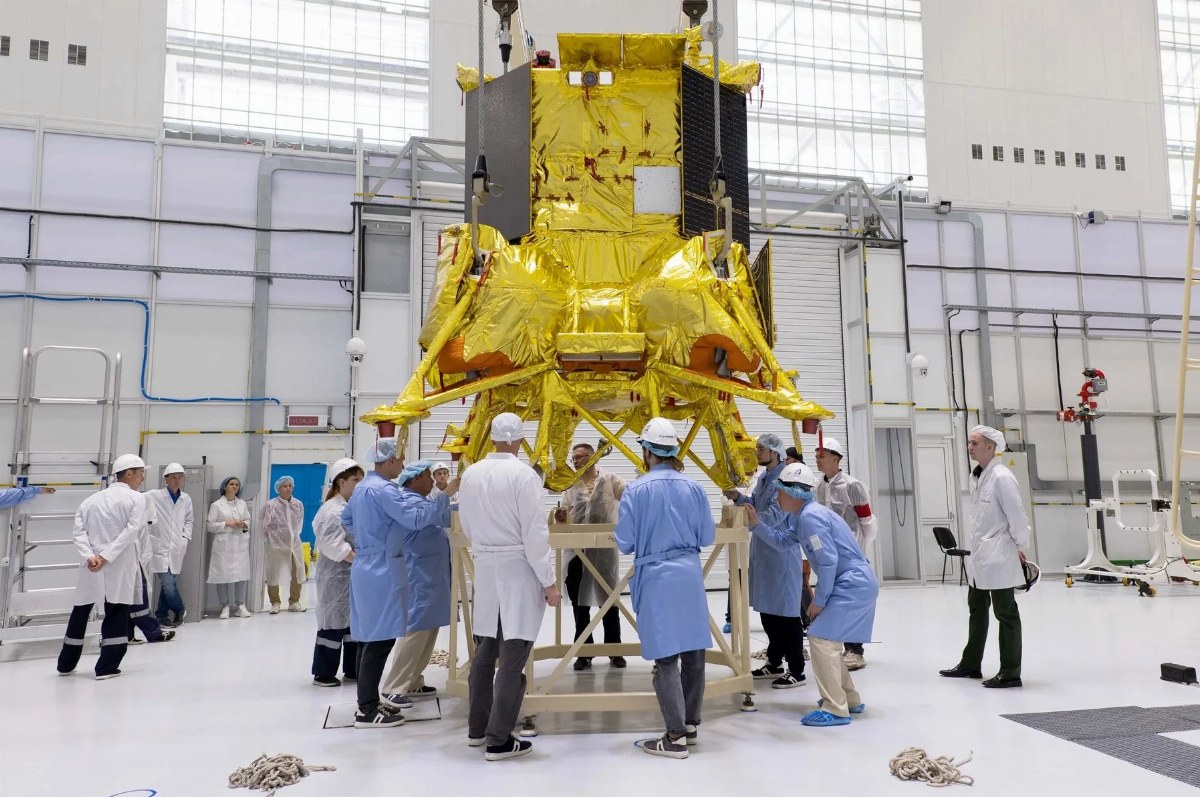
South Korea has announced its goal to achieve a Moon landing by 2030, following similar ambitions from the United States and China, though this mission will be unmanned. This initiative is part of a comprehensive technological strategy that encompasses seven ambitious projects ranging from nuclear energy and quantum computing to space exploration and biotechnology, as the nation seeks to establish new growth engines beyond semiconductors and artificial intelligence (AI), according to reports.
The initiative, dubbed “Seven Major SEED” (SEED standing for Science, Engineering, Energy and Development), was unveiled during a meeting led by President Lee Jae Myung. It includes objectives such as the commercial deployment of domestically developed small modular reactors (SMRs) by 2035, a Moon landing in 2030, the development of a 100-qubit quantum computer by 2029, and the commercialization of brain-computer interface products by 2035.
President Lee emphasized that South Korea must seize the opportunities emerging from the semiconductor industry boom and the rapid expansion of AI to prepare for the country’s next growth drivers.
“The seven SEED projects we are discussing today will become engines of next-generation growth and essential national strategic assets,” stated Lee.
Long-term Development Plan with Moon Landing by Decade’s End
Bae Kyung-hoon, South Korea’s Minister of Science, highlighted that the initiative targets SMRs, fusion energy, next-generation renewable energy, quantum technology, the aerospace sector, advanced biotechnology, and supply chains for critical minerals and materials.
This plan is introduced in the context of South Korea facing a declining working-age population and slowing economic growth potential while competing for an edge in emerging technologies, which are increasingly vital for economic competitiveness and national security.
“We will nurture these seeds and build a South Korea that no one can rival in 10 or 20 years,” Bae affirmed.
The space program includes a domestic Moon landing mission in 2030, a second mission featuring a lunar module in 2032, and the establishment of an independent low Earth orbit satellite communication network by 2035.
The only countries that have successfully landed on the Moon so far are the former Soviet Union, the United States, China, India (in 2023), and Japan (in 2024). To date, only the U.S. has sent humans to the Moon’s surface, but both Washington and China plan to accomplish this by 2030.
South Korea Sets Ambitious Goals in Its Technology Plan
Under the newly announced strategy, South Korea aims to commercially deploy a domestically developed SMR by 2035 and begin constructing SMRs that do not use light water in the 2030s, while also pursuing fusion-powered electricity by the end of the decade.
The renewable energy component includes plans for developing ultra-efficient solar cells, advanced offshore wind energy technologies, hydrogen production systems, and AI-based electrical grid technologies, as stated in a government announcement.
In quantum technology, the government aims to develop a 100-qubit domestic quantum processor with error correction by 2029 and establish South Korea as the leading country in quantum chip production by 2035.
The government also plans to develop technologies related to space data centers and support South Korean companies in next-generation commercial aircraft development programs.
In biotechnology, South Korea aims to create an AI-bio infrastructure by 2030 and commercialize brain-computer interface products by 2035, while also supporting AI-assisted drug discovery, autonomous labs, and advanced genetic and cellular therapies.
Officials indicated that a public-private working group will be established to expedite commercialization through regulatory reforms.
“Whether we become leaders enjoying limitless opportunities or followers at risk of falling behind depends on our choices,” emphasized President Lee.