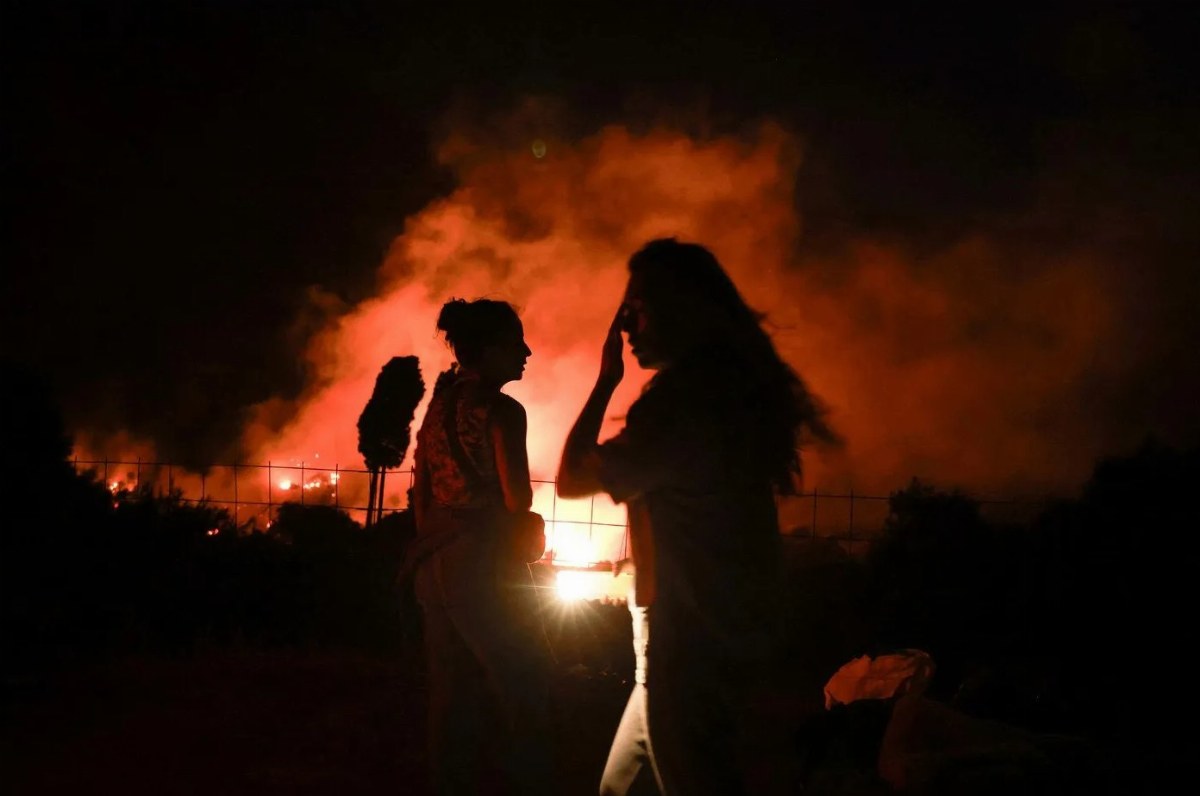
Research indicates that approximately 75% of the area burned by wildfires in Greece this year is associated with the electrical network, according to reports.
Electrical sparks from Greece’s outdated network are significantly contributing to devastating wildfires, as shown by preliminary data from authorities and recent investigations.
These fires typically ignite under hazardous conditions—during strong winds, peak electricity demand, and often in remote, fire-prone areas—resulting in swift and catastrophic spread.
The fire response unit reports that once again, about 75% of the land scorched in Greece this year is linked to the electrical network.
“The Most Severe and Devastating Fires”
Two wildfires at the end of July—one in western Attica and the other on the island of Crete—were also found to be connected to the electrical network, according to initial conclusions from Greek firefighters.
These blazes destroyed over 14,000 acres and resulted in four fatalities.
A similar pattern emerged last year, with six out of ten major fires and 55% of the area burned in 2025 attributed to the electrical network, stated Elias Tziritis, wildfire action coordinator at the World Wildlife Fund Greece, as reported.
“Statistically, most fires may not start from the electrical network, but they are responsible for the most severe and devastating fires,” he explained.
Outdated Electrical Infrastructure
Neglected power lines, vegetation in contact with wires, dust accumulation on transmission equipment, and other similar malfunctions can create sparks.
The risk escalates during strong winds and high electricity demand when the aging infrastructure is under greater strain.
A significant portion of Greece’s electrical network was installed decades ago, extending through fire-prone forests and increasingly depopulated rural areas. In the 1960s, the country opted for an overhead network as a cheaper means to expand electricity access, while the prolonged financial crisis that began in 2009 further limited investments in the system.
Critics argue that Greece has been too slow to bury distribution lines and adapt the network to the increasingly severe fire conditions.
“We raised this issue years ago, calling for urgent measures regarding the electrical network,” stated Christos Kalogeropoulos, a retired lieutenant general of the Fire Service and former head of the Arson Unit.
“We have long been advocating for urgent underground cabling,” he added.
High Costs for Burying the Network
The electricity distribution operator in Greece, HEDNO, contests claims that the network is one of the primary causes of wildfires, noting that only about 1% of registered wildfires in 2025 were attributed to the electrical network, compared to roughly 3% in the U.S.
Alexandra Sdoukou, spokesperson for the ruling New Democracy party, stated that burying the entire medium-voltage network of 120,000 kilometers would cost about €35 billion, which would require the government to prioritize areas at the highest risk.
Meanwhile, opposition parties and advocacy groups accuse the government of acting too slowly, failing to maintain the electrical network adequately, and abandoning certain fire prevention projects funded by EU recovery funds.