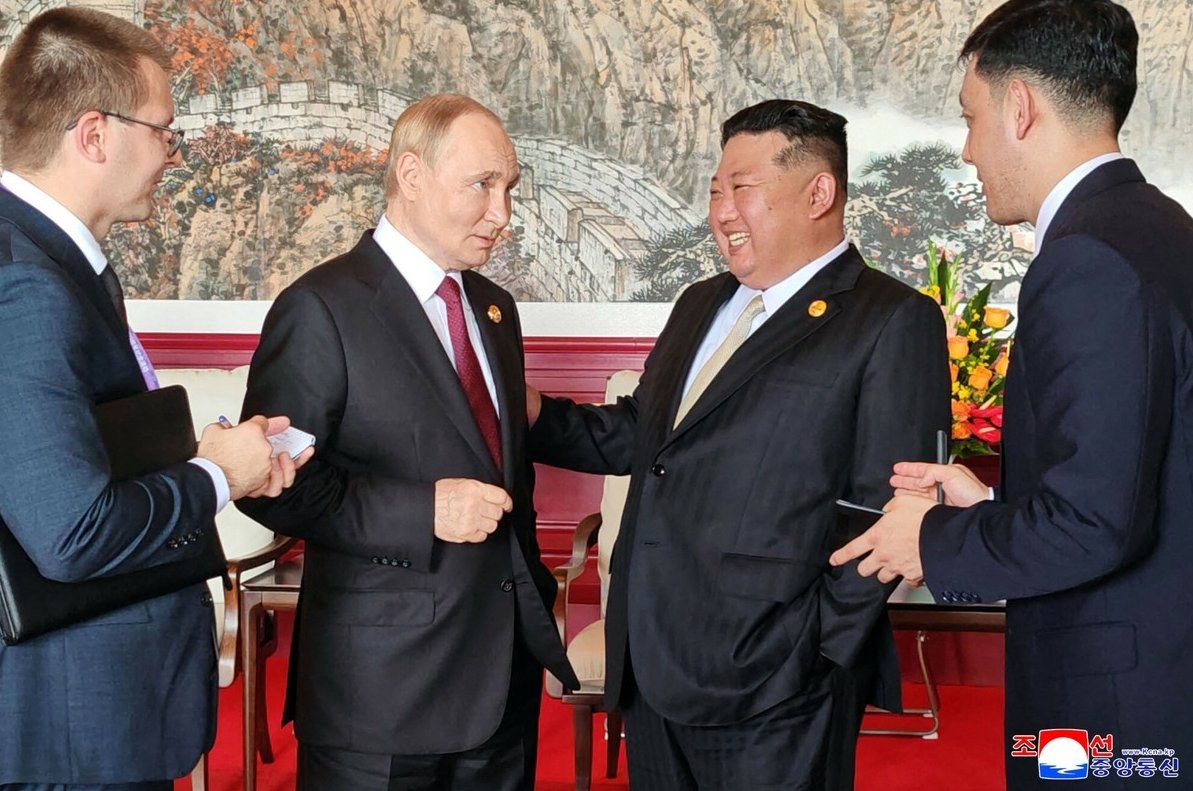
North Korea’s cooperation with Russia amid the Ukraine conflict might generate as much as $22 billion for Kim Jong Un, according to estimates from analysts at Bloomberg.
Following Russia’s full-scale invasion of Ukraine, the country faced ammunition shortages and began sourcing supplies from North Korea, establishing new income streams for Pyongyang and impacting its economy.
Andrei Lankov, an expert on Korea and head of the consulting firm Korea Risk Group, described these gains as crucial for North Korean leadership.
North Korea’s Contributions
Ukrainian intelligence estimates indicate that by late 2025, North Korea was supplying as much as half of Russia’s needs for 122 mm and 152 mm caliber ammunition.
In addition to arms, North Korea dispatched around 16,000 soldiers to Russia, reportedly at a cost of approximately $2,000 per month per soldier, plus compensation for any casualties.
The influx of funds has enabled Pyongyang to boost its economy and expedite military and nuclear program advancements.
In the capital, large-scale infrastructure projects are underway, including the construction of a new residential district, while the military continues to modernize.
Over the past two years, North Korea has unveiled two new destroyers, each with a displacement of 5,000 tons, and has made significant progress in missile and nuclear technology. U.S. military officials suggest that technology transfers from Russia may have contributed to these advancements.
Additional Funding Sources
Bloomberg highlights that the financial inflow to North Korea is not solely driven by collaboration with Moscow. Cyber operations and cryptocurrency thefts continue to play a significant role.
According to estimates, hacker groups linked to Pyongyang may account for over 70% of global digital asset thefts.
Analysts note that all cited figures are approximations, as North Korea’s economy is closed, limiting access to reliable financial data. Conclusions are based on indirect indicators and analytical assessments.