
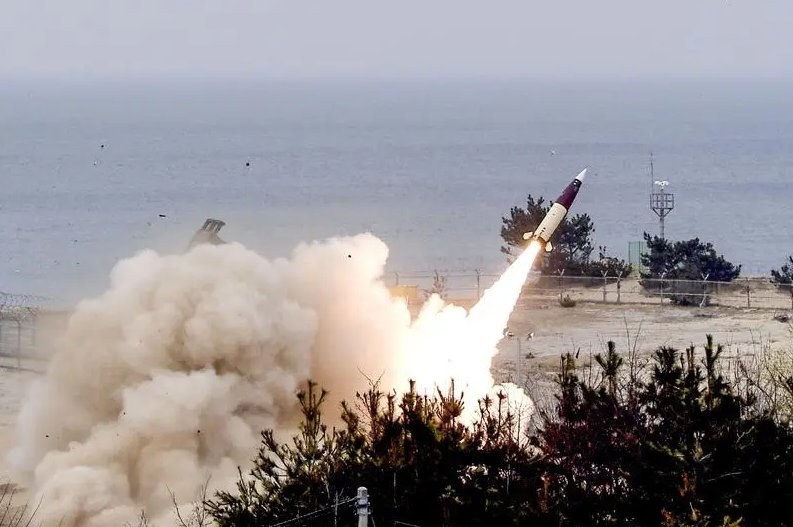
The U.S. Army has expended a substantial part of its long-range precision missile stock during the five-month conflict with Iran, according to three sources familiar with the data. This situation raises concerns about the U.S. military’s ability to manage future conflicts.
Sources indicate that the depletion primarily involves the Army Tactical Missile Systems (ATACMS) and Precision Strike Missiles (PrSM). The United States has reportedly utilized “practically all” of these weapons.
Details regarding the extent of the depletion of ATACMS and PrSM missiles have not been previously disclosed.
These long-range munitions are a crucial component of the U.S. military’s arsenal, enabling precise strikes from a safe distance. The ATACMS missiles provided by the U.S. played a vital role in the conflict in Ukraine, allowing Ukrainian forces to target sites within Russia.
PrSM represents a newer and more advanced generation of missiles intended to replace ATACMS, which has a shorter range.
Analysts assert that such missiles, each costing over one million dollars, would also be essential in a potential conflict with China.
The sources declined to specify how many munitions from each category remain in U.S. stockpiles.
President Donald Trump initiated the conflict with Iran alongside Israel at the end of February, estimating it would be short-lived. However, all three sources indicated that as the war prolongs, the reduction of missile stocks could hinder the U.S. ability to deter adversaries like Russia and China.
Trump Personally Responds to Missile Stock Depletion Reports
A fourth individual familiar with the situation stated that although U.S. Central Command (CENTCOM) has nearly exhausted its initial stockpile of ground-launched missiles, it has managed to replenish its reserves from other military stockpiles worldwide.
Reuters granted anonymity to the sources interviewed to allow them to speak freely about the situation.
When asked about the ammunition stock data, the White House issued a statement from Trump asserting that the U.S. possesses “far more munitions than anyone else in the world” and “more than we need.” Trump added, “Our defense industry is currently producing more munitions than ever before while expanding factories and equipment at a record pace.”
U.S. Defense Manufacturers Remain Silent on Stock Levels
Analysts agree that certain types of munitions, including artillery shells and various missile categories, are currently being produced at record levels. However, they warn that these quantities may still be insufficient to sustain a prolonged war.
Lockheed Martin, the manufacturer of ATACMS and PrSM missiles, as well as the THAAD missile defense system, did not immediately respond to inquiries regarding Trump’s statements or the stock levels. Raytheon, which produces Tomahawk missiles and interceptors for Patriot systems, also did not provide an immediate response.
“The United States Army is the most powerful in the world and has everything it needs to execute operations at the time and place chosen by the President. We have successfully conducted multiple operations in various theaters while ensuring the U.S. military has a vast arsenal of capabilities to protect our citizens and interests.”
However, Reuters notes that stock data has circulated within the federal government in recent weeks amidst tense discussions within the Trump administration about how long the U.S. can continue strikes against Iran without depleting stocks to a level that could limit the military’s capacity to respond to crises in other regions.
Warning About U.S. Armament Reserves
One source indicated that the reduction of ATACMS and PrSM stocks reflects the Trump administration’s decision to avoid riskier attack methods against Iranian targets, such as using piloted aircraft to drop bombs.
As missiles allow for target strikes from great distances, analysts believe they would hold particular value in a conflict against an adversary with a strong air defense, such as China. A report published in March by the Center for Strategic and International Studies (CSIS) indicated that these missiles were used to strike targets within Iran.
According to the report, PrSM missile stocks were already low from the beginning due to their relatively new status; however, the U.S. military has ordered a significant number of these missiles for the year 2027. The U.S. Army announced that ATACMS missiles are being gradually phased out, with production redirected toward the new PrSM missiles.
Two Reuters sources claim that military leaders have been warning Trump for several weeks that the stocks of defensive weapons, including interceptors for the Patriot batteries effective against ballistic missiles, are dwindling. Last week, several media outlets reported that Trump decided against launching a new large-scale offensive in Iran, partly due to warnings from his military advisors about the state of U.S. stock levels.
An American official disputed these reports, stating that Trump chose not to proceed with a new attack due to pressure from Gulf states.
The conflict in the Middle East has sparked intense debate regarding Trump’s authority to conduct hostilities against Iran without Congressional approval. No request for an official declaration of war or authorization for military force has been submitted to Congress.
Other U.S. Missile Stockpiles Have Also Diminished
A report released last week by CSIS estimates that between February and July, approximately 65% of the interceptors for the Patriot systems have been consumed, and the number of THAAD ballistic interceptors in U.S. stocks was at least 38% lower than at the start of the Middle East war.
The Patriot and THAAD systems are capable of detecting and destroying incoming enemy missiles and are among the most effective means of defense in the U.S. arsenal.
Although Reuters did not have direct access to stock data, two of the sources claimed that these figures matched information circulating within the U.S. government.
The United States has also consumed nearly half of its global stock of Tomahawk cruise missiles—generally launched from ships—since the war began, according to one source.
Reuters could not independently verify this information.
Tomahawk is a U.S. Navy weapon launched from destroyers, cruisers, and submarines, and has long been the primary means by which the American navy can strike heavily defended targets without exposing pilots to risk.
Raytheon, a division of RTX, has reached a preliminary multi-year agreement with the Pentagon to increase Tomahawk missile production, alongside boosting production of other types of munitions, as Washington seeks to replenish its military stockpiles.


