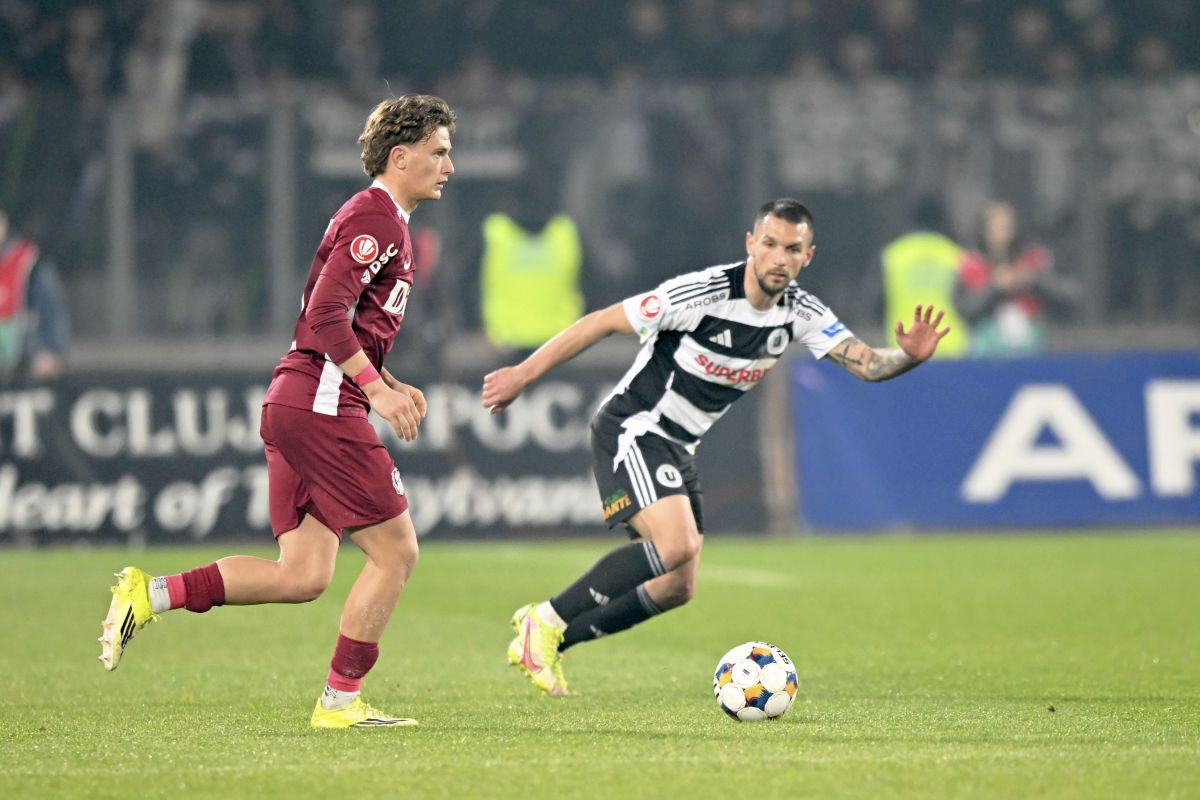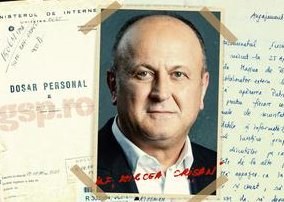
Gazeta has accessed two volumes from the network file R303384 at the National Council for the Study of Security Archives (CNSAS), which includes the case of Dan Șucu, the owner of Rapid. While the institution provided a brief summary in 2015, GSP now presents the full story of informant ‘Mircea Crișan’, detailed across 62 pages from June 1984 to November 1989, during his tenure as a guide with the National Tourism Office (ONT). Although he was never officially declared a collaborator, he has not commented on the matter. Did he remain an agent after the Revolution?
On August 16, 1984, Romania was suffocated under the communist regime of dictator Nicolae Ceaușescu. The country experienced severe austerity; basic food items were rationed, power outages were common, and gasoline was distributed in limited quantities. Television broadcasts were restricted to a few hours daily, primarily featuring programs dedicated to the “beloved leader.” The population lived in fear with few outlets for satisfaction.
In Bucharest, 21-year-old Dan Viorel Șucu, a third-year student at the Faculty of Machine Construction Technology at the Polytechnic Institute, was discreetly invited to a Securitate office. There, willingly and without special external pressures, he drafted and signed a collaboration agreement with the feared communist secret service.
Assuming the cover name ‘Mircea Crișan’ as per the personal network file R303384, he subsequently delivered a minimum of 58 informative notes, solely between June 1986 and December 1987!
The recruitment of Dan Șucu as Securitate’s informant, the contents of his signed Commitment with the secret services, his attitude of complete acceptance, and the profiles determined by Securitate are documented extensively in the files studied by GSP.
Dan Șucu: Recruited for Tourists and Foreign Journalists
At that time, the current owner of Rapid worked as a guide for the ONT, which managed organized visits for foreign tourists in Romania. His recruitment aimed to gather operational information from the circles he frequented in that capacity: foreign visitors, representatives of tourism firms, journalists invited through the Ministry of Tourism, colleagues at ONT, or any other individuals of interest to Securitate.
The two volumes at CNSAS, studied by GSP, encompass 62 pages and include a collection of informative notes, reports, correspondence, analyses, and personal records that outline the profile of informant ‘Mircea Crișan’ from the perspective of the communist secret services.
Securitate’s Commitment: “I will not disclose my connection to the Security organs”
Before detailing Dan Șucu’s complex journey through the underbelly of pre-revolutionary Romanian society, let us start from the text of the “Commitment” he signed with Securitate.
“I, the undersigned Șucu Dan, son of Bucur and Maria, born on 25.04.1963 in Bucharest, as an external collaborator guide at ONT Carpați, aware that defending the homeland is a patriotic duty for every citizen, commit to supporting the security organs by informing them of all data and information I will notice during the accompaniment of foreign tourist groups or discussions I have with them or information obtained from other persons.”
Furthermore, he committed to being honest and correct, to respect all instructions given, to exert effort in fulfilling the tasks assigned, and not to disclose this connection to the security organs.
CNSAS, 2015: “He cannot be attributed the status of collaborator of Securitate, in the legal sense”
The relationship between Dan Șucu and Securitate has been a subject of public discussion since 2015. Following a request from the newspaper “Evenimentul zilei,” CNSAS issued a certificate concluding that Dan Viorel Șucu, then vice-president of the Association of Large Commercial Networks in Romania and a founding member of the Sports Club – Herăstrău Tennis Club, did NOT collaborate with Securitate in the legal sense. However, it also presented a selection of passages from the reports provided by source ‘Mircea Crișan’ and indicated why he does not meet the legal cumulative conditions of a collaborator, alongside three separate opinions from council members that argued otherwise.
Notably, to be declared a collaborator of Securitate IN THE LEGAL SENSE, two cumulative conditions must be met: first, there must be a network file or informative notes demonstrating the ADMINISTRATIVE status of informant/collaborator/agent; second, those notes must contain information violating the rights and fundamental freedoms of the individual being targeted, resulting in politically significant actions by Securitate against those subjects.
No documents indicating abandonment before the Revolution: did he continue as an agent after 1989?
However, Gazeta has consulted the complete files of Dan Șucu and presents the entire saga of the Rapid patron’s activities. One key observation is that the documentation stops on November 6, 1989, about a month and a half before Ceaușescu’s fall. There are no documents indicating that Securitate abandoned Șucu prior to the Revolution; thus, it is feasible to speculate that the businessman may have continued his “partnership” with the secret services post-1990, potentially taken over by SRI as an active agent during the regime change.
Student Șucu: Monitored through multiple sources
Securitate took notice of Dan Șucu during the summer of 1984 when it aimed to recruit him into the network, initiating checks around the active ONT guide. It activated various sources to gather data about the Polytechnic student.
On June 2, 1984, source ‘Tănase’ reported: “Șucu Dan is an external collaborator guide of ONT Carpați Bucharest, certified in English since 1983. Immediately after certification, he presented himself to ONT for registration and work.”
Further, he worked initially with individual tourists, performing many transfers to and from Otopeni airport. Later, he worked with a group from “Ambasadorii prieteniei” for four days in Bucharest.
He is a second-year student. From discussions with him, I’ve gathered he is among the top students, has prospects of becoming a party member, is polite, hardworking, and behaves well, source ‘Tănase’, 02.06.1984, file R 303384, pg. 8, CNSAS
Recruited by Lt. Maj. Andrei Andronic: Was he the former SRI chief in Iași in the ‘90s?
Six days before the note provided by ‘Sorina’, on August 3, 1984, Dan Șucu was already approached by a Securitate officer, Lt. Maj. Andrei Andronic, who would soon formalize his recruitment.
IMPORTANT: In the early 2000s, a document titled “Armagedon 7” emerged publicly, authored by unknown individuals. The report claimed that many former Security officers remained within the SRI, SIE, and other institutions post-Revolution. Among a list of over 1,600 names was one Andrei Andronic, noted as “former Security officer. Taken in by SRI, promoted to the rank of colonel and advanced to chief of the SRI Iași section.” It is possible he is the same person who recruited Dan Șucu, although there is no definitive data connecting him to the head of the intelligence branch in Iași during the ‘90s.
– “He claimed that since he started working as a guide for ONT Carpați Bucharest, he has accompanied several groups of foreign tourists, mainly from the USA, Canada, England, and Israel.”
– “He noted certain peculiar aspects, such as the relationships of some tourists with Romanian citizens, the disappearance of some for a while from the group, and various questions posed to ascertain certain data regarding social-political life in our country, aspects that he recorded in his activity reports submitted at the end of the tours.”
– “I explained that such aspects present interest for state organs, and it is his patriotic and service duty to inform us about such issues in the future. He stated he is aware of these duties and will strive to fulfill them as best as he can.”
“He has already engaged in resolving tasks and providing written information with operational content”
By August 14, 1984, a “Report proposing the recruitment of the named ȘUCU DAN VIOREL as an informant” was drafted. This document was divided into several sections from “Need and purpose of recruitment” to “Qualities and informative capabilities.” Here are a few excerpts:
– “In order to informatively integrate foreign tourist groups visiting our country through ONT Carpați Bucharest, representatives of tourism companies, and journalists invited by the Ministry of Tourism, to detect among them spies and agents, as well as to identify suspicious individuals among Romanian citizens who maintain unofficial relations with them, we took up the case of Șucu Dan Viorel, external collaborator guide at ONT Carpați Bucharest.”
– “The undersigned demonstrated receptiveness to the instructions given, retaining and signaling matters of operational interest regarding the activities, concerns, and connections of the foreign tourists he accompanied, proving he has observation skills and analytical power.”
– “He has good information capabilities concerning American citizens Michael Hopkins from the ‘Ambasadorii Prieteniei’ Foundation and John Athenian from the ‘Connections Unlimited’ company, both of whom were under our office’s attention.”
– “His guarantee of accepting collaboration with security organs is also given by the fact that he has already engaged in resolving tasks and providing written information with operational content.”
In the event he refuses collaboration, he will be led to believe we aimed to deepen and complement data provided by him, and simultaneously implement counterintelligence procedures, excerpt from “Report proposing recruitment,” file R 303384, pg. 1, CNSAS
How the recruitment unfolded: “He accepted without reservations”
Finally, after another 48 hours, on August 16, 1984, Securitate executed its plan. The report about “how the recruitment of Dan Viorel Șucu as informant took place” was signed by three individuals: Lt. Maj. Andrei Andronic (chief officer), Col. Fulop Atila (coordinator), and Lt. Col. Iliescu Gheorghe (service chief).
– “The recruitment took place at the headquarters of our organs, where the candidate was invited under the pretext of deepening some issues previously reported by him concerning the activities and behaviors of certain foreigners he accompanied, as well as for discussing problems related to his work as a guide.”
– “The candidate affirmed that he is aware of the duties arising from his role as a guide for foreign tourist groups, which he considers to be of patriotic importance, and he will strive to fulfill these duties in the best conditions.”
– “He was offered the opportunity to collaborate in an organized and secret manner with the security organs, which he accepted without reservations, committing in writing to respect all instructions given and to maintain the confidentiality of this link.”
Note on relationships regarding 13 individuals in his circle: 10 colleagues and 3 Americans
Along with the Commitment that Șucu signed with Securitate came a “Note on relationships,” drafted by the newly minted informant ‘Mircea Crișan’. This was a list of 13 individuals from his acquaintance, flagged for potential future report references. Among them were 10 colleagues from the group of guides and 3 American citizens whom “I accompanied and know better.”
Among them were John Athenian, director of “Connections Unlimited,” and Michael Hopkins from “Ambasadorii Prieteniei.” Indications were present for both that they were already in Securitate’s net: the first with a Monitoring File (DUI) and the second under Informative Surveillance (SI)! Moreover, the list of ONT colleagues included:
- coordinating guides: Angela Tănăsoiu, Zoe Pavel
- U.S. liaison guides: Ionică Poșircă, Anca Florescu, Margareta Zelenak
- Yugoslavia liaison guide: Anica Prejmereanu
- guides: Ana Maria Ivan, Mariana Burghava, Mihai Bărbulescu, Dan Burcă
Notes were subsequently presented under the pseudonym ‘Mircea Crișan’ regarding the last two individuals.
Mihai Bărbulescu is easily influenced by people with strong personalities, and his displayed vanity was a constant source of teasing. I know he was a Petroleum and Gas student and that he may have been expelled. From the state security standpoint, he cannot handle all the complex demands he may face, should his general attitude not change, excerpt from informative note “Mircea Crișan” about guide Mihai Bărbulescu, 08.02.1988
58 Informative Notes in 19 Months: June 1986 – December 1987
Once integrated into Securitate’s framework, Dan Șucu began delivering a flurry of materials about numerous people and situations in his vicinity. His informational contributions were periodically centralized through “Analysis Notes.” The first was issued on December 28, 1986, reflecting Securitate’s conclusions regarding the work of informant ‘Mircea Crișan’.
From June 1, 1986 (taken into connection by Lt. Maj. Popovici Doru, based on password) until the issuance of the note (about seven months), “he provided a number of 14 informative materials with high operational value regarding delegates from tourism companies or journalists arriving from the USA.”
In the “Note” from December 10, 1987, one year later, new details emerged concerning the involvement of ‘Mircea Crișan’: “He furnished a total of 44 materials with operational value related to delegates from partner tourism companies arriving from the USA, to the external collaborator guides of ONT, and service providers within the tourism network.”
Consequently, measures were taken regarding those highlighted by him, either active operations against suspects or operational signals to the competent security organs.
During the collaboration, informant ‘Mircea Crișan’ demonstrated genuine skills for informative work, manifesting seriousness and receptivity to fulfilling the assigned tasks. Informant ‘Mircea Crișan’ will be educated and trained on specific counter-intelligence issues to engage him in initiating and conducting informational combinations to verify elements under the attention of Service 7, excerpt from Analysis Note informant “Mircea Crișan,” 28.12.1986
Stringent Checks for ‘Mircea Crișan’: Informant Integration, Intercepted Correspondence, Wiretaps
Simultaneously, Securitate was executing a comprehensive system of verification for ‘Mircea Crișan’ aimed at testing his correctness and loyalty to his “master”:
- Informative integration with various sources in his surroundings;
- Home investigations;
- Intercepting correspondence;
- Installing audio listening devices (phones or microphones).
“For the installation of complex TO means, an informative combination will be initiated to take molds of the keys to the residence,” noted one of the monitoring measures of Dan Șucu, as outlined in the Analysis Note from December 1987.
TO indicates technical-operational and pertained to mounting specific equipment to capture discussions occurring within the residence.
Caught in “Offside” by Securitate: “He demonstrated a lack of discernment necessary in relationships with foreign citizens”
During the course of the verifications, ‘Mircea Crișan’ also found himself caught in “offside” during a trip as an ONT guide. This emerges from the same Analysis Note dated December 12, 1987, where the author, a captain with an indecipherable signature, noted:
– “In his conducted activities, he demonstrated ease through a lack of the necessary discernment in relationships with foreign citizens, having been warned (cautioned) in February 1988 for unofficial relations with a tourist who arrived in Poiana Brașov.”
– “In light of the aforementioned, informant ‘Mircea Crișan’ acknowledged his mistakes and promised to fully adhere to the country’s laws and the norms regarding relationships with foreign citizens.”
“In accordance with his sincerity, we will assess if his behavior will be communicated to the faculty”
Later, on January 28, 1988, a Note-Report described the extracurricular incident, noting that between December 19, 1987, and January 25, 1988, “guide Dan Șucu was stationed in Poiana Brașov, at the ‘Ciucaș’ hotel, with ‘Skientreprise’.”
The end of the note contains handwritten observations from an officer named Olteanu, likely Capt. Cornel Olteanu, identified in CNSAS documents on Officer lists working on “Șucu’s file.”
Hence: “Clarify all these aspects with Ș.D. Advise him that according to his sincerity, we will assess whether his behavior will be communicated to the faculty. Report in writing. Come with proposals.” This veiled threat encompassed potential academic repercussions if Șucu attempted to conceal the sensitive episode detected by Securitate!
No Concealment of the Extraprofessional Incident at Poiana Brașov: “State organs should analyze, I will respond personally”
However, this would not be the case, as in an informative note dated February 9, 1988, ‘Mircea Crișan’ himself fully acknowledged the incident at Poiana Brașov (file R303384/vol. 2/pg. 12/CNSAS).
“I urge state organs to analyze what transpired, and regarding the consequences, I will respond personally,” wrote Șucu.
Ultimately, the sanction would be a “warning of the undersigned to prevent the commission of such acts affecting his professional activity.”
Source “A. Grama”: “Confusion in his working style resulting in panic”
How, meanwhile, did ‘Mircea Crișan’ appear in Securitate’s records through the information compiled by sources in his vicinity?
The answer emerges from numerous informative notes collected from various collaborators who intersected with Șucu after he had already been recruited by the communist secret service.
The officers responsible for the activities and contributions of ‘Mircea Crișan’ needed to ensure that their informant did not deviate from the path set by Securitate.
For instance, source ‘A. Grama’ noted on March 17, 1986: “Professionally, he is not very well prepared due to a lack of experience in working with large groups of tourists. This creates a certain confusion in his working style, occasionally resulting in panic.”
He added: “He accepts advice from more experienced individuals, but it seems he bears some resentment towards those for daring to advise him.”
He is not a pleasant person to those around him, though this is more superficial; his slight vanity is the cause, excerpt from note source “A. Grama,” file R303384, CNSAS
“He is extraordinarily lazy. He seems to have been spoiled by his parents”
Source ‘Felicia 2’ was even more blunt in her characterizations. “During 1984-1985, he worked with groups of American tourists arriving through a Hungarian agency. After discussions with the Hungarian delegate, he was left in Brașov and did not accompany the group to Cluj. After this group, he was suspended for almost a year,” stated the informant in a note dated September 30, 1987.
She added: “He knows English quite well, but if he works in a team, he prefers to make separate opinions, meaning slightly altering the program.”
On September 26, 1988, she noted: “He has quite good training in tourism, he could be excellent if he would put in the effort, but he is extraordinarily lazy. He seems to be the boy still spoiled by his parents.”
Source “Amalia”, blunt: “Professionally considered mediocre”
However, the most striking portrait is found in the final informative note existing in the file. Belonging to source “Amalia”, it is dated November 4, 1989, just a month and a half before the Revolution and the fall of the Ceaușescu regime.
“Șucu Dan – approximately 25 years old, profession engineer, works non-stop with these groups (i.e., American tourists), being favored by Angela Tănăsoiu (i.e., the coordinator of ONT guides), justifying to colleagues that he is in acute need of money because he has to support his wife in college, furnishing a house, and having recently also bought an Oltcit,” reported “Amalia.”
She continued: “He knows in advance what groups are set to arrive in the country, being understood in this regard with the delegates of the respective firms. Professionally, he is considered mediocre, while the delegates regard him as very interested materially.”
“He demands $200-300 from delegates. He has bought a color TV, a car, and leads a comfortable life”
Additional details emerged: “At the end of each group, he demands his share from the delegates, amounting to $200-300, to overlook the illicit activities they conduct, such as charging tourists a visa fee of $28 per person, a visa included in the price of the excursion.”
“The undersigned claimed that through guiding, he managed to purchase a color TV, a car, and leads a comfortable life. He also mentioned completing university, fearing he would not earn the same amount at a post,” added “Amalia.”
During the last group PUTNIK, he claimed to have been nominated for the group as there were special interests involved, excerpt from note source “Amalia,” file R303384, CNSAS
Chiefs Outraged: “Doesn’t this style of working with the network lead to deconspiracy?”
The note provided by “Amalia,” with her remark at the end regarding “special interests” invoked carelessly by ‘Mircea Crișan’, sparked a blunt reaction from one of the heads overseeing “Șucu’s file.”
A few red-ink annotations on the page reveal an angry tone: “What do you think, Comrade Olteanu? Especially since the information is very thin. Doesn’t this style of working with the network lead to deconspiracy? He should not be put on actions without my approval. I do not want to believe otherwise!” Comrade Olteanu was one of the officers responsible for ‘Mircea Crișan’.
Surprise: “He was passionate about handball, having briefly participated at the Steaua Sports Club”
One previously unknown detail about Dan Șucu is that the Rapid owner “was passionate about handball, having briefly participated at the Steaua Sports Club.”
This detail surfaced in correspondence between the Bucharest Security and UM 0625, indicative of the Third Direction, Counterintelligence. It was found in a file dated January 27, 1989, regarding an investigation at the residence of ‘Mircea Crișan’.
At that time, he resided in an apartment near Lake Morii in sector 6, after a period spent nearby “at his in-laws’.” According to the document, his father-in-law from the first marriage, Camelia, named Vicențiu Nițoi, was director at the Construction, Repairs, and Housing Administration Enterprise (ICRAL) number 7, Giulești. Before the Revolution, this entity managed state housing and had responsibilities including the distribution of residences in collaboration with local authorities.
As for Dan Șucu’s parents: “His father was an officer, now an engineer, while his mother was a teacher.” Moreover, young Dan studied right where his mother taught, at General School No. 27, in sector 2.
Dan Șucu Refuses to Discuss Security Matters: “Thank you! Goodbye!”
Thus concludes the documented saga of ‘Mircea Crișan’, over which loomed, like all Romanians, the collapse of Ceaușescu. Yet, a lingering question remains without a firm answer in the documents: did Dan Șucu continue working as a secret agent after the Revolution, considering there is no indication of abandonment before late December 1989?
For now, we’ll find out in Episode 2 of the saga of ‘Mircea Crișan’ about the extensive informative notes delivered to Securitate, in 23 spectacular pages. Some previously publicized by CNSAS in a summary from December 2015, while others will now be revealed for the first time! Dan Șucu declined to provide any comments, responding only with “Thank you! Goodbye!” before hanging up the phone.
Dan Șucu’s Timeline
- Date of Birth: 25.04.1963
- 1969-1977: General School No. 27 Bucharest (his mother taught there)
- 1977-1981: “Dimitrie Cantemir” High School
- 1977: Becomes UTC member
- 1982: Enters TCM Faculty at the Polytechnic Institute
- 1983: Begins working as ONT guide (certified in English)
- 16.08.1984: Recruited by Securitate as informant
- November 1989: Still providing informative notes to Securitate, as indicated in the personal file at CNSAS
- December 1989/January 1990: Possibly still an active agent, no data indicating he was abandoned by Securitate before Ceaușescu’s fall
- 1993: Launches “Mobexpert,” which he still controls today, becoming one of Romania’s wealthiest individuals
- May 2022: Acquires 50% of Rapid’s shares