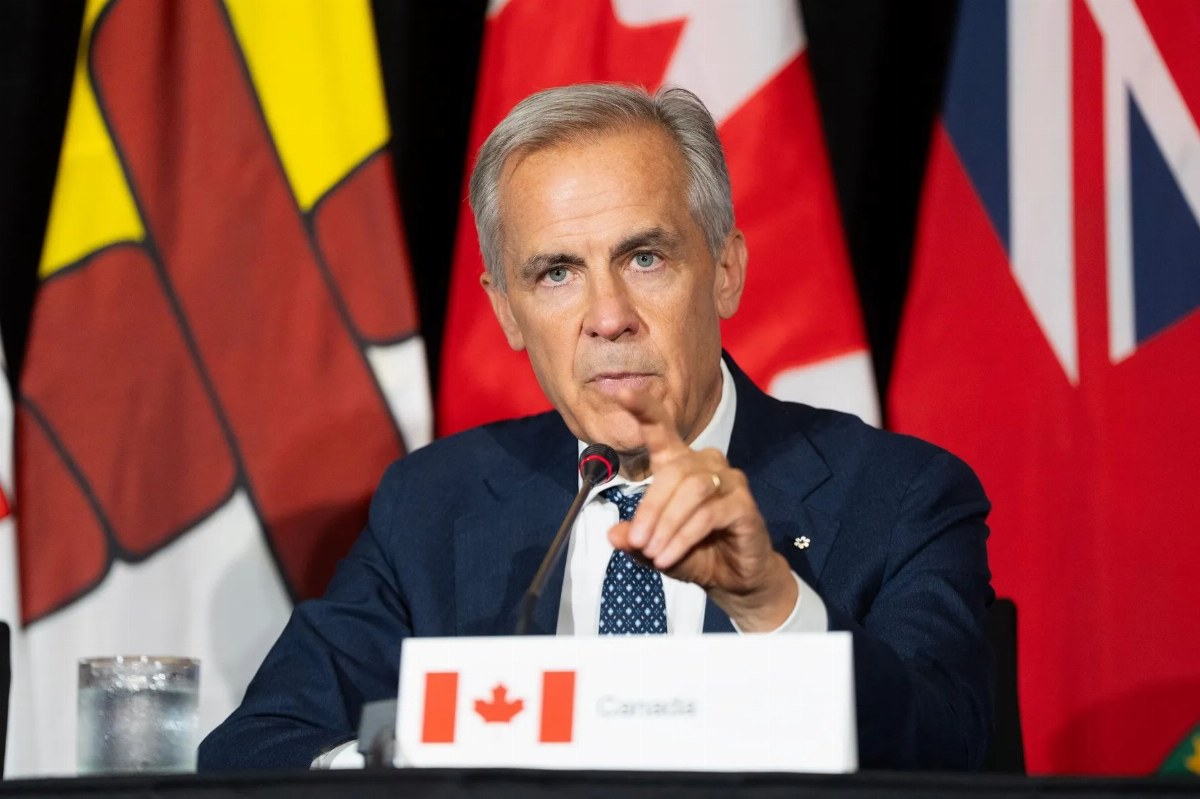
Canada is prepared to take necessary actions to defend itself in the ongoing trade conflict with the United States, including potential retaliation, Prime Minister Mark Carney stated on Thursday during a meeting with provincial premiers, following the announcement of new tariffs by the US.
On Monday, President Donald Trump unveiled 50% tariffs on a range of Canadian products, set to take effect on August 19.
“We are intensifying trade negotiations with the United States and will not hesitate to defend our interests if necessary,” Carney remarked during the meeting in Charlottetown, Prince Edward Island, calling the new US tariffs unjustified.
“All options are on the table if an agreement is not reached,” he added, referring to possible countermeasures, but did not provide further details.
This week, Trump and Carney agreed to ramp up bilateral trade negotiations. This comes in the wake of Trump’s decision on July 1 to not fully extend the United States-Mexico-Canada Agreement (USMCA) for another 16 years, leaving it in place only with the condition of annual reviews.
The US is separately negotiating with Canada and Mexico, with Washington reporting greater progress with Mexico. This raises the risk that the US may attempt to impose concessions on Canada that Mexico might accept.
Carney emphasized his government’s desire for a comprehensive agreement, rather than sector-specific arrangements.
Although Carney stated that he and Canadian provincial leaders are united, the ten provinces are divided on the approach to take. Alberta and Saskatchewan, major exporters of crude oil and potash to the US, have ruled out imposing export restrictions or tariffs to increase pressure on Washington.
Ontario Premier Doug Ford suggested that Canada should implement tariffs identical to those of the US, “dollar for dollar,” while acknowledging that Prime Minister Carney is in a tough position. “One moment, the Prime Minister is standing beside him (the US leader), and the next moment, President Trump turns on him like a rabid dog,” Ford remarked.
British Columbia Premier David Eby proposed that his province could restrict US access to essential Canadian mineral exports, including copper, zinc, and aluminum. “If the Prime Minister reaches out to British Columbia and says he needs support in the form of strong measures for negotiations, then we will be there,” Eby stated.