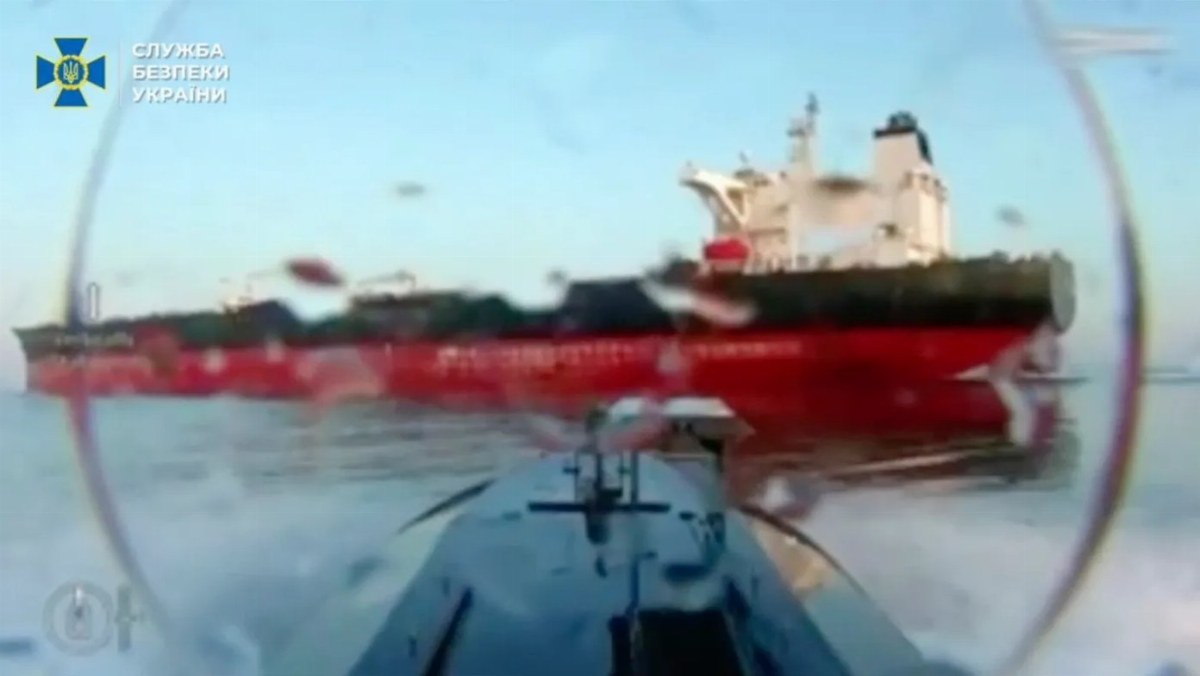
The recent drone strikes by Ukraine have significantly affected fuel prices in Crimea, which has been illegally annexed by Moscow since 2014. In Yalta, a popular tourist destination on the northern coast of the Black Sea, the price of gasoline has surged to 350 rubles, approximately 20.84 lei per liter, according to Alexander Slepinin, a local inn owner, as reported by the independent Russian publication The Moscow Times.
Slepinin noted that this particular gas station is currently the only one in the city selling fuel without restrictions, yet there are no long lines. Due to the steep prices, most drivers are unable to fill up their tanks. “A canister costs 7,000 rubles (416.87 lei). Tourists arriving by car are bringing their own fuel supplies. The influx of tourists has nearly dried up. At the neighboring hotel, all staff have been sent home, and those remaining have had their salaries cut by half,” Slepinin lamented.
On Saturday morning, the Ministry of Energy and Natural Resources of the annexed Crimea announced that fuel sales were ongoing at 99 gas stations across the peninsula. In Sevastopol, local authorities reported that gasoline is available at nine stations, but restrictions are still in place: no more than 20 liters per vehicle, and sales in canisters are prohibited.
Official Statements on Fuel Prices
Rosstat previously reported that the average price of AI-92 gasoline in Crimea is 123.5 rubles (7.35 lei) per liter, while AI-95 gasoline is priced at 170.6 rubles (10.16 lei). However, according to Kommersant, actual prices at gas stations in Sevastopol can reach up to 199 rubles (11.85 lei) per liter, and generally in Crimea, prices range from 185 to 200 rubles (11.02 to 11.91 lei).
On the black market, prices reportedly soar to between 250 and 400 rubles (14.89 to 23.82 lei) per liter. According to official statistics, by July 6, the annual increase in gasoline prices in Russia had reached 21.9%, marking the highest level since 2010.
The fuel crisis is attributed to Ukrainian drone attacks on Russian refineries. Reports from Reuters indicate that Russian gasoline production has fallen to 65% of summer consumption levels this week, with diesel production dropping by nearly 40%.
Energy Intelligence estimates that the operational capacity of Russian refineries has plummeted to its lowest levels in two decades due to these strikes. Officially, fuel sales restrictions are in effect in over 40 regions across Russia. However, calculations by The Insider suggest that various limits and bans have been implemented virtually nationwide, including in Ukrainian territories occupied by Russia.