Romanian President Nicușor Dan, along with his delegation, outlined the country’s initial decisions at the NATO Summit in Ankara, including plans to become a founding member of the Defense, Security, and Resilience Bank. U.S. President Donald Trump arrived in Turkey and resumed his harsh criticism of European allies, expressing significant disappointment.
According to correspondent Laurențiu Ungureanu in Ankara, the official dinner marks the commencement of the NATO Summit, which will continue on Wednesday with discussions focused on military spending, Ukraine, and likely Iran.
During his remarks on Tuesday, Trump highlighted U.S. spending to deter Russia, asserting that the U.S. should not spend any more money and suggesting the withdrawal of all U.S. troops from Europe. He noted, “Europe is a very different place than it was 20 years ago” due to issues surrounding immigration and energy.
He warned, “If they are not careful about these two aspects, you will no longer have Europe,” reiterating his disappointment with NATO allies.
Ukrainian President Zelensky called for Ukraine’s membership in NATO, emphasizing that his nation could provide extraordinary defense capabilities to the alliance. He stated, “Ukraine belongs in NATO because NATO together with Ukraine represents the alliance of the future,” in front of a defense industry audience.
Leaders attending the NATO Summit began arriving at the Presidential Complex in Beștepe, Ankara, where Turkish President Recep Tayyip Erdogan was set to host the official dinner. President Dan was accompanied by First Lady Mirabela Grădinaru.
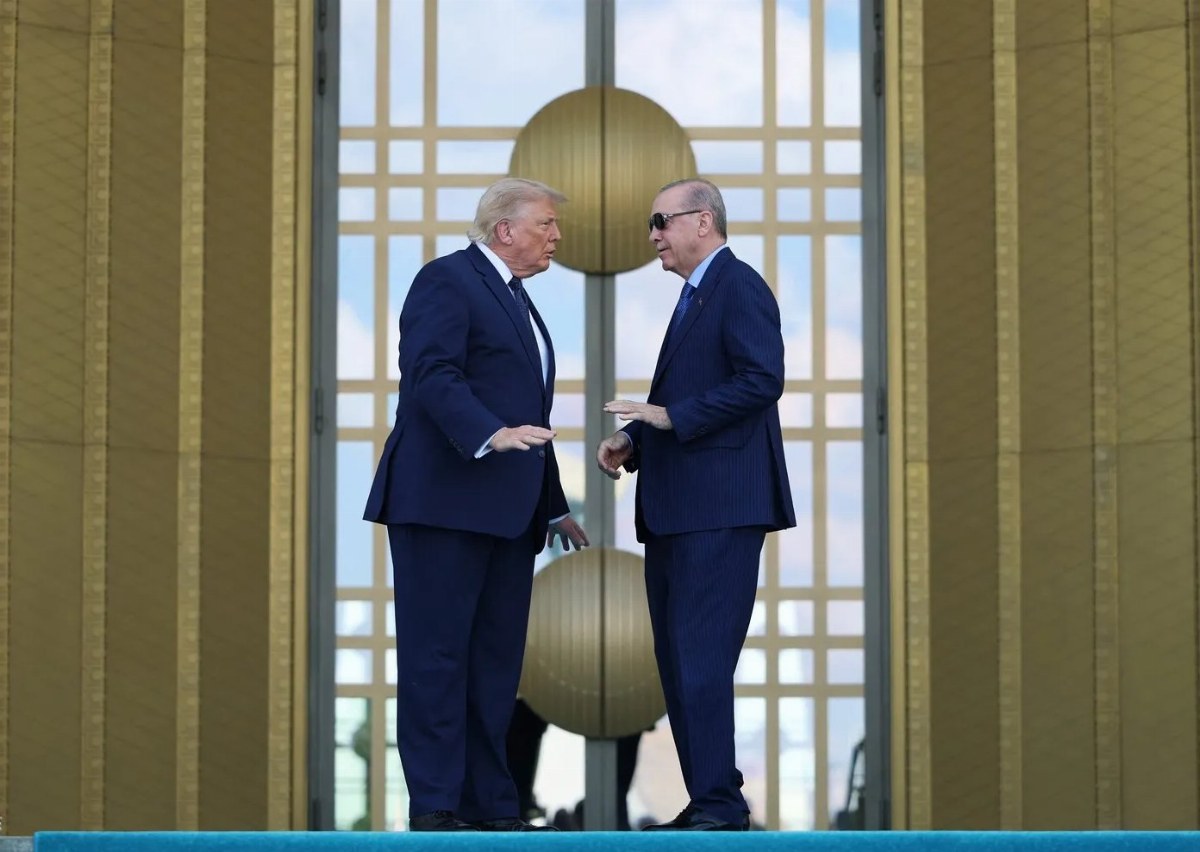
Trump announced the lifting of U.S. sanctions imposed on Turkey in 2020 and expressed willingness to sell F-35 fighter jets to Ankara. He praised his Turkish counterpart during a joint press conference in Ankara. The U.S. had previously imposed sanctions on Turkey and excluded it from the F-35 program in response to Ankara’s purchase of the Russian S-400 air defense system.
On the subject of the Defense, Security, and Resilience Bank, Dan stated that as a founding member, Romania reaffirms its commitment to developing this new cooperative instrument and is honored to host one of the bank’s regional offices. He added that this multilateral financial institution aims to enhance member states’ capabilities to fund defense and security investments by expanding capital access, lowering financing costs, and supporting industrial capacity development, particularly for small and medium-sized enterprises.
During the summit, Zelensky urged allies to provide urgently needed defense systems to protect Ukraine from increasingly intense Russian attacks, particularly following recent missile strikes on Kyiv that resulted in civilian casualties.
Following a productive discussion with a U.S. Congressional delegation, Dan highlighted the importance of the transatlantic relationship and discussed concrete ways to strengthen the Strategic Partnership between Romania and the United States, focusing on defense cooperation and economic opportunities. He emphasized ongoing efforts to enhance security in the Black Sea region and throughout the Euro-Atlantic area.
Romania, among the founders of the Defense, Security, and Resilience Bank, signed a declaration to create this initiative, promoted by Canadian Prime Minister Mark Carney, which seeks to combat the fracturing of the traditional U.S.-led global order. The declaration was also signed by leaders from Canada, Albania, Belgium, Greece, Latvia, Luxembourg, Turkey, and Ukraine.
In a joint statement, leaders recognized the necessity to mobilize both public and private capital extensively to support priorities in defense, security, and resilience as allies increase defense investments and accelerate critical capability production. They underscored that the bank is intended to complement rather than duplicate existing national and multilateral instruments aimed at enhancing defense production.
Romania’s Minister of Defense, Radu Miruță, announced additional key decisions, including Romania’s participation in the GlobalEye program, which will see NATO acquire a new generation of surveillance and early warning aircraft to replace the current AWACS fleet. This initiative will enhance Romania’s surveillance capabilities and directly contribute to security on the Eastern Flank.
Furthermore, Romania entered partnerships for the development of air defense systems to procure modern capabilities to intercept low-altitude threats and passive aerial surveillance systems, which promise reduced costs and improved interoperability among NATO member states.
France and the UK plan to present a multinational maritime mission in the Strait of Hormuz during discussions with NATO foreign ministers and Gulf Arab states, although some diplomats doubt the feasibility of overcoming Iranian opposition.
Trump expressed hope for a speedy resolution to the war in Ukraine, stating that discussions with both Putin and Zelensky were constructive, but he reiterated the need for the alliance to focus on its commitments.
During discussions, the NATO Secretary-General, Mark Rutte, announced the launch of a strategic air transport fleet and additional air-to-air refueling capabilities to bolster deterrence and defense capacity, amid reports of significant military contracts to be revealed at the summit. Rutte commended Trump for encouraging European allies to increase their defense spending in response to security concerns stemming from Russia’s 2022 invasion of Ukraine.
Despite anticipating criticism from Trump regarding their defense commitments, European officials hope that Erdogan and Rutte will leverage their ties with the U.S. president to stabilize the summit discussions.