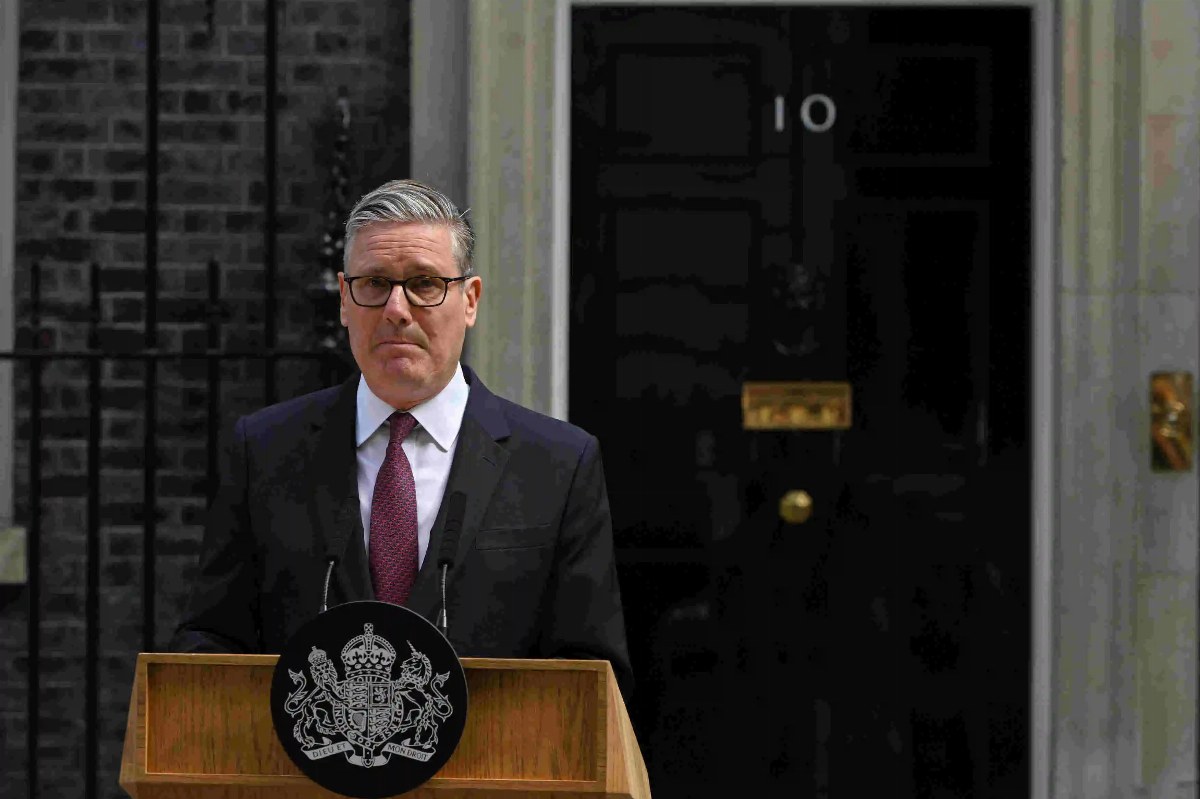
Keir Starmer’s brief tenure as Prime Minister of the United Kingdom has come to a dramatic end, marking him as the most unpopular British leader in recent times. His resignation follows just two years after the Labour Party, under his leadership, secured a remarkable victory in the July 2024 elections, winning 411 out of 650 seats in the House of Commons, a comfortable majority of 174 seats.
This week, Starmer announced his resignation in an emotional speech outside Downing Street, signaling a controlled transition of power likely to Andy Burnham, former mayor of Greater Manchester. His time in office was characterized by strategic blunders, inconsistent policy directions, and an inability to establish a clear vision for governance, according to reports from The Telegraph, The Guardian, and AFP.
A Remarkable Political Ascent
Starmer, who hails from modest beginnings as the son of a mechanic, was motivated by a sense of injustice and a desire to support the underprivileged. However, his ascent to Downing Street was deemed extraordinary, especially given his late entry into politics at age 52 and minimal experience compared to fellow Labour politicians.
Starmer lacked substantial support within the parliamentary group and had little experience in behind-the-scenes negotiations or alliance-building, which may explain his numerous missteps and shifts in direction.
A Troubling Start
From the outset, Starmer’s government faced challenges. Controversies emerged early on regarding the acceptance of free gifts, including designer sunglasses and tickets to Taylor Swift’s concert, which, while not illegal, tarnished his reputation. A series of misjudgments and policy reversals soon followed.
One notable decision was to cut winter heating subsidies for nearly all pensioners except the poorest, reflecting a significant disconnect from the political ramifications of such a move. This decision was poorly received by voters, leading Starmer to retract it, but the damage was already done. A year later, Labour acknowledged that this topic remained a contentious issue among constituents.
Moreover, his attempt to drastically reduce social spending, amid rising costs, necessitated another retreat, further undermining his authority and fueling perceptions of a rudderless administration.
Despite Labour’s manifesto pledges to avoid increases in working-class taxes, Starmer’s first budget saw a rise in certain employer National Insurance contributions, drawing new criticism.
The Mood Darkens
Starmer’s early speeches seemed to set a grim tone for his government, as he quickly quashed any signs of optimism among the electorate eager for change after years of Conservative austerity, Brexit divisions, and the impacts of the Covid pandemic.
Public dissatisfaction with Starmer began shortly after he took office. A cabinet minister likened him to the “third plumber,” suggesting that the homeowner’s frustration was directed at him for failing to fix problems left by his predecessors.
Whether accurately perceived or not, many believe that Starmer operated with limited maneuverability due to his electoral commitment to not raise taxes, which severely restricted options for generating revenue amid sluggish economic growth.
Upon taking office in July 2024, Starmer inherited a dire situation with underfunded public services and an economy struggling to provide the resources needed by the British populace. Many voters remain frustrated, leading to a volatile political climate exacerbated by social media’s rapid dissemination of discontent.
Starmer faced external criticism from figures like Donald Trump and Elon Musk, particularly regarding immigration policies.
Some Promises Fulfilled
Despite the public’s anger, analyses indicate that the Starmer government did fulfill several campaign promises. Minimum wage increases, enhanced worker rights, NHS waiting list reductions, and pulling half a million children out of poverty were noted achievements, though economic growth remained sluggish and not necessarily reflected in the citizens’ financial wellbeing.
Starmer’s immigration measures have seen net migration decrease significantly, but the government has faced persistent criticism on this front, with the Reform UK party capitalizing on public discontent.
Racially-charged protests erupted after high-profile crimes committed by migrants, further complicating the political landscape.
Mandelson Controversy Erodes Trust
One of the most damaging issues contributing to Starmer’s downfall was the appointment of Peter Mandelson as the UK ambassador to the United States. Once seen as a potential asset in navigating relations under President Trump, Mandelson’s connections to the disgraced Jeffrey Epstein became public, further tarnishing Starmer’s credibility.
Starmer’s apologies and claims of ignorance regarding Mandelson’s failure to pass necessary security checks fell on deaf ears as he struggled to maintain a reputation for integrity.
What Was Starmer’s Plan for Britain?
Analysts suggest that inherent issues plagued Starmer’s leadership. Despite Labour’s overwhelming parliamentary majority, only 34% of voters supported the party, many motivated more by dissatisfaction with Conservatives than enthusiasm for Labour.
Starmer appeared unable to articulate a cohesive narrative for his government, leading to perceptions of indecisiveness despite his parliamentary strength. His reluctance to define a distinct vision created an impression of disconnect with rising populist movements on both the left and right.
Deep Regrets
Ultimately, Starmer failed to present a compelling vision for the country, and as disillusionment grew, he found himself unable to respond effectively to the electorate’s demands.
His administration’s lack of direction was highlighted by his own admission that there would never be a concept of “Starmerism.” This disconnect became evident as he struggled against populist movements that resonated more with voters.
Stronger International Presence
Starmer seemed more adept at handling international matters, particularly in rallying European support for Ukraine amid its conflict with Russia. Ursula von der Leyen praised his legacy for strengthening European security.
However, his reluctance to take a clear stance on the Israel-Gaza conflict may have cost him local support, with some votes shifting to the Green Party.
Conclusion
Following a devastating defeat for Labour in the May local elections, the writing was on the wall for Starmer. Losses across the board, including regions where Labour had longstanding dominance, led to his downfall.
The decision by a Labour MP to resign to allow Burnham to contest for Parliament marked a pivotal moment, culminating in Starmer’s announcement of his resignation shortly thereafter.
Lessons for the World
Starmer’s resignation underscores the failures of two prevalent strategies among center-left parties: responding to ongoing crises with moderate policies and conceding ground to rising far-right movements. Issues faced by Starmer are reflective of challenges confronting many Western leaders, where promises made during campaigns often clash with the realities of governance.
The political landscape, marked by fragmentation and instability, poses challenges for Starmer’s successor, who must navigate deep-rooted political, economic, and social issues. This instability is evident across Europe and the United States, where center parties have struggled to maintain relevance in the face of public discontent. As Starmer’s case illustrates, the road ahead remains fraught with obstacles for leaders seeking to regain public trust.