
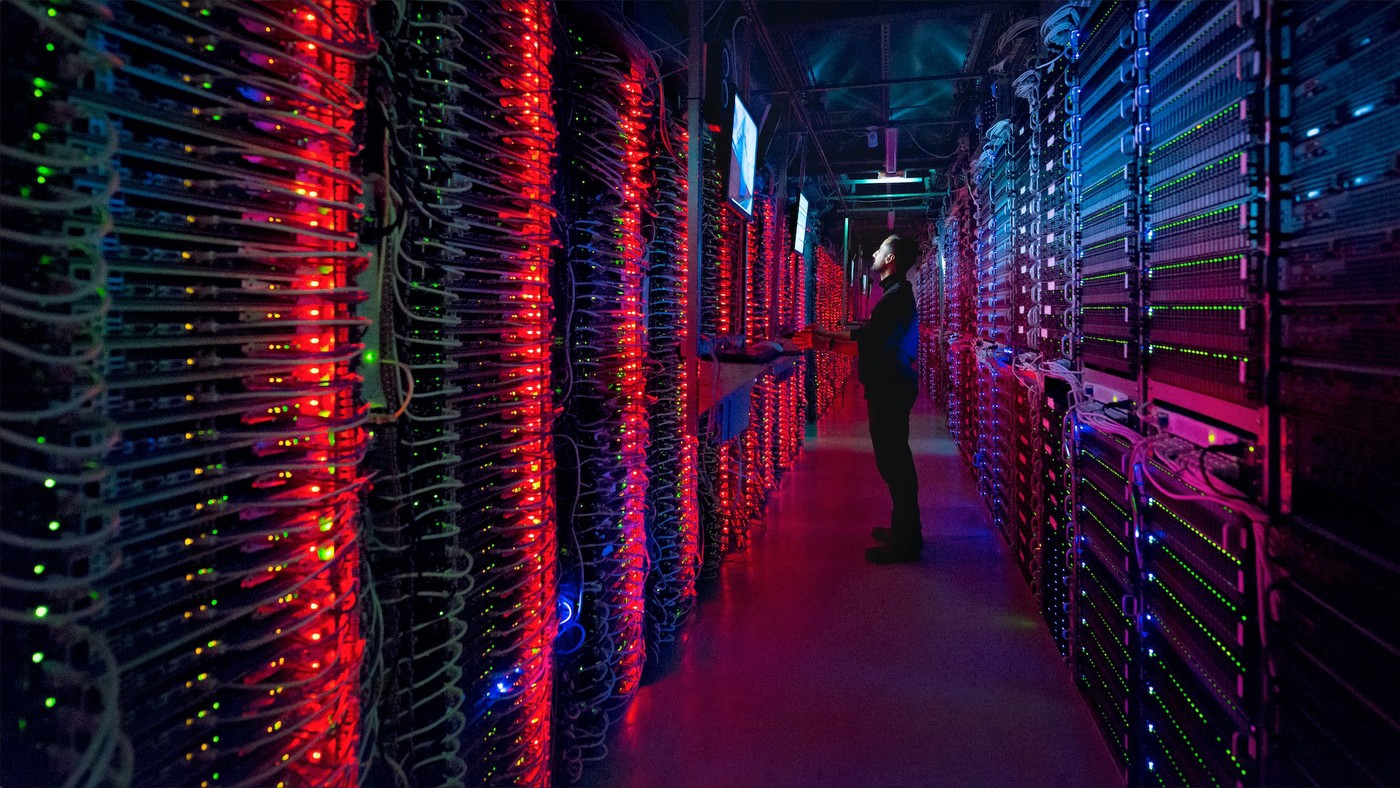
In Ireland, data centers consumed 22% of the country's electricity last year, driving up household bills, according to data from a report cited by The Guardian.
- According to this report, data center energy demand in Ireland has added hundreds of euros to household electricity bills, a pattern that could be repeated across Europe.
Ireland's growing number of data centers consumed 22% of the country's electricity last year, more than all urban homes combined, according to the Office for National Statistics. By comparison, the equivalent percentage in the United States and Great Britain is 6%.
And these data centers have “taken” €715m out of the Irish economy and increased household bills by a cumulative average of €360 between 2015 and 2023, says the report, which was commissioned by Friends of the Earth Ireland and Beyond Fossil Fuels. The document thus claims that Irish households subsidized the big tech companies through a “hidden data center tax” included in their electricity bills.
“Ireland's case should be a warning to Europe: if big tech companies are allowed to expand their data centers unchecked, there will be massive knock-on effects on the European economy and households. And combined with fossil gases, this creates a toxic mix – driving up energy prices for people already facing a new energy crisis,” says Jill McArdle of Berlin-based non-profit Beyond Fossil Fuels.
But data center industry representatives dispute the report's findings and say the data center industry is boosting the economy.
The Irish government has generally welcomed their expansion, calling data centers “a key enabler of our technology-based innovation economy” and denying they would create a hidden tax on consumers.
“It could lock Europe into a dependency on fossil gas”
Seán Fearon, a researcher at the Institute of Environmental Sciences and Technologies at the Autonomous University of Barcelona and an author of the report, said: “Our modeling shows that data center electricity demand – which is high, growing and inflexible – increases the number of hours gas sets the price in the Irish energy system, driving up electricity costs.”
When the price is determined by other factors – for example, the strong wind that powers wind turbines – the bills can go down.
But data so far has shown that this effect has become more pronounced during energy crises, when high demand from data centers and dependence on gas combine to amplify price spikes, Fearon said.
And depending on data center expansion, the average Irish household could pay between €295 and €644 more cumulatively between 2025 and 2034, which would mean a national total of between €633 million and €1.43 billion, he added.
Jill McArdle of Beyond Fossil Fuels believes that, under these conditions, the European Commission should take Ireland's case into account and strengthen safeguards amid the proliferation of data centers – driven in part by artificial intelligence – across Europe.
“Even Donald Trump, under intense voter pressure, has acknowledged that big tech companies should pay their own energy bills,” McArdle said. “If data centers are not forced to run on additional renewable energy, they could lock Europe into a dependency on fossil gas, which is volatile and expensive.”
Investors in data centers have injected billions of euros into the economy, defend the representatives of the sector
Industry groups contested the report, saying that large energy users buy electricity differently than other users and that they invest money in the economy.
Maurice Mortell, chairman of Digital Infrastructure Ireland, says data center investors have injected €18 billion into the economy in recent years.
And Tom Parlon, chairman of the Irish Data Center Supplier Alliance, says data centers pay network tariffs and commercial electricity costs commensurate with their consumption and investment.
According to him, data centers must meet 80% of their energy needs from additional renewable capacity – the strictest regime in Europe – and they also contributed most of Ireland's windfall from corporate tax.
“These unprecedented tax revenues enable the Irish state to invest in critical infrastructure and housing, even funding direct support for Irish households and climate action programmes,” said Parlon.


