The risk of Ebola in the European Union is “very low”, assures the European Commission, after Marco Rubio criticized the WHO for the slowness with which it acted

The risk of an Ebola infection in the EU is “very low” and “nothing indicates” that Europeans should take specific measures outside of the usual public health recommendations, the European Commission said on Wednesday, reports AFP, according to News.ro.
“We know that diseases do not stop at borders, and this is also true in the case of the Ebola virus. That is why (…) we are doing everything we can to support the region,” said a spokeswoman for the European executive, Eva Hrncirova, during a press conference.
On Sunday, the WHO launched an international health alert to deal with this new Ebola epidemic in the Democratic Republic of Congo, the 17th in this vast Central African country with more than 100 million inhabitants.
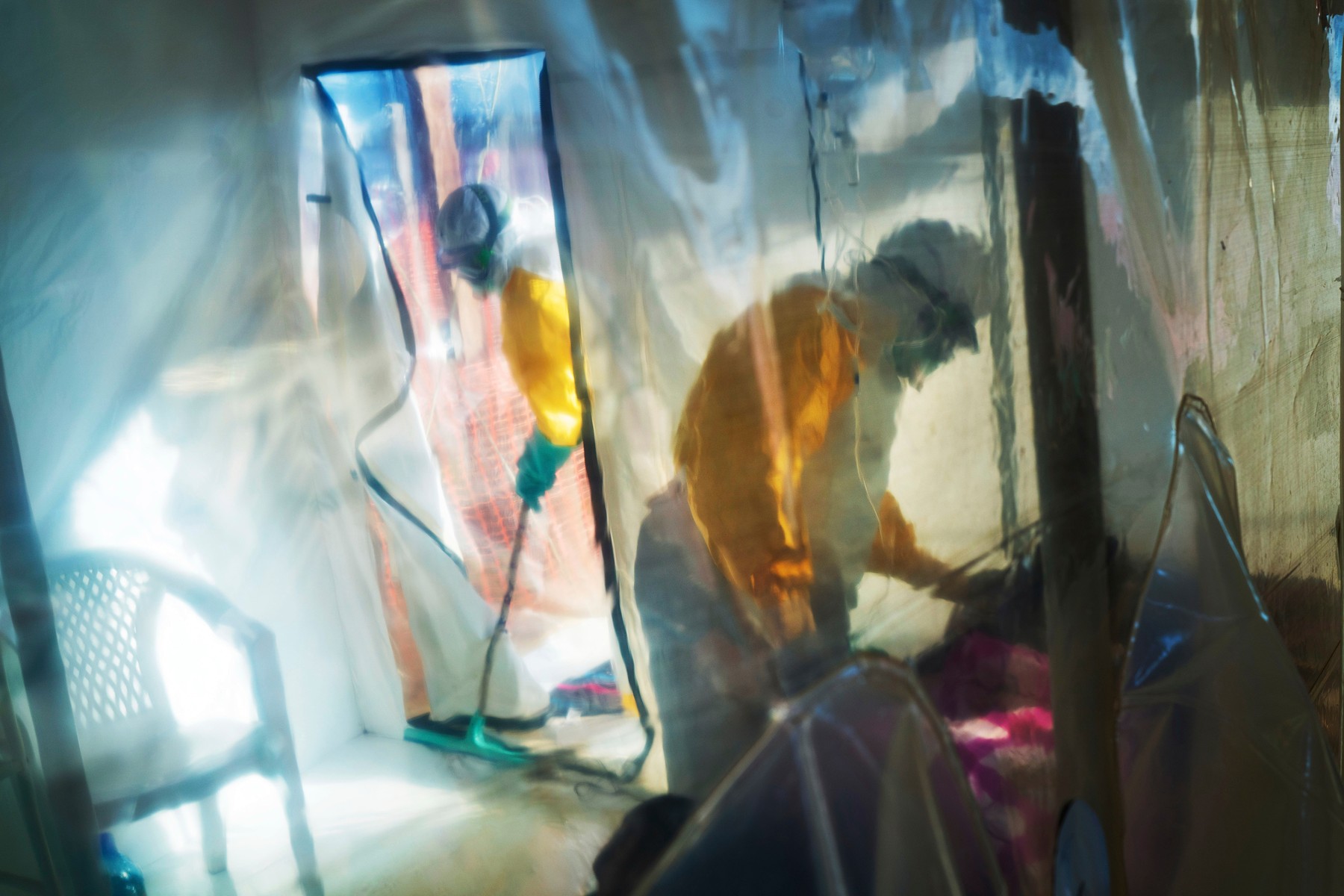
“We are doing everything possible to come to the aid of the DRC,” the European Commission said. “A humanitarian airlift is being organized, so we will soon transport essential materials there: medicines, protective equipment, materials to fight infections, tents, everything they need,” assured the European executive.
Ebola causes an extremely deadly hemorrhagic fever, but the virus, which has caused more than 15,000 deaths in Africa over the past 50 years, is relatively less contagious than, say, Covid or measles.
In Uganda, one death and one case were registered, but no local outbreak of the epidemic was reported.
Germany said on Tuesday it would “host and care” for an American missionary doctor working for a Christian NGO in Ituri who was exposed to the virus while treating patients.
The United States on Monday announced increased border health checks for airline passengers from affected African countries, and Bahrain, a small state on the Arabian Peninsula, announced late on Tuesday that it would ban visitors from these countries from entering for a month.
“All contact persons, all infected persons, must not travel,” advised Abdi Rahman Mahamud, director of health emergency response and alert operations at the WHO, on Wednesday.
On Tuesday, the head of American diplomacy, Marco Rubio, criticized the slowness of the WHO, which, according to him, “was a little late” in identifying the epidemic.
“It could be a matter of not knowing how the IHR (International Health Regulation, no) works and the responsibilities of the WHO and other entities. We do not replace their work, but we support them. That is why there could be a certain lack of understanding”, replied Tedros Adhanom Ghebreyesus on Wednesday.
The first case identified so far is a medical assistant who presented himself on April 24 at a medical center in Bunia, the capital of Ituri province. But the epicenter of the epidemic was located approximately 90 km away, in the Mongbwalu health zone, which suggests that the epidemic would have started from this locality, and the cases would have spread later.
The WHO was alerted to the emergence of a disease with high mortality on May 5, a first case of Ebola tested positive on May 15, and the organization declared an international health emergency two days later.
“Given the scale of the problem, we believe that (the epidemic) probably started a few months ago, but investigations are ongoing,” Anaïs Legand, technical expert on viral hemorrhagic fevers at the WHO, explained in Geneva on Wednesday.
“We anticipate that these numbers will continue to increase, given the period of circulation of the virus before the epidemic was detected,” added Dr. Tedros Adhanom Ghebreyesus.
According to him, “several factors justify deep concern about the risk of increased spread and new deaths”, such as the estimated number of cases, especially in urban areas, deaths among medical personnel, population movements in the region and the nature of the variant of the virus, Bundibugyo, for which there is no approved vaccine or treatment.
Today, “our priority is truly to break the chain of transmission by implementing contact tracing, isolating and managing all suspected and confirmed cases,” Anaïs Legand announced in Geneva.