Behind the scenes of the attack on Kyiv. We saw Russia's new tactics with our own eyes

KIEV, Ukraine — First, seemingly endless waves of Russian drones flew in throughout the day. Then, as night came, ballistic missiles began to fall.
In the early morning hours Business Insider reporters huddled with dozens of others in a cold, tightly packed parking lot converted into a bomb shelter in Kiev.
In the dim light, some slept in their cars; others occupied one of the eight beds or couches, tables or chairs, while the whole city trembled above them.
Read also in BUSINESS INSIDER
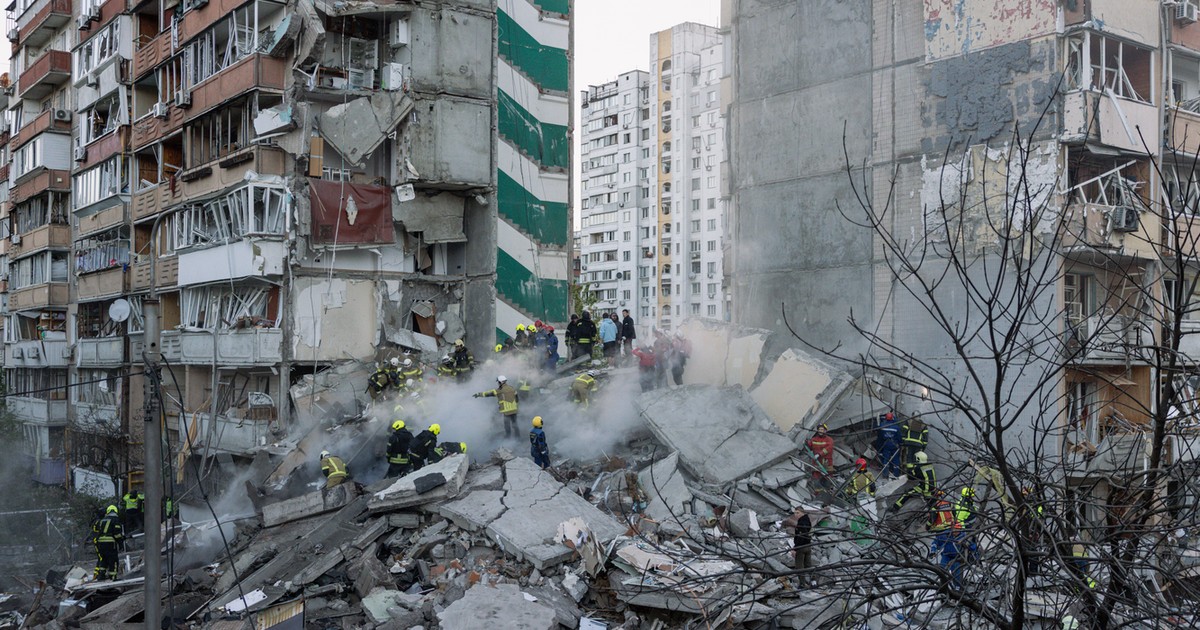
Ukrainian air defenses fought fiercely against the night bombing of Russia, but some of the shells penetrated the defenses, turning entire buildings into rubble.
For many hours of the night, the people in the shelter did what they could, waiting for the attack to end. They listened to music, watched shows on their devices, curled up and tried to sleep, talked quietly to others, and scrolled through their phones for updates.
Destroyed gas station after Russian shelling
|
Diego Fedele / Contributor / Getty Images
Ukraine anticipated the arrival of heavy bombardment. Warnings have been issued before, and between 8 a.m. and 6:30 p.m. local time on Tuesday, Russia fired more than 750 combat drones and decoys in continuous waves over Ukraine, the Kyiv air force said. This rare daytime shelling came after the end of a three-day ceasefire.
Read also: “The Ukrainian armed forces are the best in Europe today.” Now it is the West that comes with requests
Navigation suddenly stopped working
Ukrainian President Volodymyr Zelensky called the attack “one of the longest mass Russian attacks” on the country. Authorities said at least six people were killed and dozens injured on Wednesday.
Business Insider representatives were on a road north of Kiev around noon when navigation on iPhones suddenly stopped working – which could indicate electronic warfare activity.
Russian drones have been flying nearby, and Ukraine frequently uses GPS jamming in an attempt to disable them.
In the evening, Business Insider joined a Ukrainian mobile air defense unit operating near Kiev. It fought against Russian Shahid-type attack drones.
Soldiers manning a .50-caliber machine gun shot down one of the Russian drones, the unit's commander told us. At that point, Ukrainian forces had already intercepted over 700 drones across the country throughout the day.
The commander said that in his opinion Russia tried to exhaust Ukraine's air defenses before moving on to missile attacks.
Emergency sirens sounded throughout the day. Ukrainian military intelligence reported on Tuesday that Russia had launched a large-scale air attack on critical infrastructure and civilian targets, warning that it could develop into a “prolonged” bombardment.
“Russia plans to use a large number of air- and sea-launched cruise missiles, as well as ballistic missiles,” the intelligence agency reported. In the statement, he noted that the targets include, among others, “critical infrastructure and life support systems in large cities, including energy facilities, defense industry plants and government buildings.”
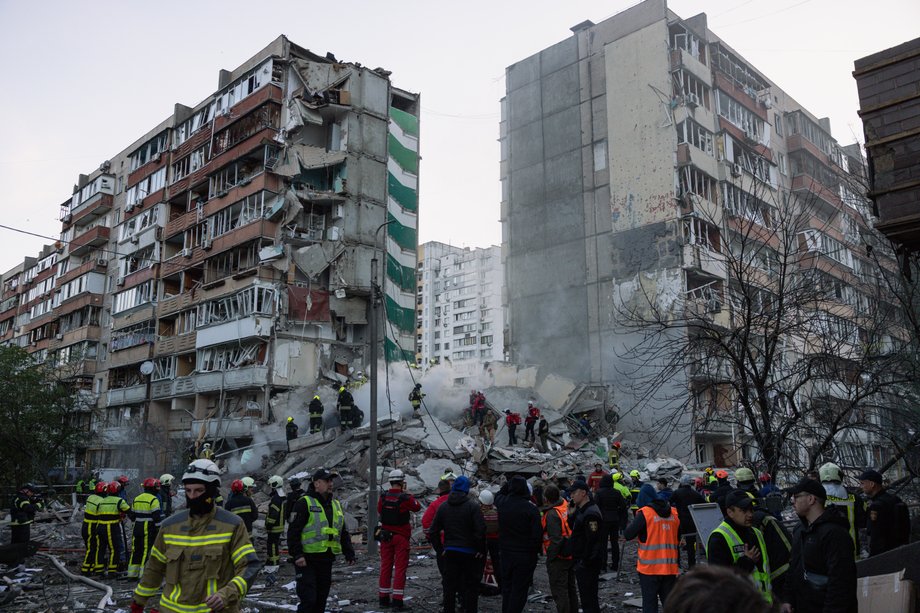
Destruction after Russia's attack on Kyiv
|
Diego Fedele / Contributor / Getty Images
Rockets came after the drones
Russian drones continued to arrive in waves. Okay. time. At 1:00 the inhabitants of Kiev received information about the launch of ballistic missiles and went to shelters. The explosions shook the city, jolting people hiding in a converted parking lot from their stupor.
Local Telegram channels published videos purporting to show the moment a Russian drone struck a multi-story building in Kiev, as well as other scenes of destruction across the city.
“Russia treacherously attacked Kyiv” — reported the Ukrainian State Service for Emergency Situations, adding that “residential buildings and civilian infrastructure in several districts of the city were damaged as a result of the shelling.”
Daytime attacks followed by night shelling are becoming a new tactic for Russian forces. Earlier this month, the US think tank Institute for Science and International Security described the recent “emergence of continuous combined night-day strike cycles” as “significant operational development” for Russia.
The above text is a translation from American edition of Business Insider