If he actually takes up this position, critics of the current team's actions will confirm their opinion that the current government is seeking to privatize health care in Poland.
Nowicki arouses extreme emotions among our interlocutors. For some, he is a symbol of the privatization of health care, while others emphasize his high managerial competences.
— If this nomination takes place, which is quite controversial in my opinion, it will be to some extent consistent with the current line of the ministry's management – it will be in line with the recent activities of the Ministry of Health. – Wojciech Konieczny, former deputy minister of health from the Left, tells us.
Read also: The Niedzielski Act started a cost spiral. The silence continues
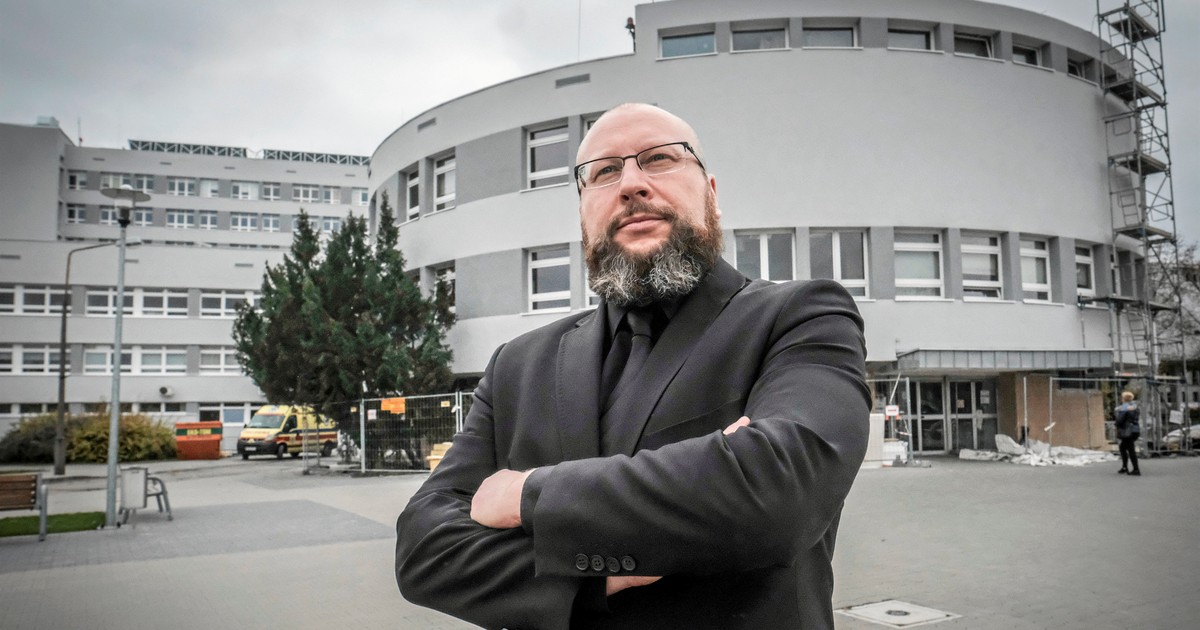
Health care manager Piotr Nowicki, head of the Warsaw Institute of Psychiatry and Neurology (IPiN) until the end of March, is being tipped by the media to be the new deputy minister of health.
— His resignation from the function at IPiN is interpreted in the context of his promotion to the Ministry of Health — we hear from one of our sources.
However, controversies reported in the media may prevent the implementation of these plans.
On Tuesday evening, Dominika Pietrzyk from “Rzeczpospolita” wrote that a full-time IPiN researcher signed four additional civil law contracts with the Institute for the implementation of a project financed from public money. Salary amount? Okay. PLN 1.2 million… And IPiN? After being audited by the Medical Research Agency, it does not want to reimburse expenses deemed ineligible.
In turn, Magda Roszkowska described the situation at the institute in a recent text in “Gazeta Wyborcza”: “From January 2025 to April 8, 2026, 15 psychiatrists left the IPiN. At that time, director Piotr Nowicki began to implement the restructuring plan he had created and approved by the Ministry of Health.”
And she added: “There has been no toilet paper in closed psychiatric wards since January. No one visits some patients there, so they have nothing to wipe with,” a therapist from the Institute of Psychiatry and Neurology tells me.
He is to take the place of the only doctor in the ministry's management
Nowicki would replace the only doctor in the ministry's management – Tomasz Maciejewski.
— If it's true that he will follow Maciejewski there, it will mean that there will be no doctor in the management of the Ministry of Health. This has never happened before in history – emphasizes one of our sources.
Maciejewski, as we hear, announced from the beginning that he would only take up the position for a while, and besides, “he is fed up with working in the ministry and wants to get away from there as soon as possible.” However, our interlocutors claim that he will certainly not be given the green light to leave the ministry before the Sejm considers the motion for a vote of no confidence in the health of Jolanta Sobierańska-Grenda. This vote may take place at the end of April.
Nowicki, if he is actually nominated, would be responsible for the consolidation and restructuring of hospitals. How media sensitive this topic is is shown by the famous example of closing the maternity ward in Lesko.
According to some of our interlocutors, he was born for this role. — He shows a “hey forward” attitude and boasts about the hospital restructurings he has carried out. It will merge and consolidate entities and cooperate with Bank Gospodarstwa Krajowego – says one of our sources.
He was the head of the Institute of Psychiatry and Neurology
Nowicki was born in 1973. He graduated in sociology from the University of Wrocław, postgraduate studies in health care management and MBA studies at the WSB University in Wrocław.
Before joining IPiN, he dealt with, among others, restructuring of medical entities of the Medical University of Warsaw and the Children's Health Center, he also headed the hospital in Poznań, as a manager he was also involved in the restructuring and consolidation of hospitals in Wrocław and headed the Opole Oncology Center.
He lectures at several universities, including the private School of Medical Sciences run by LuxMed. He is also the owner of Consulting-Med. However, if he is appointed to the Ministry of Health, he will have to suspend or liquidate his activities.
As Magda Roszkowska wrote in “GW”, he left IPiN on March 31, after only a year and a half. “It was written on the institution's social networking site that he had completed the mission by successfully introducing the first stage of restructuring. The post also shows that the direction of changes he set out under the slogan “Let the Institute become an INSTITUTE” will continue to be implemented by his successor, a trained Polish teacher,” we read.
– He was not interested in psychiatry or neurology at all, that's not why he was at IPiN – says one of our interlocutors.
In an earlier publication of “GW”, the story of Nowicki's successor at IPiN, Sylwia Szepelawy, was described in detail by Judyta Watoła. As she indicated, her career gained a dizzying pace after she completed her MBA in health care at the University of Technology and Art in Wrocław less than two years ago.
“Previously, she worked for ten years as an administration manager at the Dormed clinic in the town of Sulechów in the Lubusz Voivodeship. Then, in the same Sulechów, for less than three years she held the position of deputy director at the Topmed clinic. And as soon as she obtained her MBA diploma, she became the director of the Independent Complex of Public Open Treatment Facilities in Warsaw-Wawer. Hence, after only 11 months, she moved to the position of deputy director of the Institute of Psychiatry and Neurology, where now – again only after a year – she has been promoted to the position of general director,” Watoła reported.
However, one of our interlocutors argues that Szepelawa “is definitely not the target director” and a competition for the head of the institute should be expected.
The market appreciates Nowicki's managerial competences
In opposition to media criticism, some of our interlocutors speak highly of Nowicki's competences.
– He is a good manager – he helped several hospitals recover financially – says one of our sources. He emphasizes that Nowicki's task at IPiN was to restore stability. — For the first time in a long time the result is better. He reduced costs – for many years the institute had been in debt, among others. in parabanks. His predecessor resigned – it's a very difficult job – we hear.
Another of our interlocutors echoes him: – He is definitely an efficient manager, he is one of the best people on the market for managing hospitals – few people know as much as he does about how to set up a hospital. There is no doubt that he has a lot to say and makes sense when it comes to hospital treatment, he argues. In his opinion Nowicki is therefore better suited to the consolidation and restructuring of hospitals than anyone else.
However, the same interlocutor admits that the former director of IPiN is “not a world champion” when it comes to interpersonal skills.
Another source adds that Nowicki is “convinced of his own infallibility.”
“If health care is to be privatized, this is the best candidate.”
— The minister and the rest of the ministry's management are serious supporters of commercialization and de facto privatization of health care. Nowicki and Sobierańska-Grenda will be a good duo. They will try to close as many departments and hospitals as possible, one of the interlocutors tells us.
He adds that if – as alleged by some of the opposition, e.g. Razem – the ruling team really wants to privatize health care in Poland and aims to close as many hospitals as possible, then Piotr Nowicki “is suitable for this”. – He is an expert in this very thing – emphasizes our source.
— If health care is to be privatized, this is the best candidate for deputy minister – he convinces.
However, our other interlocutor opposes this approach. As he assures, privatization of the system, or even less privatization of hospitals, cannot take place in Poland and no one has such intentions.
He argues that in the light of the applicable regulations, privatization is de facto impossible. — Theoretically, only hospitals that are companies can be privatized. Meanwhile, only 1/4 of institutions have this legal form. Moreover, in the case of hospitals – companies – the act stipulates that these are local government units and there is no possibility of changes that would result in the local government losing its majority stake, he explains.
— The hospital base largely reflects the realities of the 1990s. Changes are needed to make it more efficient. However, there is still a long way to privatization, our interlocutor emphasizes.
Health care may be a “millstone” around the necks of the current team
— If nothing is done with health, it will be a millstone around the necks of the current ruling team during the election campaign. – admits one of our interlocutors.
The government is under censure not only because of the closure of maternity wards, but also because of the controversy related to the financing of diagnostic tests by the National Health Fund.
The situation of those in power is not made easier by the recent media coverage cases of KO politicians using the system bypassing normal procedures.
According to the analyzes of the Res Futura collective, the case of KO senator Tomasz Lenz received wide attention on social media. As WP described, he arranged for his son to have an ingrown toenail treated at a public hospital in Aleksandrów Kujawski, bypassing the queue, procedures and documentation.
In turn, the website zero.pl reported on the “hijacking of an ambulance” by one of the directors of the hospital in Knurów (Silesian Voivodeship) to help a relative of KO MP Krystyna Szumilas.
All this is compounded by the disastrous results of public opinion polls. For example, the latest United Surveys survey for Wirtualna Polska shows that over 82 percent Poles have a negative opinion about the influence of the current ruling coalition on the situation in Polish health care. There is also great skepticism among the voters of the formations that make up the government.
What can be done?
— A profound change is needed, adapting the system to the current realities, lack of action causes the financial inefficiency of the system. The problem lies in the complete imbalance of the revenue and cost sides – says one of our sources.
A necessary step, as he emphasizes, is to modify the current system of increases in health care. — We are in a bind because of the system of raises for the health service. Between 2023 and 2025, expenditure on the National Health Fund increased by almost 50 percent, without structural and systemic changes, nothing will change. This year, over PLN 70 billion (out of approximately PLN 220 billion available to the National Health Fund in 2026) will go to salary increases, he argues.
Another condition for improving the situation – in the opinion of our interlocutors – is the consolidation of hospitals, which would be handled by Piotr Nowicki.
— It must take place, if only because the situation must be adjusted to the demographic decline. The hospital base must be adapted to the health needs of society, argues one of our interlocutors.
Another adds that we should strive for hospitals to have narrower specializations, and not like today, where “everyone does everything.” Moreover, in his opinion, a large part of diagnostic tests and procedures could be performed on an outpatient basis, rather than in a hospital setting.
However, as Judyta Watoła notes in “GW”, in the Ministry of Health under the government of Jolanta Sobierańska-Grenda, work on new draft bills practically came to a standstill. She managed to get only one bill passed – an amendment to the Medical Fund Act to save the finances of the National Health Fund.
On Tuesday, April 14, the government adopted another project of the Ministry of Health – resulting from the National Reconstruction Plan. This is about amending laws related to the development of e-health services aimed at digitizing the system.
This lack of effectiveness in the area of legislation, according to our sources, proves the weak political position of Sobierańska-Grenda.
— No decision is also a decision – the system is clearly unbalanced, and this will backfire – concludes our interlocutor.