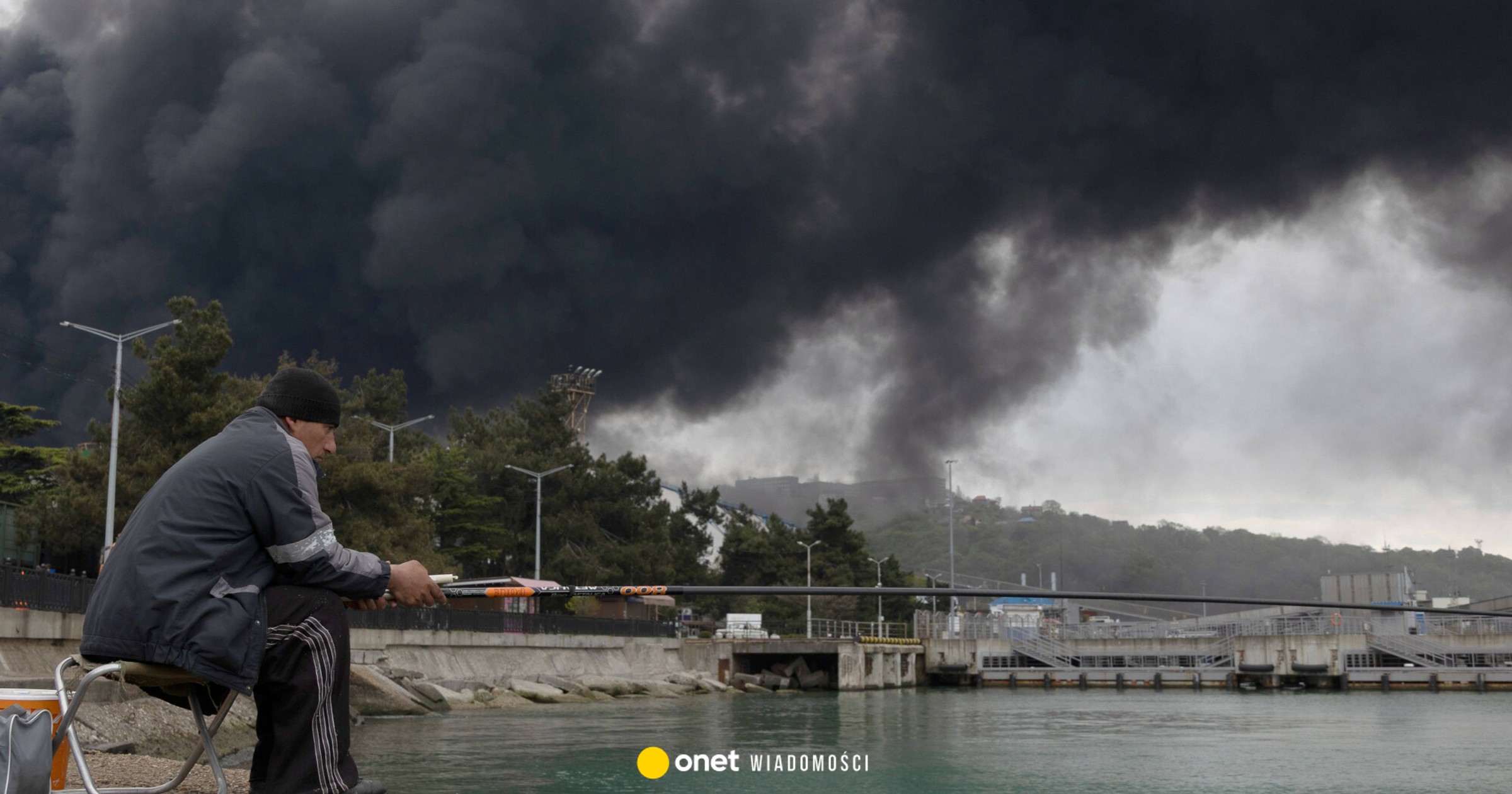
Everything you need to know about the crisis situation on the fuel market that the Government is establishing from tomorrow


The announcement made by the Government of Romania regarding the establishment of a crisis situation on the market of crude oil and petroleum products comes in a tense context, marked by accelerated fuel prices. Although the term may sound alarming, it has a clear definition in Romanian legislation and essentially implies a set of temporary measures through which the state can intervene to stabilize the market.
The government will institute a crisis situation on the fuel market. The Truth photo
According to Law no. 85/2018 on ensuring the security of the supply of oil and oil products, the crisis situation is declared when major malfunctions occur in the supply or when there is a real risk that the market can no longer function normally. Specifically, the law provides in art. 2 lit. g) that o “emergency situation” or crisis occurs in case of a “significant disruptions to the supply of crude oil and petroleum products” affecting national consumption.
The establishment of this state is not done arbitrarily, but through an official decision, usually a government decision, based on the analyzes carried out by the competent authorities. Also in Law no. 85/2018, at art. 8 para. (1), it is mentioned that the authorities can adopt immediate measures to reduce the effects of a crisis, including the use of emergency stocks.
The duration of such a measure is limited, being meant to strictly cover the period in which there are malfunctions. The law does not impose a fixed term, but emphasizes the temporary nature and the need to constantly reassess the situation. Basically, the state of crisis can last from a few weeks to a few months, depending on the evolution of the market.
During the period in which it is activated, the state acquires additional instruments of intervention. According to art. 9 para. (1) from the same law, the authorities can decide:
- controlled release of stocks of oil and oil products;
- restricting or prioritizing consumption for certain sectors;
- coordination of distribution to avoid bottlenecks.
Also, in practice, complementary measures can be adopted, such as temporary price capping or strict market monitoring, even if these can be regulated by separate normative acts.
It is important to understand that the establishment of a crisis situation does not automatically mean a lack of fuels, but on the contrary, it represents a mechanism by which the state tries to prevent exactly such a scenario. By using strategic reserves and temporarily controlling the market, the authorities aim to ensure continuity of supply and limit the impact on the population and the economy.
In conclusion, the measure announced by the Romanian Government is a safety measure, clearly provided for in the law, which applies only in exceptional conditions and aims to stabilize a market under pressure.
The crisis situation established for 6 months with the possibility of extension
The government announced that it will declare, on Tuesday, March 24, a crisis situation on the fuel market. The decision will be taken by Emergency Ordinance.
During the crisis situation, applicable protective measures will be instituted for a period of 6 months, with the possibility of successive extensions for intervals of no more than 3 months, as long as the circumstances that determined the establishment of the crisis situation persist.
Energy expert: “Cheap diesel is no longer a credible scenario. The threshold of 10 lei/liter becomes the new basis”
The commercial surcharge for gasoline, diesel and the raw materials used to obtain them will be limited throughout the chain of economic activity.
The export and/or intra-Community deliveries of petrol and diesel can be carried out by economic operators exclusively with the prior written consent of the Ministry of Economy, Digitalisation, Entrepreneurship and Tourism and the Ministry of Energy.
During the crisis, the amount of biofuel in gasoline is reduced to lower the final price.
Also, the Ministries of Finance, Economy, Energy, together with the Competition Council, will permanently monitor the market and evaluate any other measures that are required.
Diesel has become more expensive by almost 2 lei in three weeks
On Monday, prices reached 9.99 lei/liter for standard diesel at Lukoil and 9.97 at OMV, the cheapest standard diesel at Petrom – 9.83 lei/liter.
Mol gas stations sell diesel for 9.92 lei/liter, and Rompetrol for 9.93 lei/liter, these being the highest prices recorded since the war in the Middle East broke out.
As for premium diesel, the lowest prices are at Petrom – 10.23 – 10.26 lei/liter, followed by Lukoil – 10.34 lei/liter, Mol – 10.47 lei/liter, Rompetrol – 10.50 lei/liter and OMV – 10.52 – 10.53 lei/liter.
The prices of standard gasoline did not stay the same either, the cheapest gasoline being sold by Petrom for 9.13-9.15 lei/liter, followed by Rompetrol with 9.17 lei/liter, Lukoil with 9.19 lei/liter, Mol with 9.22 lei/liter and OMV with 9.26 lei/liter.
As for premium gasoline, prices start at 9.74 lei/liter at Petrom, reaching 9.92-9.95 lei/liter at Mol, 9.94 at Rompetrol and 9.97 lei/liter at OMV.
Thus, the average price for standard diesel is 9.95 lei/liter, and for premium diesel 10.42 lei/liter, which means an average diesel price of 10.19 lei/liter, compared to 8.25 lei/liter on February 27, respectively an increase of 1.94 lei per liter of diesel.
Oil prices rose in volatile trading on Monday as investors weighed the possibility of a further escalation of tensions after President Donald Trump's ultimatum demanding Tehran reopen the Strait of Hormuz or risk attacks on its energy infrastructure.