Indexations 2026. The end of the era of large pension increases. And very good [OPINIA]


Many seniors may be disappointed. A year ago it was 5.5 percent, in previous years even 12 or 14 percent. Contrary to appearances, it is very good that the sudden price increases are ending. Also for the retirees themselves, although they may not be fully aware of it.
Read also in BUSINESS INSIDER
In recent years, governments (regardless of their options) have used the indexation of pensions as a weapon in their political fight. According to the principle: “look, we gave so much to seniors, and they gave less.”
And cool. Except there's a second meaning. For politicians, much less favorable than the several-digit indexation index in the regulation of the Minister of Family.
In Business Insider Polska, we have written many times about how the indexation index is constructed. It consists of inflation for the previous year (ordinary or so-called pension inflation, depending on which is higher) and 20%. real salary increase. Real, i.e. what is above inflation.
In fact, indexation is compensation for the rising costs of living in the previous year. To put it another way: seniors must first use their own money to pay for increasingly expensive groceries, medicines, services or bills, and in March of the following year the state will reimburse them for it.
The more they assumed, the greater the compensation. So while we boast about high indexation, we also admit that the cost of living for seniors has increased significantly.
And the other way around: a decline in the indexation index means contained inflation and prices – although still rising – at a much slower pace.
Of course, in theory it is better to get a raise of PLN 150 than PLN 50 per month. The thing is that the seniors paid this PLN 100 difference from their own pockets in the previous months.
This does not mean that we should return to penny indexation, e.g. from 2015-2017. But definitely 14%. indicator is not good.
Let me just remind you that in 2023, when the indexation was 14.8%, inflation was rampant. It is true that wages also grew very quickly, but only nominally. In real terms, purchasing power decreased by 2.1%. The increases may have looked spectacular, but they certainly did not increase the standard of living of seniors.
In short: high indexation means high inflation. High inflation means a fast growth rate of (nominal) wages. And a price-wage spiral, which can be a serious threat to the economy. However, we wrote about this in a separate material.
At this point I am reminded of another absurdity. How the Ministry of Finance boasted of record tax refunds in the settlement for 2022. Yes, it is good to get, for example, PLN 3,000. PLN of PIT refund in April.
Only it's the same 3,000. PLN that the government had previously taken away with the reform of the Polish Order. The refund means that the tax office previously collected too much. The mechanism of action with valorization is similar.
14 percent He won't be back for now
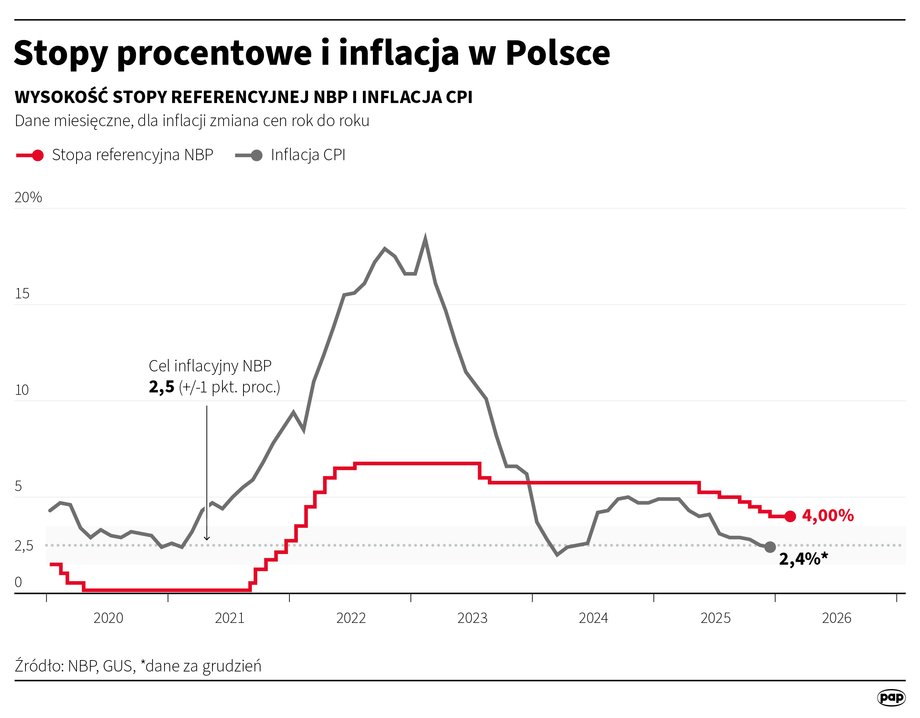
It looks like there will be no more major valorizations for now. The projection of the National Bank of Poland predicts that in the coming years inflation should return to around the target and analysts do not expect what happened in 2022-2023.
|
Michał Czernek / PAP / photos
And that will mean that seniors should get used to indexation below 5%.
They'd better forget about the second indexation of pensions promised by the ruling coalition. The government did deal with this issue, but decided to put it on the shelf until inflation becomes a real problem again.
See also: The government will disappoint retirees. There will be no second indexation
And since this is not likely to happen for now, retirees will be left with one indexation in March, and bonuses in the form of thirteenth and fourteenth pensions. And very good.