Fuel prices, unjustifiably inflated in Romania. Transporters save 3,000 lei on a fill-up made in Bulgaria


Prices at the pump are artificially inflated in Romania, draw the attention of experts who demand the urgent intervention of the state through controls and regulations. Romanians pay 2 lei more per liter than their Bulgarian neighbors, even exceeding the costs generated by higher oil prices and excise taxes.
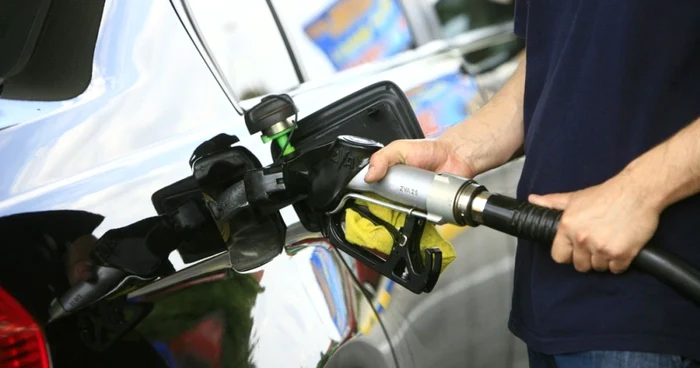
Fuel prices are unjustifiably high in Romania. The Truth photo
In just two days, fuel prices in Romania have risen by almost 25 banis, on average, the specialists' calculations showing that the price is at least 10 banis higher than would be justified by the recent increase in oil prices.
With an annual consumption of approximately 6.6 million tons of diesel, a difference of only 10 pennies per liter can mean hundreds of millions of lei annually, according to the calculations made by the energy expert Dumitru Chisăliță. According to him, the amount is paid indirectly by transporters, farmers, industry and finally by consumers. “In an economy where road transport remains the main mode of movement of goods, diesel is a systemic cost. Of the 10 money, we estimate that 3.5 money goes to the state budget and 6.5 money goes to companies. But from the beginning of the year until now, the state from the increase in the price of oil products, through VAT, earns an additional 8 money per liter sold“, warns the energy expert.
Do gas stations charge a higher commercial surcharge?
The energy specialist points out that in a functioning market, price variations are normal, but when they exceed justified raw material and logistics costs, legitimate questions arise about the structure and size of trade margins.
“In this context, it would be useful for the National Authority for Consumer Protection and the Competition Council to analyze the evolution of margins in the fuel distribution sector and how they have changed in recent days“, added Dumitru Chisăliță.
Carriers supply in Bulgaria and Hungary
The latest statistical data on fuel prices in neighboring countries show that in Bulgaria the price of gasoline is 1.74 lei cheaper than in Romania, and diesel 2.019.
In Hungary, the price differences are somewhat smaller, the price of gasoline being 75 banis lower than in Romania, while the price of diesel is 78.4 banis lower than here.
“Qn Romania supplies only captive carriers and international ones only enough to reach Hungary and Bulgaria. All carriers that do international routes refuel in the transit countries, choosing Bulgaria and Hungary because it is much cheaper,” explained Beniamin Lucescu, the president of the Federation of Romanian Transport Operators (FORT) for “Adevărul”.
Asked how much “one full” means for large transport vehicles, Lucescu stated that each vehicle has two tanks, with a total capacity of 1,200 – 1,500 liters.
A simple calculation shows that, in the case of filling up in Bulgaria, the savings would be around 3,000 lei, that is, almost 590 euros, which is not a small amount at all.
FORT asks the Government to intervene
In this context, FORT requests the Government to partially return the excise tax to transporters, to temporarily reduce its level, but also to temporarily cap the price of fuel.
“The increase in the price of fuel does not only affect transporters, but the entire economy. Every additional leu at the pump is found in the price of products, in logistics costs and, finally, in the purchasing power of Romanians. That is why it is essential that the state intervenes intelligently and temporarily to stabilize the market.
We request the Government to include in the budget for 2026 the sums necessary for the return of the excise duty of 65 money per liter to transporters and to adopt a flexible mechanism for adjusting the excise duty, related to the evolution of the price of oil. At the same time, the temporary capping of the fuel price, following the model of other European states, must be analyzed with maximum responsibility.
Without these measures, we risk the pressure on transport costs turning into a new spiral of price hikes across the economy”declared Lucescu.
Ivan: We are working on this aspect
The Minister of Energy, Bogdan Ivan, states that, after the increase in fuel prices, on average, by 25 pennies in just two days, the Competition Council is making checks to determine whether or not the price increase at the pump is justified.
He made these statements when asked if the increase from one day to the next in the price of fuel is a speculation of traders or has a real basis.
“We have blocked any possibility for any economic agent to take advantage of an armed conflict in the Middle East, to artificially increase prices, which made Romania (fuel price – no) increase by 20 pennies. Data are reported on average on the fuel market in Romania. Compared to other countries, in Italy it increased almost four times more, in Spain two and a half times more, in Germany ten times more than in Romania“, also declared Bogdan Ivan.
He said that “the state is doing its job”, showing that the Minister of Energy or the Prime Minister of Romania cannot control international developments.
Bogdan Ivan added that, if the situation in the Middle East continues, the Romanian state can intervene for a temporary period and reduce the excise tax by a few tens of money, so that the price of fuel does not increase much.
“There are working scenarios that we are working on now depending on the evolution we have. (…) One of the scenarios we are working on is this temporary adjustment as a time and as a price range to reduce prices below a certain psychological threshold, if we will have an upward trend in the following days. Two: for the special categories, transporters, farmers, we also take into account a compensation there that can help them, because any increase in transporters or farmers represents a chain increase in costs, services in our country“, Bogdan Ivan also affirmed.
How the Romanian oil system works
The supply of crude oil and petroleum products from Romania is structured on three main levels:
• current supply flow (domestic production and imports)
• the commercial stocks of the companies
• mandatory strategic stocks of the state.
This model is identical to the one used in most of the member states of the European Union and is designed to ensure energy security.
Refineries in Romania process the raw material from domestic production and from maritime or regional imports. Supply contracts are generally organized on logistics cycles of 30–90 days. In parallel, refineries maintain operational stocks of crude oil equivalent to approximately 20-45 days of operation, a standard level in the European refining industry, according to an analysis by the Intelligent Energy Association (AEI).
According to her, in the case of petroleum products, the logistics chain is faster, regional diesel imports can arrive in 7–21 days, and maritime transport from the Middle East or Asia in 20–45 days
Romania imports a large part of the crude oil it processes
Romania's annual crude oil consumption is approximately 10 million tons.
Domestic production covers only 2.9 million tons, which means that about 70% of the requirement comes from imports.
The main sources are:
• Kazakhstan
• Azerbaijan
• Iraq
Diesel fuel is the main fuel of the Romanian economy. Annual consumption is approximately 6.6 million tons, an important part being covered by direct imports or locally imported and refined crude oil.
Refining infrastructure
Romania currently has three major refineries:
- Petromidia (Rompetrol) – approximately 4.8 million tons/year
- Petrobrazi (OMV Petrom) – approximately 4.5 million tons/year
- Petrotel (Lukoil) – approximately 2.7 million tons/year
Total refining capacity is approximately 12 million tons annually, sufficient to cover much of domestic consumption and for regional exports. Crude oil and petroleum products are transported through the network operated by Conpet, which has approximately 3,800 km of pipelines.
Stocks are a safety net for the market
The market operates with several levels of stocks. Commercial stocks of petroleum products normally cover about 20–45 days of consumption.
In parallel, Romania maintains mandatory strategic stocks according to EU legislation, which must cover at least 90 days of net imports or 61 days of domestic consumption.
In practice, the level is about 90 days of consumption.
“Therefore, the Romanian oil system could theoretically cover 110-130 days of consumption in the event of a major crisis“, states Chisăliță.
The total estimated storage capacity for crude oil and petroleum products in Romania is approximately 3.3 million tons (almost half of Romania's consumption for an entire year).
Simulation of supply flows for the period December 2025 – February 2026 indicates a stable market. The commercial stock of diesel is estimated at about 450 thousand tons, equivalent to about 25–27 days of consumption in the winter season.
“Each month, diesel inputs—domestic production and imports—are almost equal to outputs represented by domestic consumption and exports, which keeps inventories constant. In parallel, refineries process about 900–950 thousand tons of crude oil monthlymaintaining a stock of approximately 900 thousand tons, equivalent to approximately 30 days of operation”added the energy expert.