The battle for Pokrovsk enters the decisive phase. If the city falls, Russia achieves the most important victory of 2024

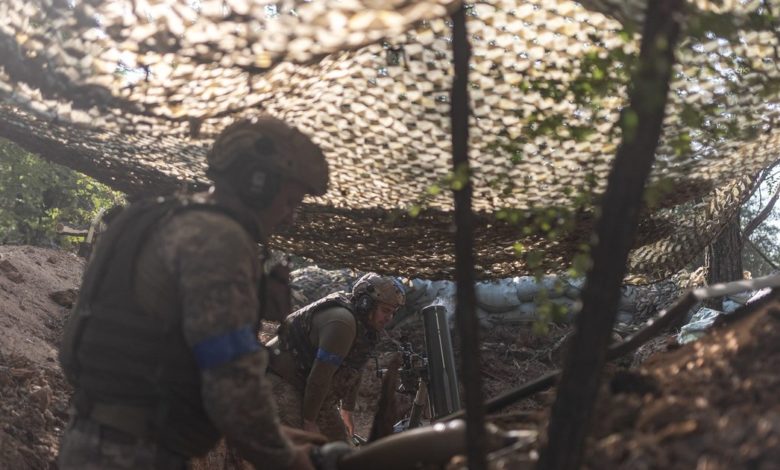
Some of the heaviest fighting of the war is taking place in eastern Ukraine these days. Russian troops are trying to break the Ukrainian defenses in the Pokrovsk-Mirnograd area, relying on numerical superiority and the massive use of guided bombs, at a time when Kiev's anti-aircraft defense remains insufficient.
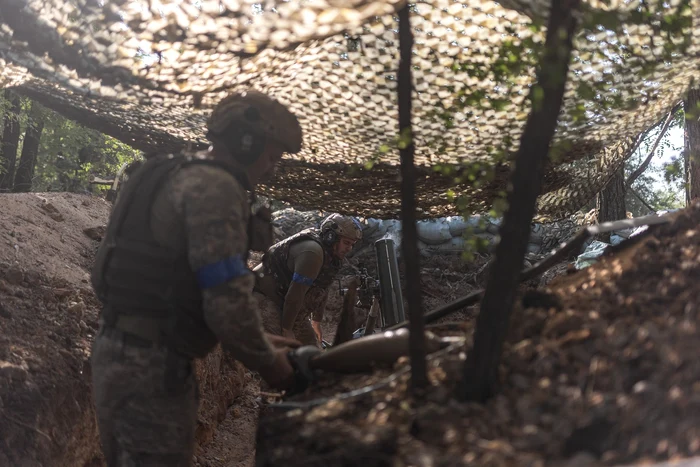
Heavy fighting in the Pokrovsk area/PHOTO: Profimedia
Moscow is trying to close a campaign that began several months ago: the capture of Pokrovsk, an essential railway junction and a strategic gateway to the rest of the Donetsk region. Without the control of this city, Russia cannot achieve its declared goal of fully occupying Donbas, according to the assessments of the General Staff of the Armed Forces of Ukraine, quoted by Reuters.
As Ukraine continues to hold back the slow but steady advance of Russian troops along some 1,200 kilometers of the front, Kiev is also under increasingly visible diplomatic pressure from the United States, which is trying to pave the way for peace talks to end a war now in its fourth year.
The Ukrainian General Staff says its forces still control the northern part of Pokrovsk – a town of about 60,000 before the war – and are still defending Mirnograd, a smaller town but vital to maintaining the defensive line.
Why Pokrovsk is the major stake
Pokrovsk's importance far exceeds its geographical size. It is a crucial rail hub and the scene of fierce fighting as early as 2023. The fall of the city would represent Russia's biggest military victory since the capture of Avdiivka in early 2024, and open the way to other key urban centers in Donbas.
At the end of last year, Moscow claimed to have occupied Pokrovsk, a claim firmly rejected by the Kiev authorities. Analysts point out that, despite huge human losses, Russia has managed to occupy only about 1.3% of Ukraine's territory from 2023 to date. Conversely, Russian aerial bombardment has caused serious damage to Ukrainian energy infrastructure in recent months.
Defense under pressure
The 7th rapid reaction corps of the Armed Forces of Ukraine, responsible for this sector, warns that Russia is “constantly pressing” in the Pokrovsk-Mirnograd area. According to the Ukrainian military, the Russian offensive takes advantage of the lack of sufficient anti-aircraft defense, the intensive use of guided bombs and the control of heights and flanks, obtained through a clear superiority in numbers.
Analysts of the DeepState platform claim that the Russian infantry has entered the north of Pokrovsk and is trying to advance towards the neighboring village of Grishine. Maps published by the group show that almost all of Pokrovsk and a significant part of Mirnograd are already under Russian control. In this context, DeepState talks about the “last battles” for the two cities.
The territory, the red line of negotiations
Nearly four years after the full-scale invasion launched on February 24, 2022, Russia controls almost a fifth of Ukraine's territory, including Crimea and parts of the east of the country occupied since 2014.
The Kremlin is now asking Kiev to give up the remaining approximately 20% of the Donetsk region that it failed to conquer militarily – a condition that Ukraine categorically rejects. Moscow insists that the territorial issue is “fundamental” to any peace deal and says it will continue the war until its goals are achieved.
Polls show that most Ukrainians consider it unacceptable to cede Donetsk, including the fortress cities of Sloviansk and Kramatorsk, in exchange for peace.
“Even under these conditions, the conquest of the entire Donetsk region remains a matter of years for Russia. The fighting for the Sloviansk-Kramatorsk agglomeration could last up to three years and entail huge losses for the invasion forces“, the 7th Rapid Reaction Corps transmitted on the X network.
Meanwhile, the situation on the ground is deteriorating. According to Volodymyr Polevîi, the head of communications of the 7th DŞV Corps, Russian troops occupied the main heights of Mirnograd and Pokrovsk, seriously complicating Ukrainian logistics. Even the use of robotic platforms has become impossible in some areas.
In addition, Russia increased the size of assault groups to 6–8 troops and brought its reserves, including drone operators, closer to the front line. Although the command center for this sector is far away in Samara, the effect on the battlefield is visible: the pressure is mounting and the fighting is approaching a breaking point.