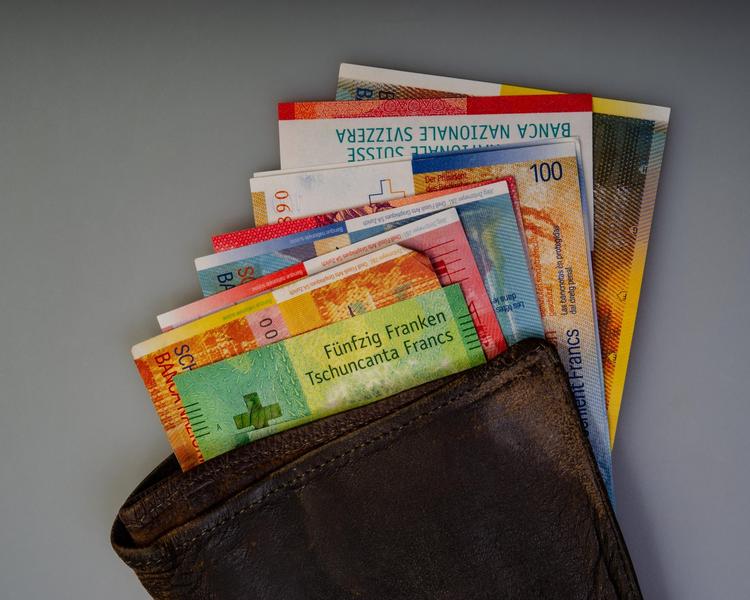
There are many ways to measure a society's fear, caution, or expectation. Some are seen during elections, others in economies, but the most sincere of all is seen in a common place: in the shopping cart.
Jjournalist Dan Popa sends the “EconoMix” newsletter every Thursday morning. If you are interested in personal finances and want to receive economic recommendations, you can subscribe here:
Because exactly there, between the cans left on the shelf, between the clothes put back together and between the fuel bought strictly as needed, you can see a country that is starting to tighten its belt.
November 2025 is one of those months in which Romania has silently reduced its consumption. The figures were confirmed on Friday by the National Institute of Statistics, which confirmed that retail sales (excluding cars and motorcycles) decreased in November 2025 by -4.8% gross series and -4.0% adjusted series compared to November 2024. “The volume of turnover in retail trade, depending on the number of working days and seasonality, in November 2025, compared to the month of November 2024, recorded a decrease, as a whole, by 4.0%, as a result of the decreases recorded in the sales of food products, beverages and tobacco (-5.1%) and in the sales of non-food products (-3.3%). The retail trade of fuels for vehicles in specialized stores increased by 2.3%”, reports INS.
A country does not reduce food consumption by –5.1% (adjusted series) by accident. It does so because money is going elsewhere, confidence is falling, fear of the future is growing, and priorities are narrowing
Romanians are not closing supermarkets, but they are starting to weigh each product.
Statistics' announcement comes a few days after EY Romania noted the same thing. “Romanian consumers are adjusting their behaviors, reducing non-essential expenses and focusing their budgets on essential products and services”, says the EY Consumer Index Romania 2025.
Almost 70% of respondents indicate the rising cost of living as their main concern, followed by the evolution of the national economy (62%).
“Romanians prioritize the essential and look for effective solutions, including by reducing waste and focusing on private brands”, says Georgiana Iancu, Retail and Consumer Products Leader at EY Romania.
The perception of inflation is widespread: more than 90% of respondents see price increases for food and household energy costs, and 84% for fuel. In addition, the phenomenon of “shrinkflation” is noted by 66% of participants, increasing the pressure on personal budgets.
In response:
- 48% intend to reduce budgets for restaurants and takeaway;
- substantial discounts are also planned for drinks, snacks and fashion or sports items.
In contrast, spending on basic foods, household products and personal care remains relatively stable, showing signs that the essentials continue to be protected, EY Romania also says.
Moreover, in a note sent to investors on Friday, BCR economists note: “Private consumption will remain subdued as real wage growth will remain negative in the first half of 2026. Regardless, we could see some improvement in the second half of the year. Consumer confidence fell in December and remained close to historic lows. The slightly better future economic outlook could not compensate for the weaker financial situation and lower purchasing intent.” Consumers remain overly pessimistic, likely due to summer tax hikes and high inflation.”
Belt tightening is first seen in food
Cutting back on food consumption is always a red flag: it doesn't speak of government-imposed austerity, but of individual, self-imposed austerity in millions of kitchens.
And when the INS writes dryly: “Sales of food, beverages and tobacco decreased by -5.1%”, in translation, this means: “Romanians started to reduce what is almost impossible to reduce.” It's the difference between “I don't buy a new TV anymore” and “I don't buy meat, drinks or premium products as often anymore”.
Non-food products confirm the change in behavior: Sales of non-food products also decrease by -3.3% (adjusted series). This includes: clothes, furniture, electronics, household appliances, household items. In short, all the things that Romanians buy when they have confidence in the future.
Romania postpones its purchases. It protects its liquidity. I tighten my belt in silence.
The only category that resists: fuels. Here the INS notes an increase of +2.3% (adjusted series) compared to the previous year. But fuels do not represent economic optimism. They represent the minimum cost of operation: commuting, distribution, deliveries, logistics transport
Romania can give up t-shirts and TVs, but it can't stop its cars.
This is the difference between discretionary consumption and compulsory consumption.
Eleven months that say more than one month
Between January 1 and November 30, 2025, the INS reports that retail grows by just +1.0% adjusted, but with a completely different profile:
Why this data matters – and what it tells us about us
To an eye unaccustomed to statistics, the percentages are trivial. To the casual eye, they are mass psychology. And here's why:
- Belt tightening is the first symptom of fear. In economics, there is a classic sequence: first people give up luxury, then people give up comfort. In the third phase, people reduce the strictly necessary INS shows that Romania is between 2 and 3.
- INS provides data before politicians do or are confirmed by crises. Crises don't start in GDP, but in food sales, energy consumption, credit deferrals and smaller supermarket baskets. Monthly retail data is among the fastest-growing x-rays of society.
- Belt tightening affects inflation, interest rates and GDP. Less demand means less pressure on prices, which can only make those in the NBR happy, because it helps them in the fight against price increases. But less demand also means weaker economic growth and interest rates that (theoretically) could come down sooner.
INS is rarely quoted in talk shows, but its data reach the NBR, reach the Ministry of Finance, reach Eurostat, reach the IMF, EC or OECD reports.
In other words, the apparently “boring” figures of the INS are the matrix on which Romania's economic policy is written.
Remember: Romania is not in an economic panic. It is on the economic defensive.
Belt-tightening is how the population tries to protect their future at the individual level, before the state recognizes the problems at the macro level.
And in this silent economy, where every family does their calculations in the kitchen, the INS communique becomes a document that deserves to be read with the utmost seriousness.