Between the railway and the factory. What was the everyday life of Polish women like in the Polish People's Republic?

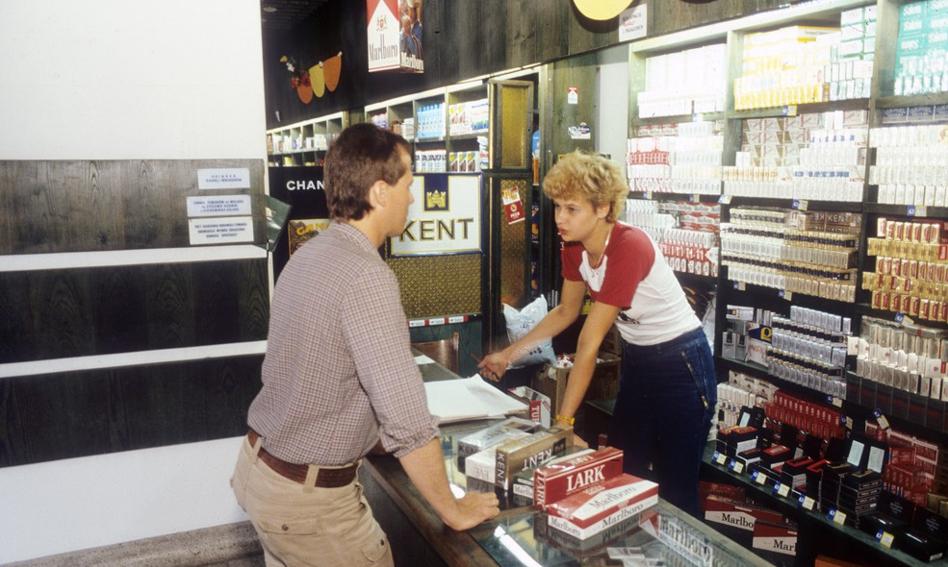
Historian and author of the book “Everyday life of women in the Polish People's Republic” prof. Błażej Brzostek told PAP that although there was no question of women's emancipation in the People's Republic of Poland, women migrated from the countryside to the cities, were financially independent, and their space of freedom was work, although in two jobs – one proper, at work, and the other at home.
Polish Press Agency: What was the everyday life of women like in the Polish People's Republic?
Prof. Błażej Brzostek: Describing it is difficult because we are trying to capture the experience of half of society – and among women there were many different groups whose fates do not form one common narrative.
PAP: So in the case of the Polish People's Republic we are talking about many images of women, rather than one?
BB: Exactly. The experience of women living in the countryside and working on farms was completely different, that of those employed in the city, and that of women who assumed traditional roles and took care of the home and children only. Their daily rhythms, social contacts, and ways of participating in culture differed.
PAP: What image of the Polish People's Republic emerges from your book?
BB: The Polish People's Republic was a dictatorship that limited the ability to express social interests. I am skeptical about narratives presenting the Polish People's Republic as a system that was emancipatory in nature, supporting, for example, the change of women's social roles towards greater freedom. Any system that blocks the expression of human opinions and emotions is non-emancipatory.
In the Polish People's Republic there was no real emancipation of women, although there were processes that increased their independence – migration from the countryside to the cities, increased material independence, new marriage law, which gave greater self-determination. A liberal abortion law was also in force from 1956, which in turn offered much greater freedom of choice than today.
PAP: So when can we talk about real emancipation?
BB: When it is possible to publicly formulate demands and protests. In the Polish People's Republic it was very difficult. Women's problems resulted primarily from their unequal position on the labor market – lower wages, difficult access to attractive professions and positions. There was also unequal time distribution and a virtual lack of political rights.
These issues could not be publicly articulated as they deserved. The space to express one's needs appeared only during the “Solidarity” period.
PAP: You mentioned “Solidarity”. Previously, there were also moments when women raised their heads and tried to go against the system?
BB: Yes, in different ways. Women were visible in protests already during the Stalinist years, especially in workplaces – they often even animated the opposition. Similarly, during peasant protests against collectivization. Groups of women blocked rural roads and tried to stop agitators demanding to join production cooperatives.
PAP: Where did their courage come from?
BB: Women operated with a sense of relative security. Arresting a man was easier for the authorities than detaining a woman taking care of small children – both politically and in terms of image. Therefore, repression against women was weaker, which increased the readiness to take actions that men were often reluctant to take. Women allowed themselves stronger public expression: they shouted at meetings and protested openly.
The source of rebellion was a better knowledge of the ills of everyday life. Women were most responsible for providing supplies for the home, so in practice they were the ones who faced permanent shortages – and these were a permanent element of the Polish People's Republic, from the beginning to the end. This experience fueled frustration and fostered criticism of both the home situation and the system itself.
PAP: In the musical “1989” directed by Katarzyna Szyngiera, behind the leaders of “Solidarity” stood women, primarily their wives – Danuta Wałęsa, Gaja Kuroń, Krystyna Frasyniuk and Alina Pienkowska and Henryka Krzywonos-Strycharska. Are we today aware of the role of women in the changes that took place during “Solidarity” and which ultimately led to the political transformation in Poland?
BB: Still not. There are, of course, works devoted to the women of Solidarity, including: Shana Penn's book “The Women's Underground.” They show that there was a specifically female type of participation in opposition structures. But at its end, the Polish People's Republic was a politically patriarchal entity – both in the ruling camp and in the Solidarity camp.
This is best seen at the Round Table: the talks were led almost exclusively by men. Only two women were present, and in some of the committees – the so-called sub-tables – there were none at all. This also applies to the sub-table dealing with the trade union movement, and therefore the legalization and future of “Solidarity” and other unions. This says everything about women's real participation in the formal negotiating structures of the time.
This problem continues to this day. The difference is that today we live in a country where we can talk about it and organize various movements. The example of the Women's Strike shows the scale of mobilization: a mass protest that – although it has not yet brought changes to the law – was politically and socially loud. In the realities of the Polish People's Republic, something like this would be unthinkable.
PAP: And what was the worldview of the average Polish woman?
BB: First of all, shaped by Catholicism, which can be seen in research and sources on public life in the Polish People's Republic. Undoubtedly, women were more religious than men, and also more involved in maintaining rituals and traditions at home.
Women were also more likely to participate in public religious rituals. They usually initiated local miraculous events. What I mean here are miracles, e.g. the transformation of an image (e.g. tears appearing on the image of Our Lady), the appearance of an unobvious light or the appearance of the figure of Our Lady or Jesus in some place. There were many such phenomena in the Polish People's Republic. Pope John Paul II additionally strengthened the need to have spiritual authority independent of party politics.
It must be remembered that the society of the Polish People's Republic remained largely traditional. In such an environment, the position of women was ambivalent. Today, the Church is perceived as an institution oppressing women, but this was not always the case. In the Polish People's Republic, it offered many women a sense of security and spiritual support. Psychological therapies were not widely available at that time, so people who couldn't cope with their problems could turn to their relatives or friends for help, at the risk of being judged, or to a priest. The lack of other ways of coping strengthened the role of religion in social life.
PAP: In the Polish People's Republic, did women have a chance to go beyond the kitchen, the Church and children?
BB: Yes, and the way out was work. For many women it was their first experience of independence. In the 1950s, most women came from social environments where women worked at home. Professional work radically changed their lives and created a space of freedom. Thanks to their own money, they were able to break away from the control of traditional society and the constellation of local male authorities. There was simply a greater space of freedom in their lives that work brought.
PAP: However, it is difficult to combine work with home duties…
BB: Work starts to become a problem when family comes along. When a wife cannot count on her husband to help her with household chores, she has to work two jobs – one at work and the other at home.
For women, combining professional work with household duties meant chronic fatigue, isolation and loneliness. Everyday, informal solidarity became a form of escape from this – neighbors, acquaintances, friends who helped each other with taking care of children or shopping. This solidarity concerned the private sphere, because women were still locked in a space from which it was very difficult to escape.
PAP: Where did the idea for this book come from?
BB: I remember the decline of the Polish People's Republic. I was a boy then and I remember my mother standing in lines and the various difficulties of everyday life she was involved in. I spent a lot of time with her in these stores, traveling “to the city”, i.e. from the outskirts of Warsaw to the center of Warsaw, where you could “get more”. This is with me. I have been interested in everyday life as an area of historical research for a long time; almost a quarter of a century ago, I published a book about the everyday life of workers in the 1950s. I wanted to get back to that. I also feel like I can say something new about women's history. However, I want to take a break from the history of cities.
PAP: Is it better to remember the history you are writing about?
BB: That's a difficult question. In the book, I rather escape into the depths of the Polish People's Republic, rather into decades that I cannot remember. It is said that one's own memory interferes with historical research. But we know that the opposite may be true. Memory is inspiration.
Interviewed by Anna Kruszyńska
Błażej Brzostek's book “Everyday life of women in the Polish People's Republic” was published by the National Publishing Institute.
Błażej Brzostek – historian, works at the University of Warsaw and the Museum of Warsaw. He deals with social history and the history of cities. He wrote about the life of Warsaw workers during Stalinism, about everyday life in the public space of Warsaw and about cuisine in the Polish People's Republic. He also researches the history of Romania – he is the author of the book “Paris of Another Europe”, devoted to the comparative history of Bucharest and Warsaw, as well as texts about the Romanian Black Sea coast and its tourist colonization. (PAP)
acre/dki/