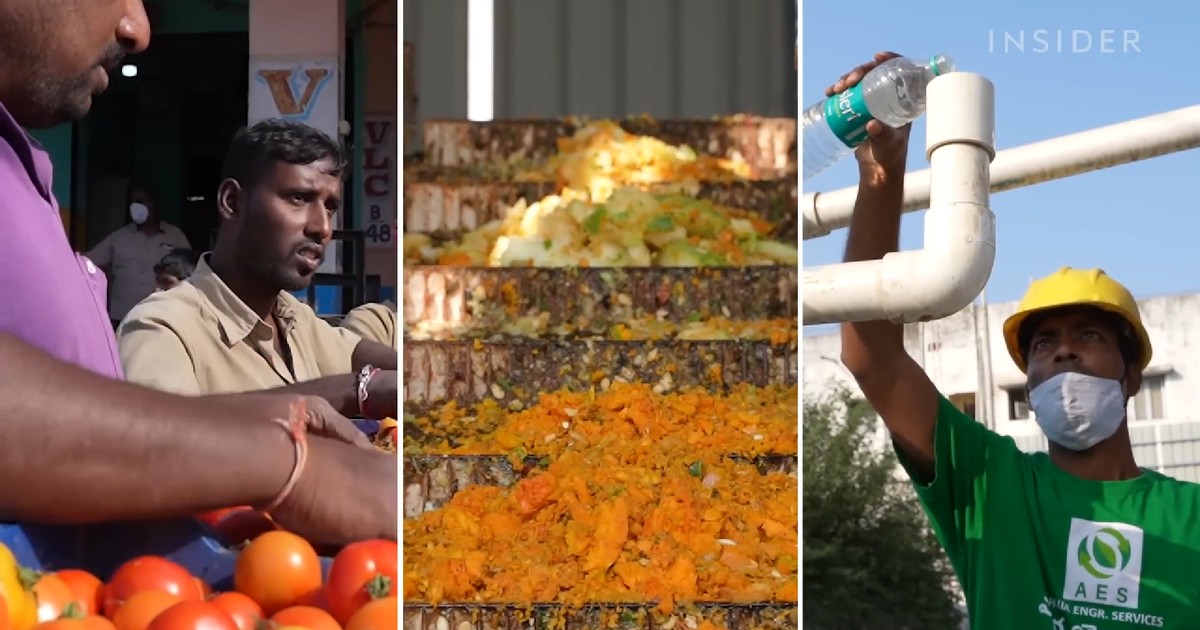
Ten tons of food remain unsold at this market every day. Instead of ending up in a landfill, it is converted into electricity that powers street lamps, buildings and a kitchen that prepares meals for 800 people. This energy source is called biogas. It's plentiful, doesn't require advanced technology, and experts say it burns cleaner than any fossil fuel.
Read also: We were in a kitchen that feeds two million children a day. This is what it looks like from the inside
Why can't we generate energy from the 1.3 billion tons of food that are thrown away every year?
To find out, we visited Bowenpally Market in Hyderabad, India. The first step is to cut the larger vegetables and load them onto the conveyor belt.
Some vegetables are spoiled. Others are thrown away because it costs farmers too much to transport them back home.
—Rotten vegetables are useless. That's why we use it as biogas, explains Bala Mallaiah, owner of Shri Balaji Trading Company.
A conveyor belt transports material to a grinder, which breaks the food into smaller, more uniform particles. In one day, it processes the same amount of vegetables that 150 people in India eat in a year.
The mill grinds the mixture into pulp, which is pumped through underground tanks to two digesters.
Methane fermentation chambers contain bacteria that reproduce in anaerobic conditions, i.e. anaerobic bacteria. They eat the food waste we put there and release methane and carbon dioxide
– explains Sandeep Karajanagi, director of research and development at Ahuja Engineering Services.
When decomposing, all organic materials release gases that cause climate warming.
However, the huge amount of food waste makes landfills the third largest source of man-made methane emissions, after fossil fuels and agriculture.
Read also: A tradition was born from tragedy. This dish requires 160 kg of ingredients
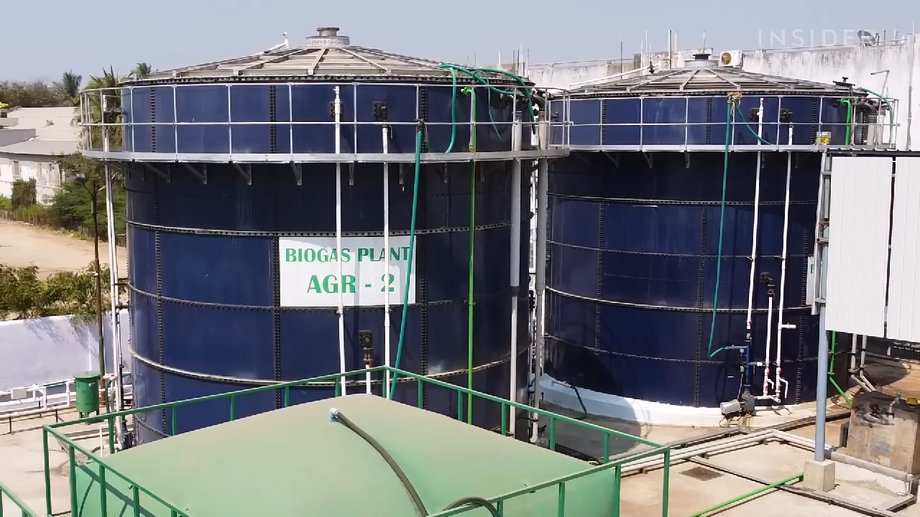
Biogas from waste: a technology that can transform the fight against emissions
|
Business Insider
Biogas from food waste. What are the benefits?
Burning biogas to generate electricity is a way to use these gases before they enter the atmosphere.
At Bowenpally, fuel can be stored locally in four huge balloons until ready for use.
“It goes from here to the kitchen, which is about 400-500 meters away,” says Karajanagi.
That's enough energy to power the cafeteria's kitchen, which serves about 800 meals a day.
In addition to energy, the plant also produces another valuable by-product: fertilizer. Farmers who sell their goods at the market buy it and spread it in the same fields where they grow vegetables.
By using this fertilizer, the soil becomes better. Yields are better and crops are sold at higher prices because organic vegetables, rice and other such products are now very expensive
says A. Gangagni Rao, Chief Scientist, Indian Institute of Chemical Technology, CSIR.
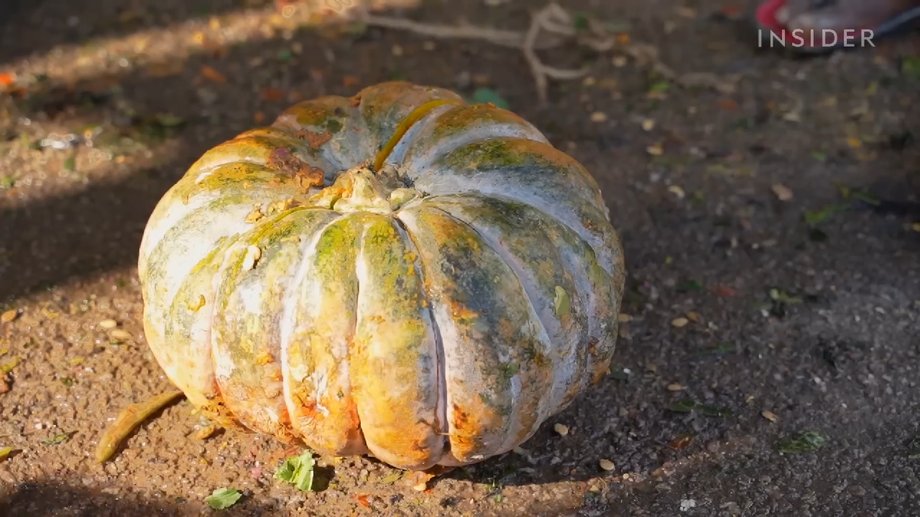
A market in India shows how to solve two crises at once: energy and waste
|
Business Insider
Dr. Rao, a scientist working on this project, is already building five more plants around the city. This isn't just limited to vegetables. Biogas can be produced from any organic material, including animal and human waste.
So if biogas can be sourced locally, it reduces municipal waste and greenhouse gas emissions, why don't we all do it?
That's because in most countries it's still cheaper to burn fossil fuels. In North America, biogas costs almost five times more than natural gas.
“You can't compete with what's called gas in the U.S. if it costs about 5 cents a liter,” said David Newman, president of the World Biogas Association.
The price difference is smaller in places like Asia, where it is less than $2. per unit.
— Many people and state governments who were considering implementing such projects suddenly realized that it was possible and that there were indigenous technologies developed in India that could work, explains Shruti Ahuja, director at Ahuja Engineering Services.
The world's largest biogas plant was recently built in Denmark, and new facilities are being built in Europe and Africa. An Israeli company sells a product for the production of biogas in a home garden.
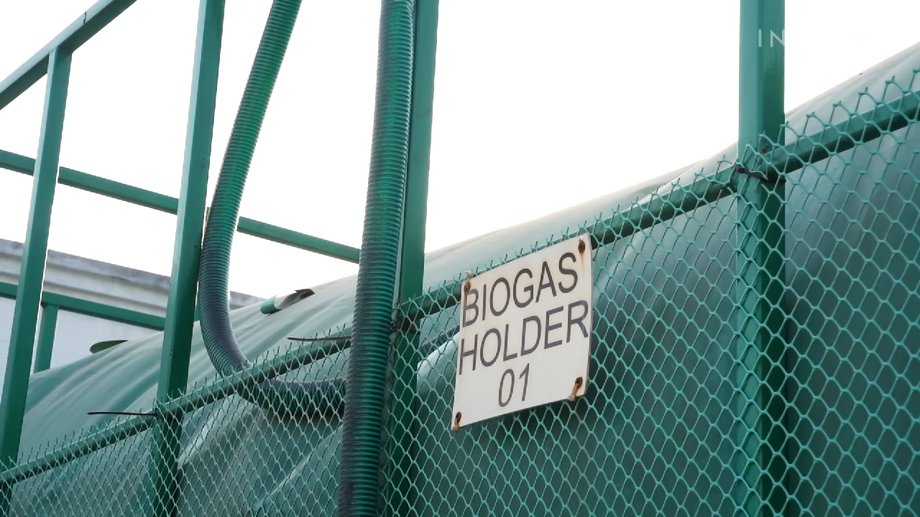
In India, they turn waste into electricity for hundreds of people
|
Business Insider
Why will biogas never replace natural gas?
Biogas will never replace natural gas. There is simply not enough waste to meet electricity demand with it.
But it does something that natural gas can't: it helps reduce the amount of waste that goes to landfills. The US is wasting a huge opportunity by throwing away 30-40%. whole foods. Even farmers who lose money when they can't sell their produce believe that biogas is a better solution than simply throwing it away.
— If we have rotten vegetables that we cannot sell, we take them to the plant. Thanks to this, they are used for good, says Kumoreya, a tomato seller.
Engineers working on the Bowenpally project hope its success will inspire others.
— These projects must be implemented so that we can live in a more sustainable way, not only for ourselves, but also for future generations, even 20 or 10 years from now. It is important that the situation is slightly better, Ahuja postulates.