Donald Trump and his ambitions to dominate the cosmos. The order that provides for the return of Americans to the moon by 2028


Donald Trump has signed an ambitious executive order that calls for Americans to return to the moon by 2028 and cement the United States' supremacy in outer space, as competition with China for control of the moon becomes more apparent.
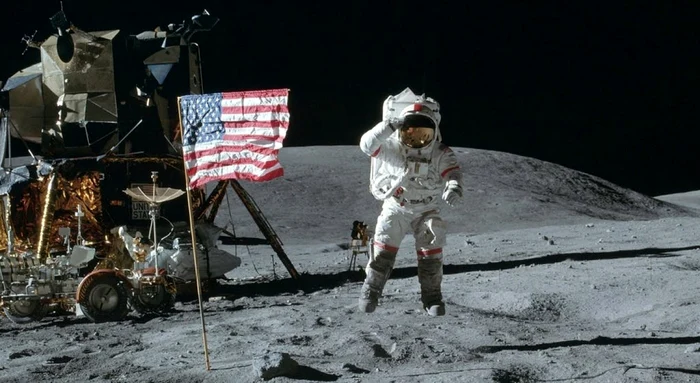
The USA wants a permanent outpost on the Moon by 2030. PHOTO: archive
President Donald Trump signed an executive order on Thursday, December 18, reaffirming the US's space ambitions: returning Americans to the moon by 2028 and protecting outer space from military threats.
The document, titled “Securing America's Space Supremacy,” it represents the Trump administration's first major space policy initiative in its second term and was signed just hours after Jared Isaacman, a billionaire and private astronaut, was sworn in as NASA's 15th administrator.
Basically, the document reorganizes the coordination of national space policy under the authority of White House science adviser Michael Kratsios and sets clear priorities for government agencies and private contractors.
The order requires the Pentagon and intelligence services to develop a space security strategy, encourages testing of missile defense technologies under the “Golden Dome” program and seeks to increase the efficiency of contractors working with NASA and the Department of Defense, Reuters notes.
With the order, Donald Trump is also reorganizing the National Space Council, the White House's main space policy coordination body, brought back to the fore by Trump in his first term. An administration official said the structure would not be abolished, but integrated into the Office of Technology Policy, with the president in the role of head of the council.
The goal of a manned landing by 2028 is reminiscent of the 2019 directive, which originally set an extremely ambitious deadline of 2024. Delays in the development of the Space Launch System rocket and SpaceX's Starship spacecraft have pushed back the timetable, and NASA had previously planned a mission for 2028, dating back to Barack Obama's tenure.
Permanent monthly base and competition with China
A manned mission in 2028 would mark the beginning of a permanent presence on the Moon under the Artemis program.
The order provides “establishing the initial elements of a permanent lunar outpost by 2030”, including with nuclear power sources, bolstering US ambitions against China, which aims for its first manned mission to the moon in 2030.
Although Donald Trump has expressed interest in missions to Mars, in collaboration with SpaceX and Elon Musk, Congress has prioritized the Artemis lunar program, already supported by billions of dollars in investments.
In parallel, the administration has reduced NASA staff by about 20 percent and proposed budget cuts for 2026 of about 25 percent, which could affect several science programs.
For his part, Jared Isaacman said that NASA should continue to pursue both lunar and Martian goals, but with a priority for the Moon to overtake China.
The success of the 2028 plan, however, depends on the progress of SpaceX's Starship, which has previously been criticized by former NASA officials for its slow pace of development.